James Tasamba
16 July 2026•Update: 16 July 2026
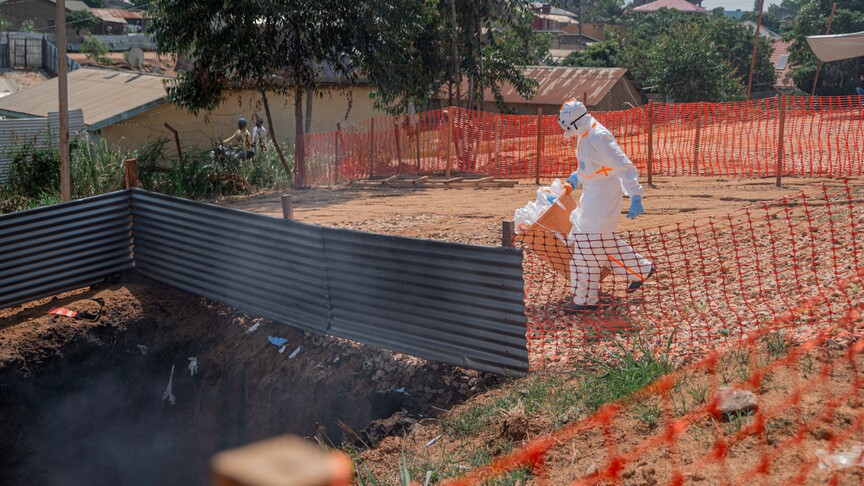
Humanitarian workers involved in the Ebola response had to be evacuated early Thursday from an Ebola treatment center in eastern Democratic Republic of Congo’s Ituri province after violence erupted because of a dead body, according to media reports.
Ahead of the violence, a pregnant woman reportedly died from anemia at Nyakunde General Hospital, where an Ebola treatment center in Ituri province is located, and where relatives gathered to demand the body.
Moments later, however, angry members of the local community attacked the center, triggering an exchange of gunfire with security after the hospital resisted handing over the body in respect of health protocols for a dignified and safe burial, the Actualite news portal reported, citing a caregiver.
“They ransacked the treatment centre built opposite the hospital, breaking some furniture, including chairs. Four patients fled; only three stayed,” said the caregiver.
Security reportedly intervened to calm the situation, but young people looked agitated, causing fear among the humanitarians who had to be evacuated to safety.
The report said the humanitarian workers who were evacuated to Bunia, the capital of Ituri province, worked for organizations such as Africa CDC, World Health Organization, Samaritan Purse and FHI 36.
Ituri has been at the center of the fight against Ebola, accounting for nearly 90% of the more than 2,000 confirmed cases recorded to date in the country.
But the response has faced several challenges, including insecurity, attacks on health workers and medical facilities, as well as community mistrust.
The incident came days after the UN Office for the Coordination of Humanitarian Affairs (OCHA) said last week that violence has injured 45 response and aid workers since the outbreak in Congo in May.
OCHA said its partners recorded injuries in 76 security incidents targeting Ebola response personnel and other aid workers in Ituri, North Kivu and South Kivu provinces.
UNICEF, meanwhile, urged urgent mobilization of resources to contain the rising cases of Ebola in Congo, warning that “as the virus progresses, resources are not keeping pace.”
Gilles Fagninou, UNICEF’s regional director for West and Central Africa, urged stronger collective action and a faster response to contain Ebola, noting that the challenge is not the lack of solutions, but the lack of funding to deploy them at the scale needed.
The UN agency said only 25% of the required funding is currently available.