- Critics warn glaciers are critical freshwater reserves in arid regions, while government says reform enables development
- Debate highlights tension between resource extraction, long-term water security
Argentina’s decision to loosen glacier protections and expand mining in the Andes has sparked protests and a heated national debate over water security and environmental safeguards.
Lawmakers approved an amendment to the country’s glacier protection law this week, clearing the way for more mining in high-altitude regions that were previously restricted.
The reform was celebrated as a victory by the country’s libertarian president Javier Milei.
Supporters say the move will unlock economic potential in mineral-rich provinces, while critics warn it could put key freshwater sources at risk in a country already facing growing climate pressures.
What does the bill say?
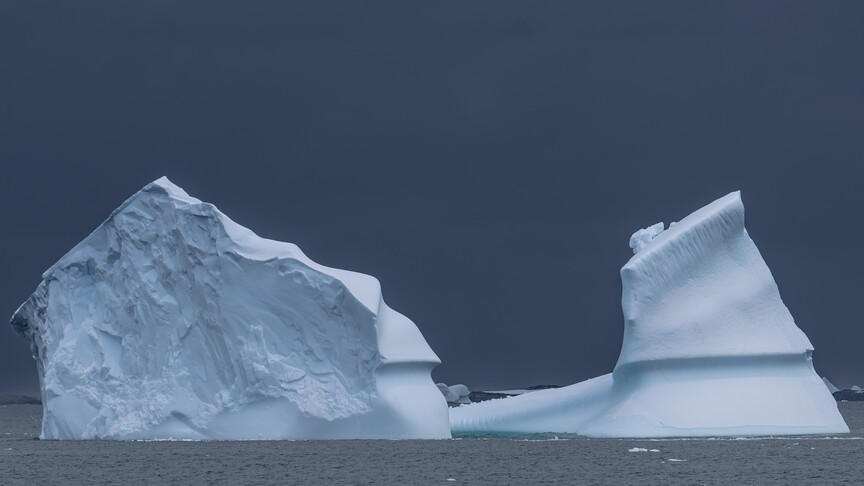
Argentina, home to nearly 17,000 glaciers, which feed 36 river basins across 12 provinces and support millions of people, passed a pioneering law protecting glaciers and surrounding areas in 2010.
The law designated glacier regions as strategic water reserves, banning mining and exploration activities.
The new amendment relaxes those restrictions and passes responsibility to provincial governments for defining protected areas.
The change eases restrictions on mining in high-altitude regions of the Andes, including areas containing glaciers and permafrost.
As a result, parts of the Andes that were previously off-limits may now be opened to mining activities targeting resources such as copper, lithium, gold and silver.
Argentina is already a major producer of lithium – a mineral central to the technology and renewable energy industries.
What do supporters of the reform argue?
Government officials and industry supporters say the previous law was too restrictive and limited economic development.
“Environmentalists would rather see us starve than have anything touched,” Milei, who does not believe in human-induced climate change, has argued.
Backers add that the reform does not eliminate glacier protection, but instead changes how protected areas are defined by allowing provinces to determine whether a glacier or the surrounding area serves a strategic water function.
In their view, this gives local authorities more flexibility to distinguish between areas that require strict protection and areas where mining and other activities can proceed.
The Milei government has framed the reform as part of a broader push to attract investment, especially in the mining sector, where Argentina hopes to expand production of lithium, copper, gold and silver.
Supporters point out that the country has lagged behind neighboring Chile in developing its mining industry, despite sharing a long Andean border and similar geological resources.
What environmentalists say
Environmental groups, scientists and civil society organizations say the reform will weaken protection for one of Argentina’s most important freshwater reserves.
Critics argue that glaciers and periglacial environments – areas of frozen ground that may not always be visibly covered in ice – are key parts of the water cycle. They store precipitation as ice during colder months and release it gradually, helping sustain rivers and water supplies during dry periods.
This function is particularly important in Argentina’s arid and semi-arid regions, such as Mendoza and San Juan, where water scarcity is already a concern.
They also say the reform comes as climate change accelerates glacier retreat, making freshwater protection more urgent. In the north-west, where mining is concentrated, glacial reserves have declined by 17% over the last decade, according to the Argentine Institute of Snow Research, Glaciology and Environmental Sciences.
During the vote, protesters gathered outside Congress with signs reading “Water is worth more than gold” and “Hands off the Glacier Law,” while Greenpeace delivered a petition with more than 67,000 signatures against the reform.
Greenpeace Argentina argues that the reforms put millions of people across the country at risk and has filed a lawsuit to denounce the reform as unconstitutional.
“Once a glacier disappears, it cannot be replaced. If glaciers disappear, many communities will face major water shortages, affecting agriculture, energy production and domestic consumption,” it said in a statement.
Other organizations have also criticized the speed of the legislative process.
Environmentalists point to Argentina’s history of mining-related pollution, including the 2015 cyanide spill at the Veladero mine in San Juan, which contaminated five rivers, as evidence of risks tied to extractive activity in sensitive mountain regions.