Maryam Ashalem de Andres
19 October 2026•Update: 19 October 2026
Mexico's National Civil Protection Coordination (CNPC) have urged residents in seven states to take precautions against heavy rainfall, flooding and landslides as Cold Front No. 2 continues to affect the country's south and southeast.
The agency said in a statement published on its official website Monday that residents in Veracruz, Tabasco, Chiapas, Oaxaca, Campeche, Yucatan and Quintana Roo should follow official guidance and strengthen self-protection measures.
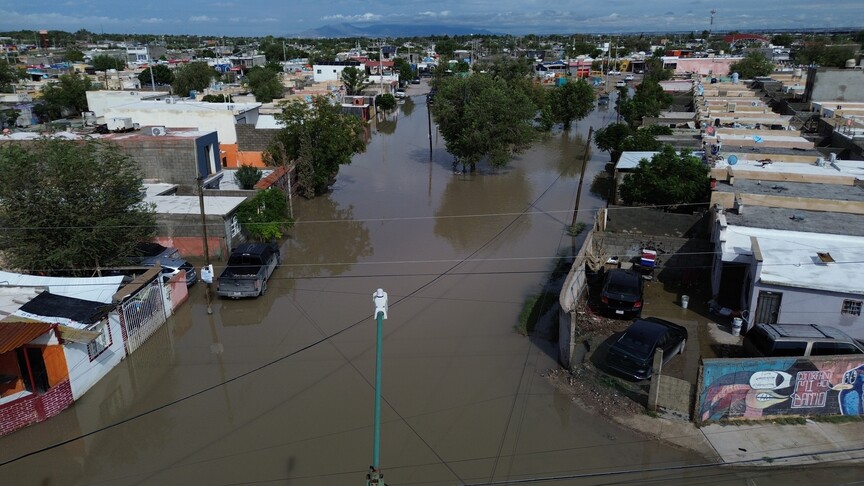
Persistent rainfall in recent days has increased the risk of flooding, flash floods, rising river levels, overflowing waterways and landslides, the agency said.
Authorities have been carrying out evacuations and moving residents to safe areas in municipalities in southern Veracruz, where federal forces are supporting operations.
According to Mexico's National Meteorological Service (SMN), the cold front is expected to remain stationary over the eastern and southeastern Gulf of Mexico, bringing torrential rainfall to southern Veracruz, western Tabasco, northwestern Chiapas and northeastern Oaxaca.
Very heavy rainfall is also forecast in parts of Yucatan and Quintana Roo, while heavy showers are expected in areas of Campeche.
The polar air mass will bring lower temperatures, northerly wind gusts of 60 to 80 kph (37 to 50 mph) in Veracruz and the Isthmus and Gulf of Tehuantepec, and 40 to 60 kph (25 to 37 mph) in Tabasco. Waves of 2 to 4 meters (6.6 to 13.1 feet) are also expected along the affected coasts and in the Gulf of Tehuantepec.
The CNPC warned that saturated soil could increase the risk of landslides and slope failures, while rising water levels could threaten communities near rivers and streams.
Residents were advised not to cross flooded streets, rivers or streams on foot or by vehicle, and to avoid areas vulnerable to flooding and landslides.
People living in low-lying areas were urged to identify evacuation routes and temporary shelters, while those instructed to evacuate should do so immediately.
Authorities also recommended avoiding beaches and coastal areas affected by strong winds and high waves and following updates from official meteorological and civil protection channels.