Mucahithan Avcioglu
24 June 2026•Update: 24 June 2026
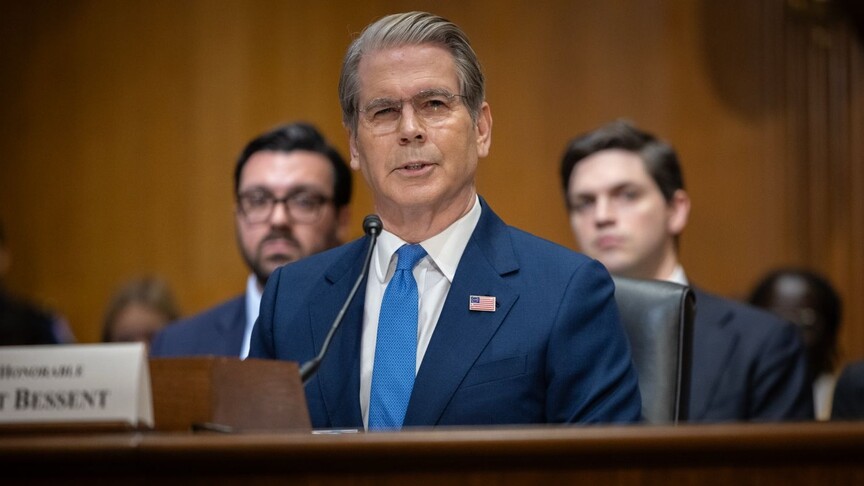
US Treasury Secretary Scott Bessent said Wednesday that the American economy could return to 3% growth before the end of the year, citing the strength of underlying economic activity as the Iran war nears a conclusion.
“We can have something with a three in front of it this year,” Bessent told CNBC, adding that “the underlying economy has been strong.”
US economic growth has slowed in recent quarters amid renewed inflation pressures, a moderating labor market, the effect of President Donald Trump’s tariffs and the fallout from the war with Iran.
Gross domestic product expanded at an annualized rate of 1.6% in the first quarter, following 0.5% growth in the final quarter of 2025. The US economy grew 2.1% for the whole of last year.
Bessent said his “3-3-3” economic plan remains achievable, referring to 3% growth, a budget deficit equal to 3% of GDP and a 3 million-barrel-per-day increase in domestic oil production.
He estimated that the economy had been running at around a 4% growth pace in February, before the US and Israel launched attacks on Iran.
On the fiscal outlook, Bessent said the administration could bring the deficit-to-GDP ratio close to 3% by the end of Trump’s term.
“What’s important about that, that’s when you start paying down overall debt as a percent of the economy,” he said.
The US deficit-to-GDP ratio stood at 5.8% at the end of 2025, after remaining above 6% in 2023 and 2024.
The federal budget deficit reached $1.25 trillion in the first eight months of fiscal year 2026, down 9% from the same period a year earlier.
High financing costs have remained a key pressure point for public finances, with interest costs becoming one of the largest federal budget items after Social Security.
Trump has repeatedly urged the Federal Reserve to lower interest rates to reduce the government’s debt-servicing burden, but the central bank has resisted further cuts during this year’s inflation surge.
Bessent said Trump has “every confidence” that new Fed Chair Kevin Warsh will guide monetary policy appropriately.