Emre Aytekin
11 May 2026•Update: 11 May 2026
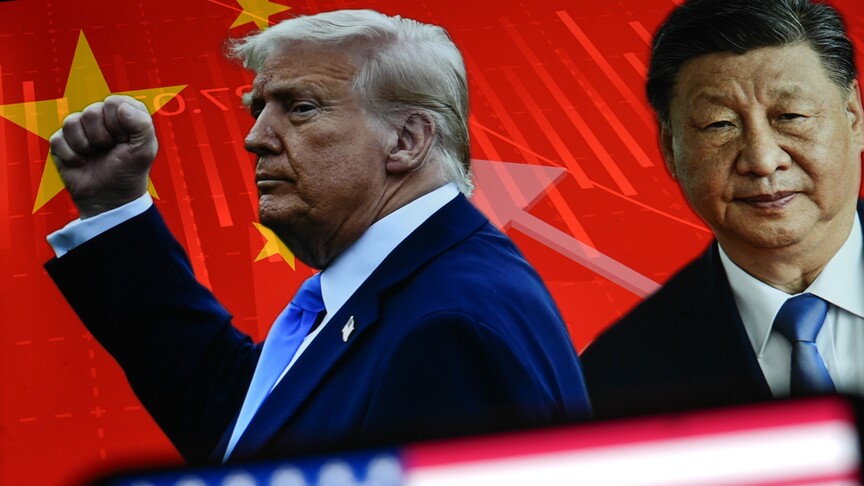
US President Donald Trump will visit Beijing this week to meet with his Chinese counterpart Xi Jinping amid the US’ weakened geopolitical status amid the Middle East war and the fragile ceasefire keeping tensions high.
The three-day visit, originally scheduled for late March, will mark the first visit by a US president to China since Trump’s first term in 2017.
Trump postponed the initial summit amid escalating tensions following joint US-Israeli attacks on Iran and Tehran’s retaliatory strikes, which led to a wider regional conflict before a fragile ceasefire took hold.
Experts say the prolonged crisis with Iran consumed a lot of time and energy from the American side of the conflict, working in advantage of China.
Experts expect Trump to focus on preserving economic stability in the Asia-Pacific region while avoiding new geopolitical flashpoints.
Jonathan A. Czin, a former CIA analyst and researcher at the Brookings Institution, said the meeting is unlikely to produce major breakthroughs and will instead focus on preserving temporary trade arrangements.
Speaking to reporters, including Anadolu, Czin said the US delegation is expected to seek Chinese commitments to increase purchases of American soybeans and Boeing passenger aircraft amid continuing export restrictions on advanced semiconductor technology.
Tensions between Washington and Beijing also remain elevated following Washington’s $11 billion arms sale to Taiwan late last year, which China views as a violation of the Three Joint Communiques governing US-China relations.
Czin said Beijing may pressure Washington on the Taiwan issue during the summit.
The ongoing disruption in the Strait of Hormuz is also expected to feature prominently in discussions between the two leaders.
Before the conflict, the strategic waterway handled about 25 percent of global oil trade, 20 percent of liquefied natural gas shipments and 30 percent of global fertilizer trade.
Despite heavy reliance on Middle Eastern energy imports, Beijing has rejected US pressure to intervene in the crisis. The Persian Gulf accounts for roughly 45 percent of China’s oil imports and 30 percent of its liquefied natural gas (LNG) supplies.
China has blamed the US and Israel for regional instability and has reportedly instructed domestic refineries not to comply with US sanctions targeting Iranian oil exports.
American officials believe rising global maritime shipping and commodity costs could eventually force Beijing toward negotiations, but some analysts argue Washington is overestimating China’s energy vulnerability.
Daniel Fu, a research fellow at Harvard Business School, said China’s strategic petroleum reserves and dependence on domestically produced coal reduce the immediate risks posed by maritime disruptions.
Speaking to reporters, including Anadolu, during an online briefing, Fu said Beijing’s control over state-owned energy companies allows rapid rerouting of supply networks during periods of instability.
He added that China’s expansion of renewable energy capacity is gradually reducing its long-term dependence on maritime fossil fuel imports, while Western sanctions imposed on Russia following its war on Ukraine unintentionally strengthened China’s energy security by redirecting Russian oil and gas exports eastward through overland pipelines.
Chinese analysts largely view the Strait of Hormuz disruption as more damaging to the economies of the US and its Western allies than to China itself.
*Writing by Emir Yildirim in Istanbul