Mücahithan Avcıoğlu
18 June 2026•Update: 18 June 2026
Cuba's Communist Party has approved a sweeping package of economic and social reforms that would expand the role of private capital and market mechanisms as the island grapples with its worst economic crisis in decades, according to official media.
The Communist Party's Central Committee approved 176 reform proposals grouped into 23 areas during an extraordinary plenary session Wednesday, Granma, the party's official newspaper, reported Thursday.
The measures are intended not only to address current economic difficulties but also to support long-term growth, according to the report.
The reforms cover a broad range of sectors, including economic planning, property relations, agriculture, labor and wage policies, energy, foreign investment, foreign trade, tourism, transport, taxation, banking and finance.
They also include measures related to digital transformation, artificial intelligence, the knowledge economy, statistics and regulatory oversight.
According to Escambray, a provincial state-run newspaper citing Cubadebate, a Cuban state-run news website, the package would reshape the country's business structure, expand opportunities for private capital and recognize market mechanisms as tools for allocating resources more efficiently.
Cuban officials said the measures do not represent a departure from the country's socialist model and remain consistent with the constitution. They acknowledged, however, that implementation would require legislative changes, including amendments to existing regulations and the adoption of new laws.
President Miguel Diaz-Canel said Cuba's current circumstances require urgent action.
According to Granma, he said the country needs a deep and agile economic agenda that can be implemented in the short term, combining macroeconomic stabilization, incentives to boost production, legal certainty, investment promotion, greater use of technology and targeted social protection.
Prime Minister Manuel Marrero Cruz said the proposals are intended not only to help the country withstand current challenges but also to promote future development, according to the Cuban Presidency.
The Presidency said the reform package will now be submitted to the National Assembly.
The measures come as Cuba faces what officials describe as its most severe multidimensional crisis since the "Special Period" that followed the collapse of the Soviet Union in the 1990s.
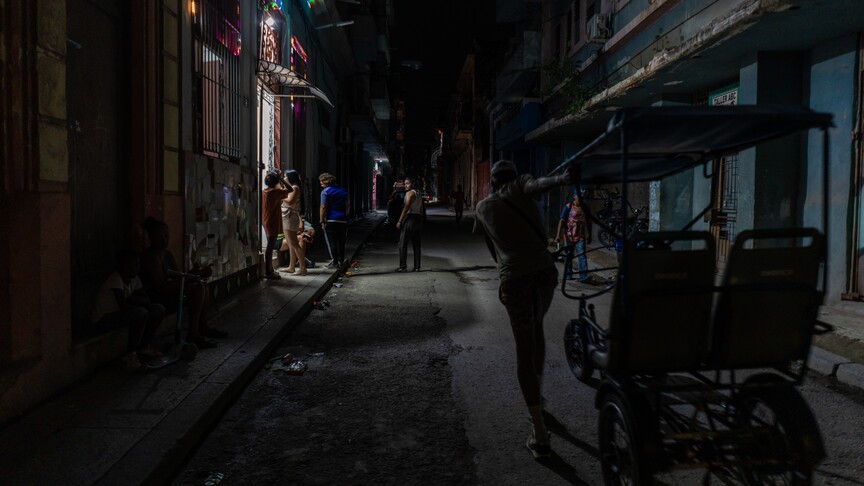
Official media reported that the economy contracted sharply in the first half of 2026, while average daily power outages reached 20 hours and the country's electricity deficit climbed to 1,955 megawatts.
Cuban authorities have blamed much of the deterioration on tighter US measures, saying Washington has disrupted oil supplies, pressured companies doing business with Cuba and restricted the island's access to international credit and financing.
The White House said on May 1 that President Donald Trump signed an executive order imposing new sanctions on Cuban officials and entities, citing repression and threats to US national security and foreign policy.
In January, Trump also signed an executive order declaring a national emergency and establishing a mechanism to impose tariffs on goods from countries that sell or supply oil to Cuba, according to the White House.