AFRICAN CAPITALS
The Ebola virus is affecting the economies of African countries that have not registered a single infection and are thousands of miles from the outbreak's epicenter.
"Some tourists have been hesitant to travel to Kenya and other nations in Africa," Kenya Tourism Board Managing Director Muriithi Ndegwa told Anadolu Agency.
"Some have no clue where the disease is; they may fear to make bookings thinking their destination might be affected," he said.
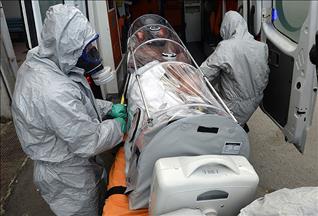
In recent months, Ebola – a contagious disease for which there is no known treatment or cure – has killed 4,922 people worldwide, according to the World Health Organization (WHO).
A total of 4,912 deaths have been reported in the West African states of Guinea, Sierra Leone and Liberia alone.
Other West African countries to have reported Ebola cases include Nigeria, Senegal and Mali.
None of the African countries outside the West African sub-region have reported Ebola infections.
But this has not been enough to spare them the repercussions of the global Ebola hysteria.
"People in the international markets don't seem to know that the epicenter of Ebola is in West Africa," said Ndegwa, whose state-run corporation is responsible for marketing Kenya as a choice tourist destination.
"They receive news as 'Ebola in Africa' under the perception that Africa is one big country," he fumed.
"There has been a drop in [tourist] numbers because of this perception," confirmed the Kenyan official. "It has contributed to people not wanting to visit Kenya."
Ndegwa, who insisted that the epicenter of Ebola was nearer to southern Europe than it was to Kenya, stopped short of providing exact tourist arrival figures.
"I can't tell you the exact percentage, but, yes, our tourism industry has been affected by Ebola," he said.
A tropical fever that first appeared in 1976 in Sudan and the Democratic Republic of Congo, Ebola can be transmitted to humans from wild animals.
It can also reportedly spread through contact with the body fluids of infected persons or of those who have succumbed to the virus.
Cancellations
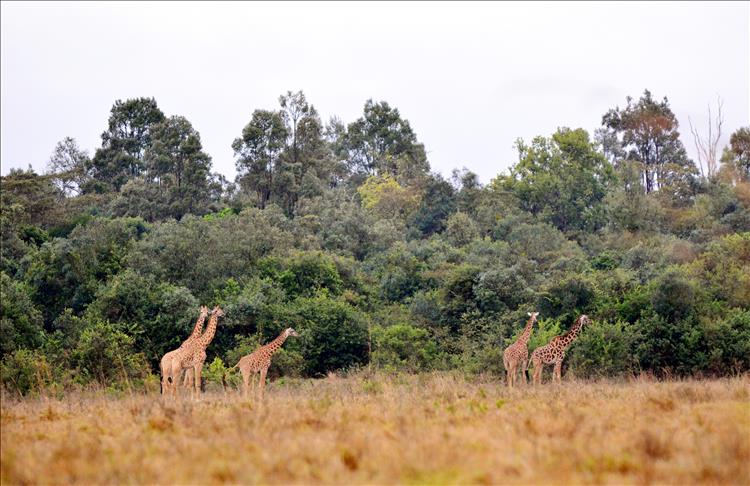
The impact has also been felt across the border in Tanzania, a major safari tourist destination.
"Though we have not seen any Ebola cases, we are facing the consequences by losing foreign income through tourism with cancelation from some tourists," Siril Akko, CEO of the Tanzania Association of Tour Operators (TATO), told AA.
"This is due to Ebola fears, because most of the people outside Africa think the African continent is just one big country," he said.
Akko recalled how, after a recent bombing in Kenya, a friend from Switzerland had called to ask about the safety of his family, which had been vacationing in Tanzania's Serengeti National Park, roughly 1,000km from Nairobi.
TATO Chairman Wilbard Chambulo said some hotels in the northern city of Arusha, which is surrounded by some of Africa's most famous landscapes and national parks, had reported numerous cancellations due to a combination of factors, including Ebola.
"I have been forced to close at least three lodges and several tented camps… because of the apparent fall of business following many cancellations, which I attribute to Ebola," he told AA.
Chambulo is himself a tour operator who manages a string of lodges and tented camps in several national parks, including Serengeti and adjacent areas.
Due to cancellations, he said, he had been forced to send 54 of his workers home for about two weeks following a 25-percent drop in visitor numbers compared to the same period from January to August of last year.
"We are working hand-in-hand with the government, through the Tanzania Tourists Board, to promote tourism to combat the problem and collect cancellation data countrywide so that we can understand the real situation we are facing," added Chambulo.
Tourism, the country's leading foreign currency earner, brings in nearly $1.8 billion annually and contributes some 17.2 percent of Tanzania's GDP.
Uganda
Uganda, another East African country that has not recorded any Ebola cases, is also feeling the heat.
"We are actually facing some cancellations," Edwin Muzahura, public relations manager at the Uganda Tourism Board, said, citing a wave of fresh cancellations.
According to him, tourism in Uganda peaks between July and September, declines in October and then picks up again from November to February.
"These cancellations are not good at all because we were just entering the peak period," he said. "We have not yet added it up to know how many cancellations [there are]."
He said the Uganda Tourism Board and other stakeholders in the tourism industry would hold a meeting this week to forge a way forward – which could, he said, involve Prime Minister Ruhakana Rugunda.
"We need to mainstream communications and mitigate the effects of some of these terrible reports," Muzahura told AA.
According to the tourism board, Uganda earned $1.4 billion in tourism receipts in the last financial year (2013/14).
Drop
But the repercussions of the Ebola hysteria are going far beyond East Africa, with tourism and the lucrative safari industries in Zambia being affected as well.
"Panic and confusion followed uncontrolled media reports regarding the outbreak of the disease in Zambia," Tourism and Arts Minister Jean Kapata told AA.
"Such negative publicity is disrupting the tourism business in Zambia," she said.
"The moment people get news that there is an outbreak of such a lethal disease in an area, whether what has been said is true or false, they are bound to overreact," added the minister. "This is exactly what is happening with tourists intending to visit Zambia."
She explained that the recent publicity about the Ebola outbreak in Zambia had had an adverse effect – not only on the tourism and Safari industry, but also on numerous hospitality industries, including hoteliers and lodgers across the country.
"Although there was quick action by the government to correct the impression that there is an Ebola outbreak in Zambia, the message has been sent to our clients – both new and old – that cases of Ebola have been reported in Zambia," lamented the minister.
"The mere mention of the presence of the Ebola virus scares people," she noted. "Fear of the virus is not only rattling would-be tourists in Zambia, but also underlining the risks associated with travel to Zambia."
Kapata insisted that the chance of contacting Ebola on safari in Zambia was effectively zero.
"A tourist is more likely to be killed by a direct lightning strike, slipping in the shower or by falling off a cliff than getting infected with Ebola," she suggested.
"We are doing our best to support our brothers in countries where there is an outbreak of the disease and making sure the virus is contained," said the minister.
Evans Muhanga, marketing director at the Zambia National Tourism Board, said Zambia had fallen short by 11.5 percent of the 1.2 million international tourists it had projected at the start of 2014.
He attributed the shortfall to the Ebola scare.
He also revealed that Zambia had witnessed a 31-percent drop in business travel.
Muhanga told AA that the board was still compiling the final figures of tourists who had arrived in Zambia so far, amid expectations that this could surpass 11.5 percent.
The total is compiled annually at the close of the tourism season, which runs from the end of March to the end of October, when the rainy season begins.
Muhanga noted that Zambia had recorded an increase in tourist numbers in recent years.
He recalled that 906,417 tourists had visited Zambia in 2011, compared to 815,000 arrivals in 2010. In 2013, the figure went up to 914,576.
Reporting by Magdalene Mukami in Kenya, Peter Saramba in Tanzania, Halima Athumani in Uganda and Francis Maingaila in Zambia
englishnews@aa.com.tr
www.aa.com.tr/en