By Umaru Sanda Amadu
ACCRA
The government of Ghana is looking to the International Monetary Fund (IMF) for a financial bailout to help stabilize the country's economy, which has reeled this year under a rapidly depreciating national currency.
"Nobody wants to be going to the IMF regularly for financial support, but as long as we address the structural challenges like this government is doing, we won't experience the same problems again," Ghanaian Deputy Minister for Trade and Industry Kweku Ricketts-Hagan told Anadolu Agency.
"We are aware that the IMF is not going to solve all our problems, but I think at this juncture, we need the IMF to be able to put us on the path of recovery," he said.
IMF officials began talks with government officials in capital Accra on Tuesday.
The Ghanaian delegation to the talks, which are expected to go on for ten days, is being led by National Development Planning Commission Chairman Kwesi Botwey.
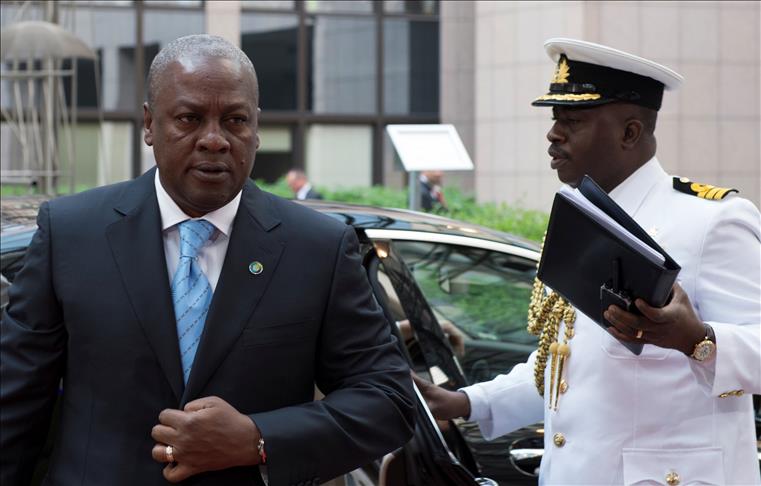
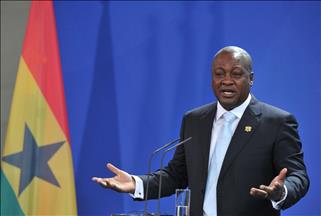
In recent months, the John Mahama government has faced serious economic challenges.
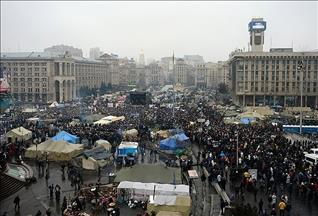
Earlier this year, several labor unions, led by the Trade Unions Congress, organized a national day of protest to decry poor economic conditions.
Teachers' unions have also organized sit-in strikes to protest the harsh economic circumstances.
And in early July, another group – Concerned Ghanaians for Responsible Governance – organized a similar protest that drew hundreds of members of Ghana's middle class.
Ghana's currency, the cedi, has depreciated by over 30 percent this year against the dollar and other major currencies, leading to some instability in the exchange rate market.
The nation is also facing a severe energy problem.
A load-shedding exercise is currently underway for Ghanaian electricity consumers after Nigeria cut the gas supply to the country due to labor strikes by Nigerian oil and gas workers.
These issues, coupled with other challenges, have forced the government to turn to the IMF for support.
"That is what the IMF is there for – to help countries build their economies," Ricketts-Hagan told AA. "We are seeking both technical and financial assistance from the IMF."
"The financial assistance will come in the way of balance-of-payment. When these negotiations are finished, we will get some balance-of-payment support, which will further help us to stabilize the cedi," the official said.
He could not say, however, exactly how much Ghana hoped to bag from the international lender.
"We started going to the IMF in 1983. The last one [loan] we had was from 2009 to 2012, and in that one we got $581 million. So if that is the guide, the new one could be plus-or-minus that figure," Ricketts-Hagan told AA.
"This will depend on which program we will go on and how long we will be on it," he added.
-Reservations-
Ghana's Trade Union Congress, however, has cried foul over the IMF talks, saying that Ghanaian workers would bear the brunt of the fallout.
"Times are hard; the prognosis on the economy is not good either, but we must at this point resist the temptation to seek an IMF bailout," congress head Kofi Asamoah said in a recent statement.
"As we have stated, it is the IMF-sponsored policies that have brought us almost to the brink. No country has developed following the advice of the IMF," he said.
"Resorting to the IMF for financial support was a mistake we made in the past. We must take responsibility for this mistake and find a solution to our problem," Asamoah asserted.
Ricketts-Hagan, however, vehemently disagreed.
"What we are discussing are our own home-grown solutions, which we presented to the IMF," he told AA.
"It isn't the best way to go if we could help it, but we have got to a point where gold and cocoa prices fell significantly, and – coupled with the power disruptions that we had – the best option that became available to us was to go to the IMF," the official explained.
The Association of Ghana Industries (AGI), for its part, has welcomed the negotiations.
"AGI has expressed the need for macro-economic stability… to ensure that businesses thrive… any move or effort that will bring some semblance of stability to our industrial setting is welcome," AGI President James Asare Agyei told AA.
"By engaging the IMF, we will have that level of fiscal discipline," he suggested.
The Institute of Chartered Accountants-Ghana, meanwhile, a vocal organization that has been keenly watching economic developments, has warned that IMF assistance alone "will not be successful in restoring the Ghanaian economy if Ghanaians do not adopt an attitude of contributing their quota by supporting the implementation of the various remedial measures."
The institute went on to advise the government to "ensure budget implementation discipline and not allow political expediency to override economic efficiency in all public policymaking processes, including public spending."
The country's economic woes are expected to be the focus of Ghana's political opposition ahead of general elections slated for 2016 in a country highly polarized along party lines.
www.aa.com.tr/en