Jo Harper
18 August 2026•Update: 18 August 2026
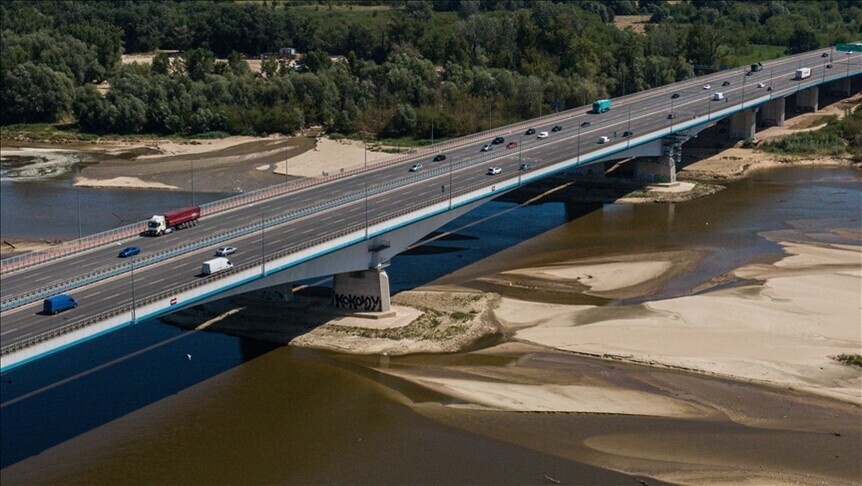
At least 630 Polish municipalities have introduced restrictions on water use this year as hydrological drought affects most of the country, the state water authority Wody Polskie said Tuesday.
Mateusz Balcerowicz, head of Wody Polskie, wrote on US social media platform X that low or extremely low water levels now affect about 70% of Poland, following prolonged periods of high temperatures and insufficient rainfall.
The restrictions introduced by local authorities generally do not affect drinking water supplies but include limits on using mains water to water gardens, wash cars or fill private swimming pools.
Smaller municipalities are particularly vulnerable because they can depend on only one or two sources of water, Balcerowicz said.
Despite the deteriorating situation, he said there was currently no nationwide threat of household water supplies running dry.
Poland has some of the lowest freshwater resources in Europe, with less than 1,600 cubic meters of renewable freshwater available per person annually, a level associated with water stress.
Low river levels have worsened throughout the summer. In July, hundreds of monitoring stations recorded flows below the long-term threshold used to define hydrological drought.
Balcerowicz said Poland needed to retain considerably more rainfall through natural and technical measures, including restoring wetlands, keeping water in soils and agricultural areas, collecting rainwater in cities and developing reservoirs where necessary.
The government is currently consulting on an updated national drought-management plan.