Ayhan Simsek
15 September 2026•Update: 15 September 2026
The right-wing Alternative for Germany (AfD) has reached 30% support in a nationwide poll for the first time and now leads Chancellor Friedrich Merz’s conservatives by 10 percentage points, according to a GMS survey published Monday.
Merz’s center-right Christian Democratic Union and its Bavarian sister party, the Christian Social Union, dropped to 20% -- the lowest level recorded by pollster GMS for the conservatives.
Together with the Social Democrats at 11%, the chancellor’s coalition would not have enough support to form a majority in parliament if elections were held this week.
GMS last surveyed the same question in late July.
Since then the AfD, which campaigns against immigration, has gained 2 points and Merz’s CDU/CSU has lost 3.
The Greens rose 1 point to 14%. The Left Party also gained 1 point to 11%. The liberal Free Democrats slipped to 4% and the Sahra Wagenknecht Alliance stood at 3%, both below the 5% threshold needed to enter parliament.
The figures mark a sharp shift from the Feb. 23, 2025, federal election, when Chancellor Merz’s conservative CDU/CSU alliance won 28.5% and the AfD 20.8%.
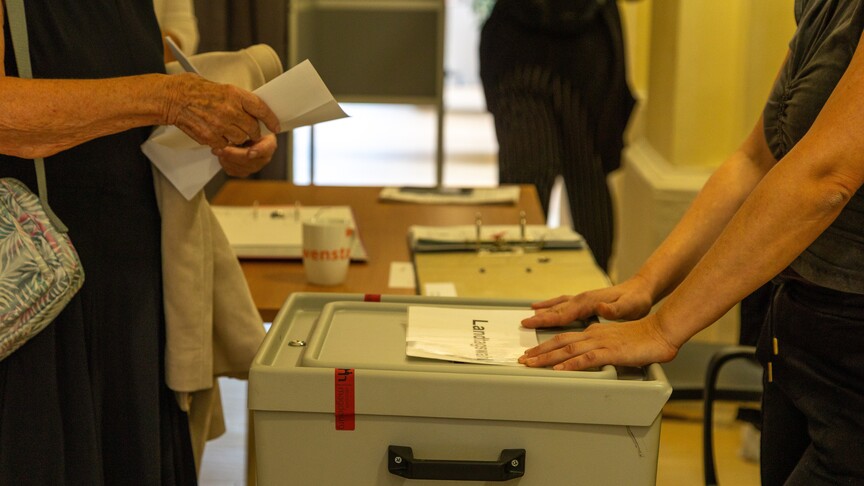
The poll comes ahead of regional elections in Mecklenburg-Vorpommern and Berlin on Sunday.
Those votes are also seen as a test of Chancellor Merz’s political future after the conservatives’ heavy defeat to the AfD in Saxony-Anhalt, where the right-wing party won 43.8% on Sept. 6.
Speculation has grown for weeks in the media about a possible change of chancellor, with North Rhine-Westphalia Premier Hendrik Wuest (CDU) named as a potential successor.
A leadership fight in the Christian Democrats after the state elections would not, by itself, dissolve the Bundestag or trigger a snap election. If party pressure forces Merz out, parliament could elect a new chancellor without a national vote.