Melike Pala
02 September 2026•Update: 02 September 2026
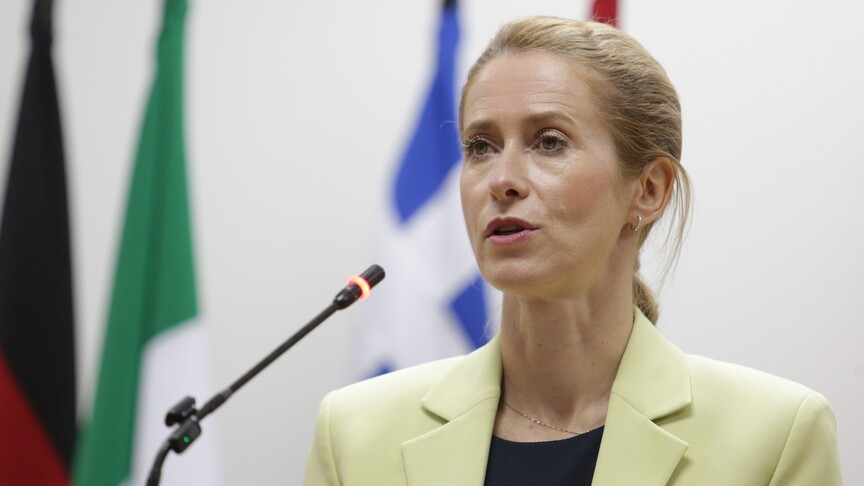
Several EU foreign ministers raised concerns Wednesday that Russian tourist visas could be used to facilitate sabotage operations inside the European Union, EU foreign policy chief Kaja Kallas said.
Speaking at a news conference following an informal meeting of EU foreign ministers in Wicklow, Ireland, Kallas said during discussions, "many" ministers argued that the EU needs to curb visas for Russian citizens.
Asked whether she had information that one of the suspects who may be behind the drone attack in Leipzig, Germany, had entered the European Union on an Italian tourist visa, Kallas said such a case would underscore the security risks posed by Russian tourist visas.
"If it is true, it shows very clearly that visas are a tool of these people who are meaning harm to the European Union to get into the European Union," she said.
"There was broad support to move with an EU visa entry ban for Russian ex-combatants and tougher visa restrictions for Russian tourists," she added.
Kallas also said the EU, together with the European Commission, was working on new proposals to strengthen sanctions enforcement.
Some ministers again raised the issue of using immobilized Russian assets, she said, adding that discussions would continue.
Kallas also said ministers discussed where EU foreign policy works effectively, where it is too slow and how the bloc could make better use of its economic and political leverage.
She said there was broad support among member states for maintaining the current institutional setup, but that it needs to be implemented more effectively.
Kallas also called for greater use of mechanisms provided by the EU treaties, including constructive abstention, which allows a member state to refrain from blocking a decision without being required to implement it.
EU foreign ministers also discussed the deteriorating situation in Gaza and the West Bank.
Kallas said occupiers' violence against Palestinians continues to rise and too often goes "unchecked."
"The E1 settlements will further undermine the prospect of the two-state solution by driving a wedge through the West Bank," she said, reaffirming EU support for the Gaza peace plan.