A state election in little-known Saxony-Anhalt is being watched across Europe for the shockwaves it could send through German national politics.
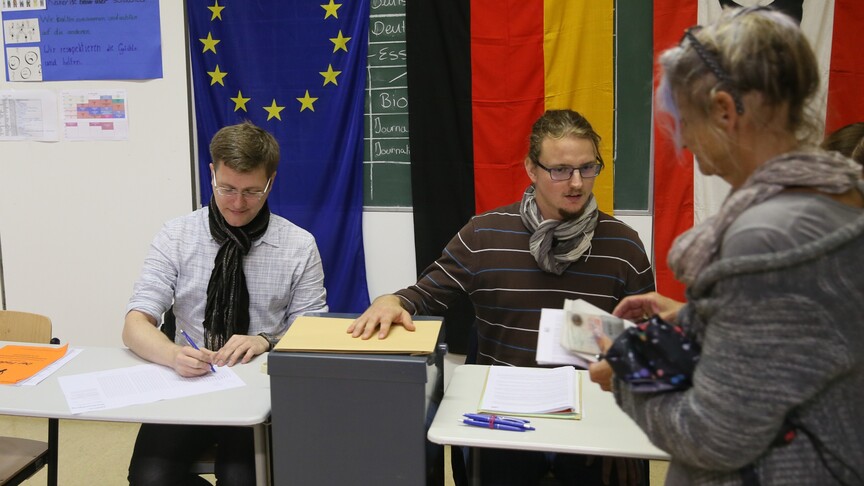
Voters on Sunday will elect a new state parliament in the mid-sized eastern region, home to less than 3% of Germany’s electorate.
The far-right Alternative for Germany (AfD) leads the polls and may form a state government, which would be the first far-right administration in a German state since 1949, after the Nazi regime fell and the Federal Republic was founded.
The political stakes far outweigh the state’s size. The AfD, which campaigns against immigration and is already the main opposition in the national parliament, is testing the “firewall” other parties have built to keep it from office.
A strong showing would hit Chancellor Friedrich Merz’s already-fragile coalition in Berlin, which has been weakened by a sluggish economy and infighting.
AfD co-leader Alice Weidel has framed the contest as more than a state race. “We will form the government in Saxony-Anhalt,” she said. “We will also govern at the federal level.”
The far-right AfD has more than doubled its support in Saxony-Anhalt in five years. It took 20.8% in 2021. It now polls above 40%.
Many observers credit lead candidate Ulrich Siegmund for driving the surge.
The 35-year-old lawmaker sells himself as a candidate of change and has already issued a “government program” plus a 100-day plan.
Immigration is the core of his pitch. He pledges to expel people without legal status “from the first minute,” expand deportation detention from dozens of places to hundreds and make asylum seekers work or lose benefits.
Weekly magazine Der Spiegel put him on its cover as “Germany’s most dangerous man.” Siegmund leaned into the label, signing copies for cameras and social media.
Critics say his moderate public image hides his ties to a tougher, more hardline network around him. The country’s domestic intelligence service has classified the AfD’s Saxony-Anhalt branch as a “confirmed right-wing extremist” organization, citing anti-democratic goals and members’ ties to far-right groups.
Far-right candidate Siegmund’s closest rival is Premier Sven Schulze of the center-right Christian Democratic Union (CDU).
The 47-year-old conservative took office only in January, after longtime leader Reiner Haseloff stepped down following nearly 15 years in power.
Schulze is less established than his predecessor and has struggled to turn name recognition into votes. The CDU presents itself as the responsible center-right choice and argues that an AfD government would scare off investors and isolate a state that lives from the European single market.
Schulze has repeatedly warned on the campaign trail that an AfD government would be an “economic catastrophe” for Saxony-Anhalt, since the far-right party is seeking to take Germany out of the euro and the visa-free Schengen area, causing alarm among investors.
“The AfD has no contacts whatsoever to make things better in Europe. It only wants out of the EU. That would be an economic catastrophe,” he said in a recent interview.
“I am the only one who, with the CDU, can keep the AfD from power and avert harm from Saxony-Anhalt.”
Polls from several institutes put the AfD at about 40% to 43%, well ahead of every other party. However, coming first is not the same as winning the state.
Seats are shared only among parties that clear the 5% threshold and enter the Landtag, so how many make it across that line can decide whether the poll leader also gets a majority.
The CDU, the center-right party of Chancellor Friedrich Merz and Premier Sven Schulze, is at about 22% to 23%, down from 37.1% in the 2021 state election. Of Schulze’s coalition partners, the Social Democrats are at about 7% to 9%. The pro-business Free Democrats are at about 3%, below the threshold.
The socialist Left Party is at about 11% to 13%. The Greens sit at about 5% to 6%, on the edge of the cutoff. The Sahra Wagenknecht Alliance, a newer left-populist party that opposes military support for Ukraine, is at about 3% to 4%.
Sunday night will therefore turn as much on the small parties as on the AfD. If enough of them miss 5%, AfD leader Ulrich Siegmund could take a majority. If they squeeze in, he could finish first and still fall short.
Merz’s CDU has ruled out any coalition or cooperation with the AfD, citing the party’s record and intelligence findings that the Saxony-Anhalt branch is a confirmed far-right extremist organization. Other mainstream parties have taken the same stance.
Far-right candidate Siegmund is not seeking a partner and is running to govern alone. Estimates suggest he needs at least 45% to 48% to win a majority of seats in the state parliament.
The Landtag’s standard size is 83 seats. A party needs 42 to govern alone. If the AfD falls short of a majority of seats, Magdeburg could spend weeks arguing over who becomes premier.
The option raised most often is a CDU-led minority government with the Social Democrats and perhaps the Greens, surviving vote by vote.
Schulze has said he will not make himself dependent on the Left Party. Sahra Wagenknecht, founder of the BSW, insisted that they want a “non-party” premier and will not serve as the majority-maker keeping the CDU in power.
German officials and analysts say Sunday’s result will echo in federal politics even if no one expects a snap election.
Calling early Bundestag elections would itself be read as an admission of failure by the co-ruling Christian Democrats (CDU/CSU) and Social Democrats.
Pressure would fall first on Merz’s conservatives. A large AfD win and a weak night for the CDU would reopen debate over his future.
According to the latest opinion polls by public broadcaster ARD, 83% of eligible voters say they are dissatisfied with Chancellor Friedrich Merz - a historically poor rating. Only 13% say they are satisfied with his work, the lowest figure the poll has recorded for a sitting chancellor.
A leadership fight within the Christian Democrats would not automatically bring down the federal government. If party pressure forces Merz to resign, parliament could elect a new chancellor without dissolving the Bundestag.
news_share_descriptionsubscription_contact