Jo Harper
22 May 2026•Update: 22 May 2026
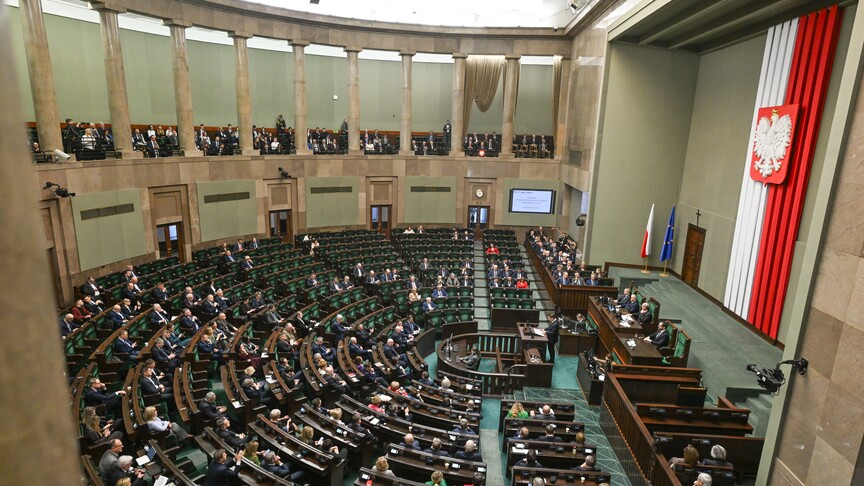
Poland’s Senate on Thursday rejected President Karol Nawrocki’s proposal to hold a national referendum on the country’s implementation of European Union climate policies, dealing an early setback to one of his flagship political initiatives.
The upper house voted 62-32, with one abstention, against authorizing the referendum, which Nawrocki wanted to hold on Sept. 27.
Under Poland’s constitution, the president can call a nationwide referendum only with Senate approval.
The proposed question asked voters: “Are you in favor of implementing EU climate policy, which has led to an increase in citizens’ cost of living, energy prices and the cost of running business and agricultural activity?”
Nawrocki argued the initiative was not directed against environmental protection or EU membership itself, but aimed to allow Poles to decide “the pace, scope and costs” of the energy transition.
He criticized policies including the EU Green Deal and the Emissions Trading System (ETS), saying they undermine competitiveness and increase prices.
However, senators from Prime Minister Donald Tusk’s governing coalition argued that the wording of the referendum was politically charged and failed to meet standards of neutrality expected in direct democracy.
The vote also reflected a broader political struggle following Nawrocki’s election over who should shape Poland’s strategic direction within the EU.
Poland remains one of the EU’s most carbon-intensive economies, with coal still accounting for around half of electricity generation and many households continuing to rely on coal for heating.
At the same time, Warsaw faces growing pressure to modernize its energy system while limiting the impact on industries and households.
For Nawrocki and the opposition camp aligned with Jaroslaw Kaczynski, criticism of EU climate policies has become part of a broader argument that Brussels is imposing excessive economic burdens on member states.
Although the referendum battle appears over for now, debate over the pace, costs and direction of Poland’s energy transition is expected to remain a major political issue in the coming years.
Nawrocki’s office said alternative political options were still under consideration.