Ambiguities leave Iran-US peace memorandum vulnerable to collapse: Experts
Analysts warn that unresolved disputes over Hormuz, Lebanon and frozen Iranian assets threaten to derail the agreement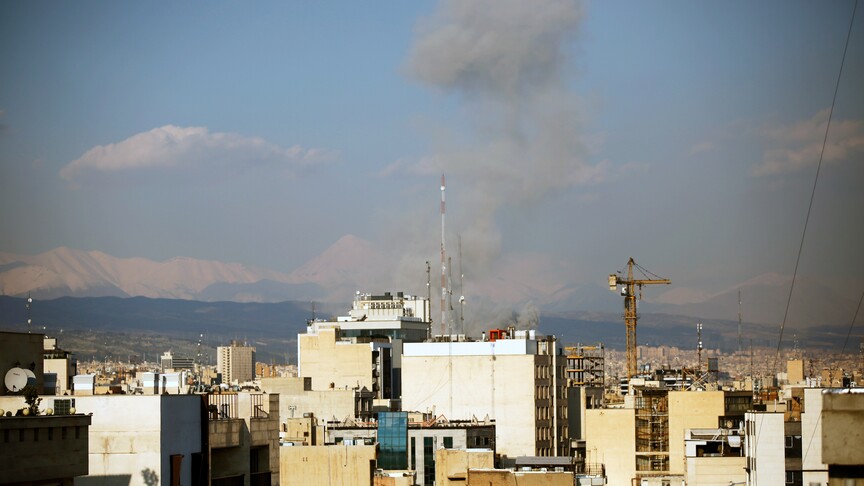
- Hormuz remains one of the agreement’s most contested issues, with Ali Vaez of International Crisis Group saying the two sides never agreed on the political meaning of its reopening
- ‘It is now a negotiation under fire … The two sides are now using military pressure as a component of the MoU negotiation,’ says MENA analyst Ryan Bohl
Renewed military exchanges between the US and Iran have exposed the fragile foundations of the Islamabad memorandum of understanding (MoU), with analysts warning that unresolved disputes over the Strait of Hormuz, sanctions relief, frozen Iranian assets and Lebanon threaten to derail the agreement before formal negotiations are complete.
Signed by the US and Iranian presidents on June 14, the MoU gave both sides 60 days to negotiate a comprehensive agreement aimed at ending months of conflict.
Experts say the deal succeeded in halting a war that neither side appeared capable of decisively winning. But they argue it was always more of a ceasefire framework than a lasting peace agreement, leaving politically sensitive issues deliberately vague in order to secure signatures.
“The ambiguities were what made the agreement possible, but they are now what could undo it,” Ali Vaez, International Crisis Group’s Iran project director, told Anadolu.
According to Vaez, Washington views the MoU as a phased process to gradually constrain Iran, while Tehran sees it as a bargain in which concessions should be immediately matched by tangible benefits.
“The biggest ambiguities concern sequencing, the Strait of Hormuz, sanctions relief, and the agreement’s reach into Lebanon,” he said. “In almost every case, the two sides agreed on broad principles while postponing the question that matters most: who moves first, and what exactly counts as compliance.”
Those differences have become increasingly visible as hostilities resume. On Wednesday, US President Donald Trump declared that the memorandum of understanding with Iran was “over,” casting fresh doubt over the future of the agreement.
Strait of Hormuz remains key fault line
Analysts say no issue better illustrates the competing interpretations of the MoU than the Strait of Hormuz, one of the world’s most important energy chokepoints.
According to Vaez, the two sides never agreed on what reopening the waterway would ultimately mean.
“Washington wants a return to unconditional freedom of navigation; Tehran believes the war proved that access through Hormuz can no longer be divorced from Iran’s own security interests.”
Ryan Bohl, a senior Middle East and North Africa analyst at the RANE Network, said Tehran expected the agreement to acknowledge its long-term influence over the strait.
“The Iranians believed that the MoU was going to be part of a process to formalize their control of Hormuz that they believe they won through the war, and the Americans believed that it was off the table.”
He argued that conflicting signals from Washington have further complicated negotiations.
“It is now a negotiation under fire. What is happening is the two sides are now using military pressure as a component of the MoU negotiation.”
John Calabrese, a senior fellow at the Middle East Institute, said ambiguity was almost inevitable given that the agreement was negotiated during wartime.
“Specific provisions lacking clarity include paragraph 5, which commits Iran merely to make ‘arrangements using its best efforts for the safe passage of commercial vessels with no charge, for 60 days only’ – which is neither an unconditional nor a permanent guarantee of free transit.”
Frozen assets deepen mistrust
Another major point of contention is the timing of sanctions relief and the release of frozen Iranian assets, including a proposed $300 billion fund.
Calabrese noted that while paragraph 11 states the US “undertakes to make” the assets “fully available,” the two governments fundamentally disagree over what that commitment entails.
“US officials have taken the position that the release of these funds is compliance-based, the Iranian side from the very outset has insisted that no such conditions be attached. You can see here two underlying problems: deep mutual distrust and the two sides vying for leverage.”
Vaez described the dispute as the agreement’s most consequential sequencing issue.
“Washington sees economic relief as leverage to be released in return for Iranian steps; Tehran sees it as payment already due under the MoU. If that gap is not bridged, each side will conclude that the other is trying to pocket its concessions while postponing its own – a recipe for the agreement to unravel.”
Bohl said Tehran believes access to the assets should have followed automatically after signing the accord.
“The Iranians believed that they had earned the assets by signing the MoU, and that the least the Americans could do to help rehabilitate their economy is to provide the relief they believed they were owed under prior rounds of negotiations with the Biden and Obama administrations.”
By contrast, he said, Washington continues to see the funds as leverage.
“On the other hand, the Trump administration still saw that as leverage to extract further concessions from the Iranians. They still wanted to see the Iranians take steps to leave Hormuz alone, to take steps towards nuclear inspections and verification. They wanted to see concrete steps from the Iranian side.”
Lebanon dispute complicates implementation
Analysts also say that Israel’s continuing attacks on Lebanon have become another test of the agreement’s durability.
Bohl argued that the issue exposed differing expectations over the scope of the MoU.
“Initially we saw that the Americans didn’t think the Lebanon angle was all that important. Then the Iranians made it very clear that Lebanon was.”
He said the issue should have been resolved before the agreement was signed.
“That was a critical part of this MoU that should have been hashed out before it was signed, and it was only something that was implemented after the Iranians threatened to reclose Hormuz and … carried out an attack on Israel.”
“That was just the first real stumbling block that was able to be relatively resolved, in part because the US doesn’t care too much about Israel’s campaign in Lebanon.”
For analysts, the renewed fighting suggests the MoU’s greatest weakness lies not in what it contains, but in what it leaves open to interpretation.
Without agreement on sequencing, compliance and the scope of each side’s commitments, they warn, the diplomatic framework risks collapsing under the weight of the very ambiguities that made it possible.