Anadolu Ajansı © 2026


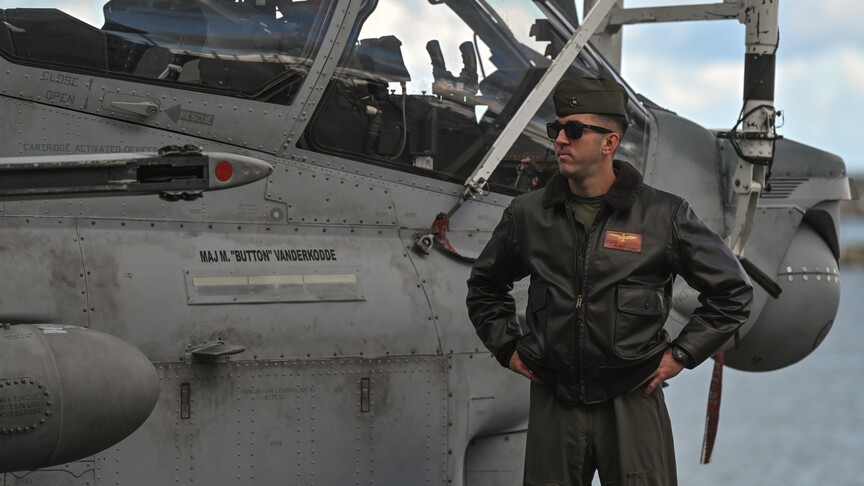
The roughly 5,000 sailors aboard the USS Abraham Lincoln have spent nearly nine months on deployment, including more than 200 consecutive days at sea without a port call.
Sailors' families, congressional lawmakers and media reports have described mold-covered showers, rationed meals, broken toilets and severe mental health strain, including reports of crew members attempting to jump overboard.
The Lincoln is one of several US aircraft carriers deployed to the region as the war with Iran has placed growing demands on the US Navy.
US military commanders have rejected suggestions of a systemic crisis aboard the carrier, pointing to high reenlistment figures and mental health data that they say compare favorably with the rest of the carrier fleet.
On Friday, Acting Navy Secretary Hung Cao announced the Lincoln’s return home, stating that the Lincoln crew "crushed their deployment."
“There is no question our young men and women have been pushed to their limits – but they have never broken,” he added in a social media post.
However, scrutiny is mounting in Congress, with lawmakers demanding answers over the conditions sailors have endured during the extended deployment.
Driven by the conflict with Iran, the US Navy has maintained an unusually concentrated presence in the Middle East, with multiple carrier strike groups breaking modern-era records for consecutive days spent at sea.
The USS Gerald R. Ford left Norfolk, Virginia, in June 2025 and was rerouted to the Caribbean four months later to support operations linked to the capture of Venezuelan leader Nicolas Maduro before being sent to the Middle East in February as tensions with Iran escalated.
After an 11-month deployment, nearly 4,500 sailors aboard the Ford returned to Norfolk in May for repairs, which included addressing a shipboard fire and a planned sewage system upgrade. The return wrapped up the longest carrier strike group deployment since the last days of the Vietnam War, according to US Naval Institute News.
The Lincoln left San Diego on Nov. 21 for what was originally billed as a seven-month deployment. Later redirected to the Middle East, it arrived in the region in January, before its mission was extended following the outbreak of the US-Israeli war with Iran on Feb. 28.
As of Tuesday, the carrier had been deployed for more than 270 days. That included more than 200 consecutive days at sea between a December stop in Guam and a brief visit to Oman on July 7.
The USS George H.W. Bush joined the buildup in April, giving Washington three active carriers in CENTCOM's area of responsibility simultaneously, supported by more than 200 aircraft and roughly 15,000 sailors and Marines.
The USS George Washington, the Navy's only aircraft carrier permanently based overseas, in Yokosuka, Japan, has since been ordered to the Middle East to relieve the Lincoln.
US officials told The Wall Street Journal the rotation had been planned before recent reports about crew welfare surfaced.
Initial indications of difficult conditions aboard the ships emerged online.
USA Today published photographs on April 16 showing sparse meals served aboard the Lincoln and the USS Tripoli, which also formed part of the Iran operation, including one tray containing carrots, a hamburger patty and what was described as a gray slab of processed meat.
Later accounts from families gathered by MS Now described some meals as consisting of half a cup of rice and two tortillas.
Newsweek published another set of photographs on April 24, reporting that one sailor's family said he had lost 17 pounds (nearly 8 kilograms) at sea. A separate report by Lee Enterprises cited a mother who said her son had lost 20 pounds (9 kilograms).
Families also reported shortages of basic personal care items such as soap and toothpaste. CNN cited a sailor who described visible black mold and water dripping from ceilings near showers and areas where crew members waited for meals.
The concerns eventually reached Congress.
Democratic Sen. Richard Blumenthal of Connecticut wrote to Defense Secretary Pete Hegseth and acting Navy Secretary Hung Cao demanding answers about the sustainability of the Navy's current deployment model.
Blumenthal cited reports of supply shortages, potential water contamination, plumbing failures, deteriorating mental health, safety concerns and major mail disruptions that left care packages stranded in transit.
The mounting pressure culminated in an Aug. 6 town hall in San Diego, where roughly 200 family members questioned Navy leaders directly.
While families have raised alarms over living conditions, Navy leaders have defended the ship's maintenance record and disputed some of the reports.
At the San Diego town hall, Navy representatives said a "stubborn clog" had temporarily affected toilets in one part of the Lincoln.
They also suggested that what sailors believed was mold in showers was likely mildew caused by ventilation problems. In a response to CNN, the Navy maintained that the Lincoln did not suffer from "chronic problems with mold in showers."
Documents obtained by NPR through a Freedom of Information Act request and later reported by The Wall Street Journal showed that the USS Gerald R. Ford's vacuum-based sewage system, which serves roughly 650 toilets, suffered 205 breakdowns over a four-day period in March 2025. Maintenance crews worked shifts of up to 19 hours to keep the system operating.
Navy officials have also sought to explain shortages aboard the Lincoln.
Vice Adm. Douglas Verissimo said at the San Diego town hall that fighting in the region disrupted logistics operations in Bahrain, creating major supply backlogs and forcing the Navy to prioritize certain shipments, with food deliveries first, hygiene products second and personal mail third.
Chief of Naval Operations Adm. Daryl Caudle said it is normal for fresh produce to run out between resupply missions and said the food complaints he had received were primarily about "the vegetable of the day."
The Navy also pushed back against reports of shortages on other vessels.
After reports claimed that female service members aboard the USS Boxer, which was also deployed in the Middle East, were rationing feminine hygiene products, the US 5th Fleet denied that supplies were running low.
The command said the Boxer had made four port visits since departing San Diego in March, had spent less than two months at sea since its most recent stop, remained fully stocked and had received two major mail deliveries in August.
Concerns have extended beyond food and living conditions to the psychological strain of the prolonged deployment.
In early August, a sailor went overboard from the Lincoln while wearing a life vest and was rescued within an hour by a search-and-rescue helicopter. US officials told CNN that the Navy internally classified the incident as a mental health episode.
One official said the ship's internal tracking of reports of suicidal thoughts had actually declined in recent months.
Family members speaking to Military Times, however, described serious psychological strain among some sailors. Annabelle Loma said her husband was "burnt out" and had attempted to jump overboard, while Maria Rodriguez said her husband had physically pulled a fellow sailor back from the edge of the flight deck.
At the Aug. 6 town hall, one spouse shared a message from her husband saying he "hopes he doesn't wake up tomorrow."
Democratic Rep. Mike Levin of California also relayed an account from a family who said the ship's medical officer had warned that the crew needed to reach port soon "or people are going to start losing their minds."
Navy commanders, however, dispute suggestions that the incidents point to a systemic mental health crisis.
Adm. Brad Cooper, commander of US Central Command, said after visiting the Lincoln that the carrier had among the lowest numbers of mental health cases in the Navy's fleet of 11 active aircraft carriers
He acknowledged that prolonged service at sea remains "uniquely challenging" and said "not all is perfect."
In an Aug. 13 statement, Central Command rejected reports of a spike in suicidal thoughts and pointed to the Lincoln's 84.4% crew reenlistment rate, among the highest in the fleet, as evidence of resilience.
The reports have prompted calls for greater scrutiny in Congress.
Sen. Ruben Gallego, a combat veteran, described the reported treatment of sailors as "not just disgusting; it's dangerous" and called for a bipartisan Senate delegation to investigate.
Rep. Seth Moulton, a Marine veteran and member of the House Armed Services Committee, called the reports "horrific" and said the committee would investigate.
White House spokesperson Olivia Wales said that the administration remained committed to ensuring the military had the necessary resources.
Hegseth has disputed the severity of the reports, telling reporters in Panama that descriptions of conditions aboard the carrier had been "completely misrepresented" and praising sailors for enduring "austere conditions with less port calls."
He had previously dismissed the initial complaints in April as "fake news."
Senate Minority Leader Chuck Schumer responded by calling for Hegseth's dismissal.
"Now our brave sailors are paying the price in a horrific and unfathomable way. Pete Hegseth must be fired immediately," Schumer said.
Following these developments, US President Donald Trump confirmed that the Lincoln was being replaced in the Middle East while also rejecting reports of the poor living conditions aboard the carrier.
"It was fake news reporting from CNN,” Trump said at the White House Monday. “The Lincoln has been out there for a period of time – a good period of time – but over the years, we’ve had them out there much longer.”
news_share_descriptionsubscription_contact