US sanctions on ICC face broad opposition worldwide
European nations, Canada, Japan reject Washington's sanctions as EU considers measures to protect international court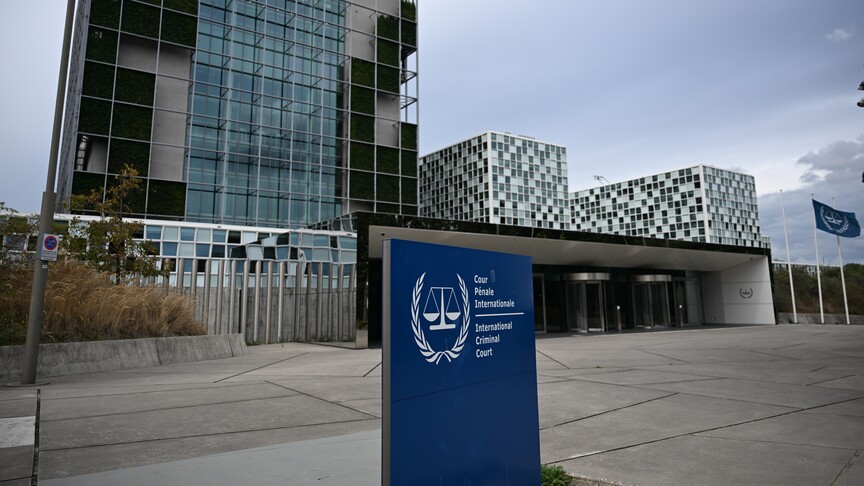
- Israeli Prime Minister Benjamin Netanyahu, whose arrest ICC has sought since November 2024, backs US sanctions
The US decision Friday to impose sweeping sanctions on the International Criminal Court (ICC) drew widespread opposition Friday, including from Washington's closest allies, exposing a diplomatic divide over international justice amid the court's pursuit of Israeli leaders accused of war crimes in Gaza.
Six European countries, Canada and Japan jointly rejected the sanctions, while the EU and UN Secretary-General Antonio Guterres separately condemned Washington's decision.
US Secretary of State Marco Rubio announced the sanctions on Friday, warning that Washington would continue its campaign to dismantle the court unless it ended what he described as threats against Americans.
“Either the ICC will end its threats, or we will end the ICC,” Rubio said, urging US allies that are members of the court to intervene.
The escalation came amid longstanding US opposition to the court's jurisdiction over American nationals and its November 2024 arrest warrants for Israeli Prime Minister Benjamin Netanyahu and former Defense Minister Yoav Gallant over alleged war crimes in Gaza.
Neither the US nor Israel is a member of the ICC, which has 125 states parties.
- US allies reject sanctions
In a joint statement challenging Washington's decision, the foreign ministers of Denmark, Germany, France, Italy, the Netherlands and the UK, alongside their Canadian and Japanese counterparts, expressed their strong disagreement with the sanctions.
"We, the undersigned States Parties to the Rome Statute of the International Criminal Court (ICC), reaffirm our continued and unwavering support for the independence, impartiality, and integrity of the ICC," they said.
The eight countries warned that the sanctions could significantly affect the court's operations, staff and their families, pledging to work together to uphold international accountability.
Switzerland separately voiced opposition to the measures aimed at “undermining the independence of the Court and its ability to fulfill its mandate.”
Dutch Prime Minister Rob Jetten also vowed to defend the Hague-based court.
"I think now the message to the United States is crystal clear: We will do whatever we need to defend the ICC," he said.
Belgian Foreign Minister Maxime Prevot strongly condemned the sanctions and called for the activation of the EU Blocking Statute to protect the court and those supporting its work.
"The Court's independence cannot depend on whom it investigates," Prevot said.
- EU considers measures to protect court
The European Commission described Washington’s announcement as "deeply regrettable" and reaffirmed the bloc's commitment to protecting the ICC's independence and operations.
"The EU stands ready to take any necessary measures to enable the Court to carry out its work both in investigating and prosecuting war crimes and crimes against humanity, and to protect the interests of EU operators within the Single Market," it said.
The bloc pledged to work with all 125 ICC member states to safeguard the institution and said the six-month period before the sanctions take effect provided an opportunity for dialogue with Washington.
Likewise, European Council President Antonio Costa said the EU would adopt "adequate measures" to protect the court, its members and staff.
- UN warns of blow to international justice
For the United Nations, Secretary-General Antonio Guterres condemned the sanctions, warning that they threatened efforts to hold perpetrators of serious international crimes accountable.
"Today's decision marks a serious blow to our collective pursuit of international criminal justice, of which the ICC is a key pillar," he said in a statement issued through his spokesperson.
Guterres also expressed deep alarm over the potential impact on the court's ability to carry out its mandate and urged countries to uphold their obligations under international law.
- ICC vows to continue work despite sanctions
The ICC strongly rejected the US measures against itself, describing them as an assault on the rule of law and an attempt to obstruct justice.
The court said the sanctions sought to disrupt its operations and intimidate those working for or cooperating with the institution.
"The Court will continue to fully discharge its mandate, with independence and impartiality, acting only on the basis of the law and the evidence, for the sake of the countless victims of grave crimes," ICC President Tomoko Akane said.
Akane, who was personally sanctioned by Washington in August, is among several ICC judges and prosecutors targeted by the US before the latest measures against the court itself.
The court urged its 125 member states to take concrete steps to safeguard its operations, stressing that the dispute went beyond the future of a single institution.
"This is not just about defending a single institution, but about safeguarding the international order grounded upon the rule of law," it said.
- Israel sole public supporter of US sanctions
Israel, meanwhile, was the only country to publicly welcome the US sanctions among governments that had issued reactions as of Friday.
Prime Minister Benjamin Netanyahu praised President Donald Trump and Secretary of State Rubio for the decision.
“The ICC is not a court. It is a political body that poses a mortal threat to law-abiding democracies worldwide and to the very idea of national sovereignty,” Netanyahu wrote on X.