By Evelyn T. Kpadeh
MONROVIA
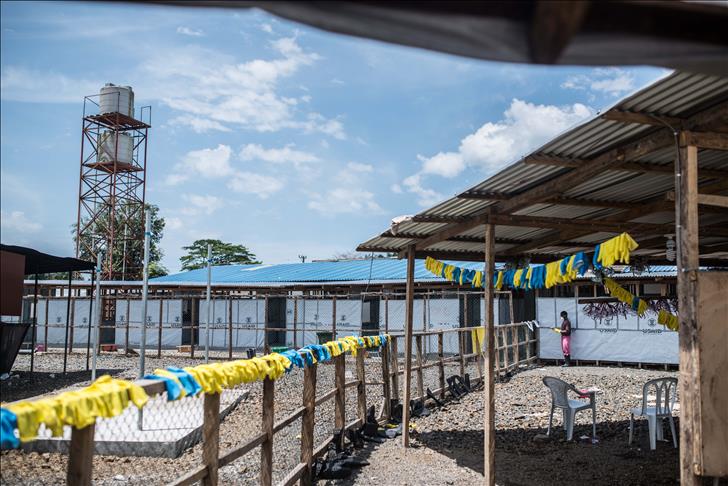
Liberians are finally breathing a sigh of relief – with the lifting of a nighttime curfew and the reopening of the country's borders – following a months-long Ebola nightmare.
"Ebola is going now from Liberia," Yatta Gballey, 30, told The Anadolu Agency jubilantly.
She knows Liberia is yet to be declared "Ebola-free," but believes the government's decision to lift a nighttime curfew and reopen the borders mean that the goal is within reach.
"Our numbers of Ebola cases aren't like those in Sierra Leone and Guinea," Gballey noted. "I am sure we will soon be declared Ebola-free."
President Ellen Johnson Sirleaf has ordered the lifting of the curfew – as of Sunday – which has remained in place since Ebola first hit the country in mid-2014.
She has also ordered the country's borders reopened.
On Aug. 20, 2014, Sirleaf, in an effort to contain the spread of Ebola, imposed a nationwide curfew prohibiting movement between 9pm and 6am.
On Sept. 8, as infection rates began to subside, she reduced the curfew to only six hours, starting at midnight.
Over the course of the last year, Ebola – a contagious disease for which there is no known treatment or cure – has killed nearly 9,177 people, mostly in West Africa, according to a Feb. 18 World Health Organization (WHO) status report.
In Liberia alone, Ebola has claimed at least 3,826 lives.
In recent weeks, however, the country has seen a sharp decline in new infections.
"The borders are now opened, but it doesn't mean Liberia is safe. It means Liberia has made significant progress containing the spread of the virus," acting Information Minister Isaac Jackson told AA.
"Unlike in times past, we were recording 50 to 100 cases a day. But today, we are only reporting about eight cases from all the Ebola treatment units," said Jackson.
Concerns
With most Liberians returning to normal life, some expressed hope that the government would keep the country's borders closed.
"Opening the border isn't a good idea," said Gballey.
"The government should just lift the curfew but keep the borders closed until Sierra Leone and Guinea are declared Ebola-free," she added.
But Jackson, the acting information minister, tried to reassure his skeptical compatriots.
"Liberia today has one of the best surveillance systems in the [West African] sub-region; it is very robust and better than before," he insisted.
The Liberian health authorities, the official said, would continue to implement Ebola-prevention procedures.
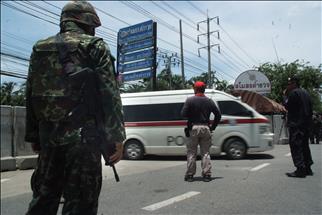
Security forces stationed at the borders, he added, would continue working with health authorities to ensure that Ebola safety protocols were observed at all entry points.
According to Jackson, anyone crossing the border will still have to undergo temperature checks, while commercial drivers have been cautioned not to transport sick people in their vehicles.
Liberia has promised to help its two Ebola-hit neighbors – Guinea and Sierra Leone – eradicate the deadly virus.
At a recent meeting in Guinean capital Conakry, representatives of the three countries – which have been the hardest hit by Ebola – vowed to achieve zero cases within 90 days.
Better business
Liberian business owners, meanwhile, are particularly excited by the prospect of reopened borders.
"I'm happy to hear that the government reopened the borders. At least prices will come down," businesswoman Suah David told AA.
"Because the borders were closed, commodity prices rose. We couldn't blame the distributors, because no goods were coming from Guinea or Sierra Leone," she recalled.
Now, Liberians can travel to the two neighboring states to do business.
Roland Davis, a Liberian clergyman, likewise welcomed the move, saying the border closure had almost driven his wife out of business.
"I want to thank the government," he told AA.
He believes opening the borders will help reduce commodity prices.
"Look at these goods we bring from Sierra Leone and Guinea. They're expensive now; we can hardly make profit," said Davis.
The clergyman, however, believes the decision to lift the nighttime curfew will have a downside.
"When the curfew was in effect, I would see fewer teen prostitutes on the streets," Davis said.
"But now that the government has lifted the curfew, street prostitution will increase again," he lamented.
Prostitution is illegal according to Liberia's penal code.