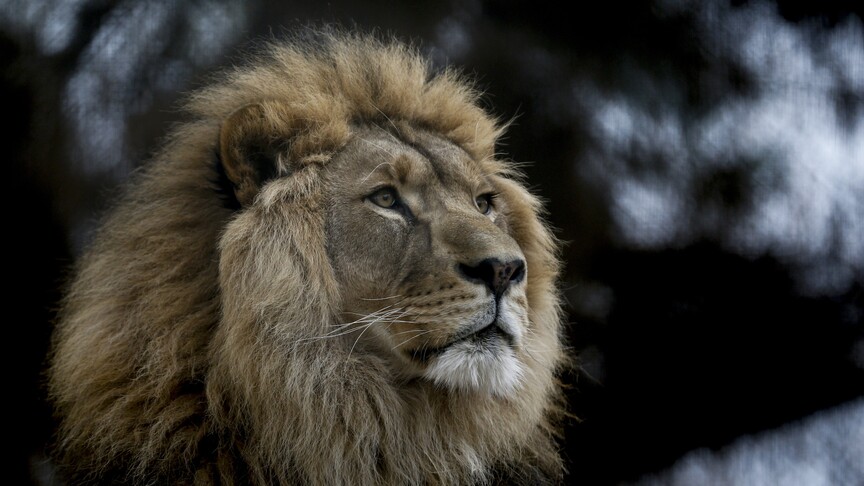
- Tanzania remains the world's biggest lion stronghold, while West and Central African populations face some of the steepest declines
- India's Asiatic lion population has rebounded to 891, highlighting how conservation efforts are producing sharply different outcomes
Once ranging across much of Africa, Europe, the Middle East and southwestern Asia, wild lions are now largely confined to fragmented populations in sub-Saharan Africa and a single population in western India.
World Lion Day, observed annually on Aug. 10, draws attention to the decline of one of the planet’s most recognizable predators and the conservation efforts that have produced sharply different results across its remaining range.
Determining exactly how many lions remain is difficult. Unlike India, which conducts a coordinated count of its Asiatic lions, Africa has no single continentwide census.
Estimates combine camera-trap surveys, sightings, tracking data, population models and expert assessments from different countries and years. Some figures include cubs, while others count only adults and older juvenile lions, meaning national totals cannot always be compared directly.
Here is the state of the world’s remaining wild lions in numbers:
23,000: The best available estimate
The Lion Recovery Fund estimates that about 23,000 wild lions remain in Africa, based on information compiled by the IUCN Cat Specialist Group’s African Lion Database.
The IUCN Cat Specialist Group estimated the African population at between 22,000 and 25,000 adult and subadult lions in 2025.
The group stresses that lion numbers remain uncertain because only a small proportion of their range has been systematically surveyed.
Earlier assessments estimated that Africa had about 35,000 lions in 2013. Differences in survey coverage and methodology mean the figure cannot be directly compared with the latest estimate, but long-term evidence points to a significant overall decline.
6.13%: A kingdom reduced
Lions occupied an estimated 566,675 square kilometers (218,795 square miles) in 2025, equivalent to just 6.13% of their historical range, according to the IUCN Cat Specialist Group.
They have disappeared from at least 16 African countries, including Egypt, Morocco, Algeria, Eritrea, Gambia, Lesotho and Sierra Leone, and may be extinct in several others.
Outside Africa, wild lions survive only in the Indian state of Gujarat.
Lions disappeared from Europe in ancient times and were gradually lost from North Africa, the Middle East and most of Asia between the 19th and mid-20th centuries. Türkiye’s last lions are believed to have disappeared in the late 1800s.
8,000: Tanzania remains the biggest stronghold
Tanzania is widely regarded as home to the world’s largest national population of wild lions, with conservation organizations estimating that around 8,000 remain in the East African country.
Other major populations are found in southern and eastern Africa.
South Africa has an estimated 3,490 free-roaming lions, including animals in transfrontier conservation areas, according to the South African National Biodiversity Institute. The country’s populations are considered stable or increasing in major reserves, although many live in fenced and intensively managed areas.
Botswana’s lion population is estimated at around 2,800, while Kenya’s 2021 national wildlife census counted 2,589.
Significant populations also survive in Zambia, Zimbabwe, Mozambique and Namibia, including in ecosystems extending across national borders.
West and Central Africa remain the regions of greatest concern. The largest West African population is estimated at only about 187 lions in the W-Arly-Pendjari complex spanning Benin, Burkina Faso and Niger.
891: India’s Asiatic lion comeback
India’s Asiatic lion population increased to 891 in 2025, up from 674 in 2020, according to the Gujarat government.
The rise to 217 animals represents an increase of about 32% in five years.
The recovery is even more striking over the longer term. Only about a dozen lions were believed to remain in Gujarat’s Gir forests in the late 19th century following widespread hunting and habitat loss.
Conservation measures helped the population recover steadily, but all remaining Asiatic lions are still confined to Gujarat’s Greater Gir landscape. Their concentration in one region leaves them vulnerable to disease outbreaks, extreme weather and other large-scale disasters.
As the population expands beyond protected areas, encounters with people, livestock, roads and settlements are also increasing.
34%: Decline over three generations
The IUCN Cat Specialist Group estimates that the lion’s occupied range contracted by 34% between 2004 and 2025, a period spanning approximately three lion generations.
It suspects the species’ population declined by a similar proportion during the same period, with the heaviest losses occurring in West and Central Africa.
The picture, however, is not uniformly negative.
In Senegal’s Niokolo-Koba National Park, the lion population has recovered from fewer than 10 animals to nearly 40 following increased protection and conservation work.
Lions have also been successfully reintroduced in protected areas in Rwanda, Malawi and Zambia.
Botswana provides an example of movement in the opposite direction, with its estimated population declining by about 20% from approximately 3,500 in 2015 to 2,800.
1 species, 2 subspecies
All living lions belong to the species Panthera leo, which is classified as “Vulnerable” on the International Union for Conservation of Nature’s Red List.
Scientists recognize two subspecies.
Panthera leo leo, which includes the Asiatic lion and populations in West and Central Africa, is classified as “Endangered.”
Panthera leo melanochaita, covering populations in eastern and southern Africa, is classified as “Vulnerable.”
The lion has also been assessed as “Largely Depleted” under the IUCN Green Status of Species, which measures how far a species is from fully recovering across its historical range.
What is driving the decline?
Habitat loss and fragmentation remain among the greatest threats as farmland, settlements, roads and other infrastructure expand into lion territory.
The decline of wild prey through poaching and the bushmeat trade can force lions to attack livestock, increasing conflict with farmers and leading to retaliatory killings through shooting, spearing or poisoning.
Lions are also caught and killed in wire snares set for other animals.
Other threats include targeted poaching for body parts, poorly monitored or unsustainable trophy hunting in some areas, disease, civil unrest and armed conflict that make protected areas harder to manage.
Conservation groups say the survival of lions will depend not only on protected areas but also on securing wildlife corridors, restoring prey populations and helping communities protect their livestock while benefiting economically from living alongside the predators.