Abbas Mimouni and Lina Altawell
08 July 2026•Update: 08 July 2026
- Court will examine appeals before confirming final results and paving way for parliament to convene
- Certification of results will launch constitutional process to form Algeria's next government
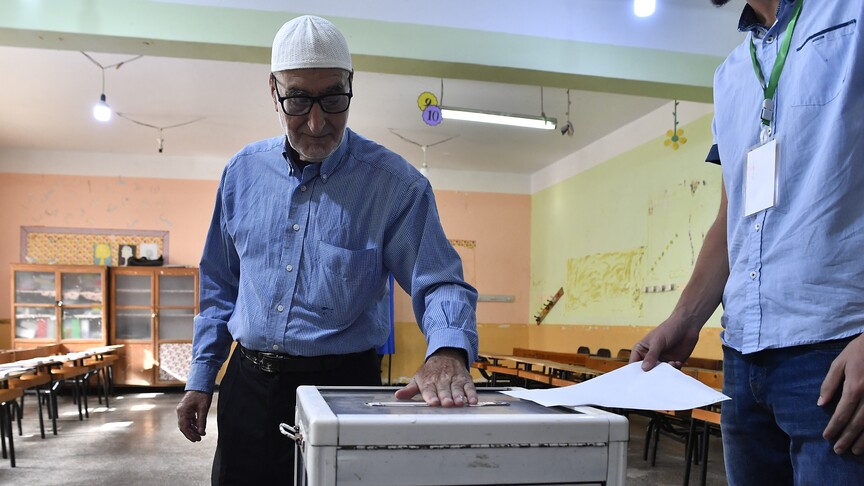
Algeria's legislative election entered its final constitutional stage on Wednesday after the Independent National Electoral Commission (INEC) referred provisional results to the Constitutional Court for review and certification.
The court's review will determine the final composition of parliament before lawmakers convene to elect a speaker and begin the constitutional process of forming a new government.
The election authority said in a statement that acting head Karim Khelfan handed the provisional election records to Constitutional Court President Leïla Aslaoui in accordance with legal procedures.
The submission included vote-counting and tabulation records required for the court to examine possible appeals and certify the final results.
Role of the Constitutional Court
With the transfer of the records, the election process moves into constitutional review.
Under Algeria's election law, political parties, candidate lists and individual candidates have 48 hours after the announcement of provisional results to challenge the outcome. The Constitutional Court then receives written responses before ruling on appeals within the legal deadlines.
If it upholds an appeal, the court may annul the disputed election in a constituency or amend the results and declare the legally elected candidate.
Certification of final results
After examining appeals, the Constitutional Court certifies and announces the final results.
Under Article 211 of the election law, the court must issue the final results within 10 days of receiving the provisional records from the election authority.
The certified results are then published in the Official Gazette, including voter turnout and the names of elected lawmakers, after which the newly elected People's National Assembly convenes in a special session to elect its speaker.
From parliament to government
Provisional results showed parties supporting President Abdelmadjid Tebboune securing a majority of seats, while several opposition parties returned to parliament after boycotting the 2021 elections.
Under Article 103 of the Constitution, a prime minister heads the government if the election produces a presidential majority, while a head of government is appointed if a parliamentary majority emerges.
Article 104 stipulates that the president appoints government members based on a proposal from the prime minister or head of government.
If the presidential camp holds the majority, Article 105 requires the president to appoint a prime minister to form a government and prepare an action plan based on the presidential program.
If a parliamentary majority is formed instead, the president appoints a head of government from that majority to form a cabinet and prepare its program. Should that process fail within 30 days, the president appoints another head of government.
Provisional election results
According to provisional results announced by Khelfan on Monday, the National Liberation Front won 90 seats in the 407-member People's National Assembly, followed by the National Democratic Rally with 73 seats and the Future Front with 59.
The Movement of Society for Peace, Algeria's largest Islamist party and the only opposition bloc in the previous parliament, secured 43 seats, while the National Construction Movement won 38.
Independent candidates placed sixth with 32 seats, down from 84 in the previous parliament.
Among opposition parties that returned after boycotting the 2021 elections, the Socialist Forces Front won 12 seats, the Voice of the People party secured 17, the Rally for Culture and Democracy won four seats, and the Workers' Party took three. The remaining seats were distributed among several smaller parties.
Once the Constitutional Court certifies the results, Algeria's newly elected parliament will convene, elect its speaker and formally begin the constitutional process of forming the country's next government.