Saudi Arabia’s advanced air defenses are repeatedly shooting down incoming missiles and drones as attacks from multiple directions test its ability to protect vital infrastructure and prevent a wider war.
The kingdom faces threats from Yemen’s Houthis, Iran-aligned armed groups in Iraq and the possibility of further escalation involving Tehran.
“Saudi Arabia has some of the best air defenses in the world, but they are also confronting more threats than before,” Anna Jacobs, a nonresident fellow at the Arab Gulf States Institute in Washington, told Anadolu.
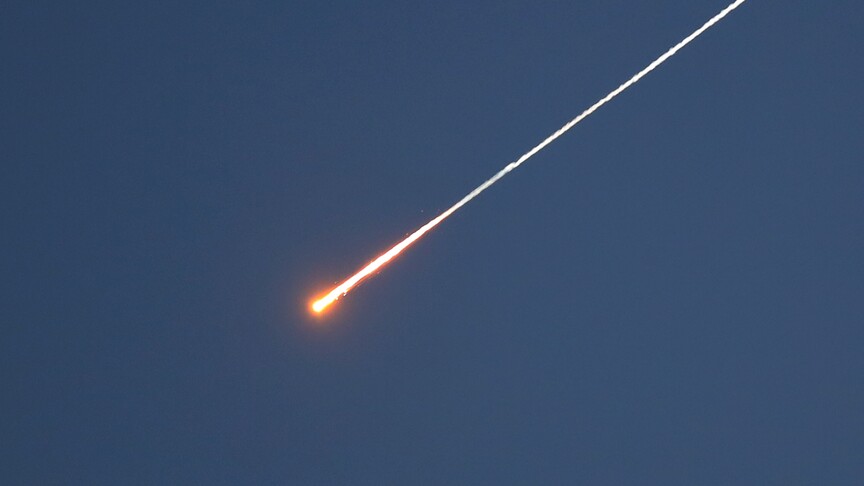
Recent interceptions illustrate that capability. In separate statements Wednesday and Thursday, the Saudi-led coalition said it intercepted and destroyed 12 drones across the country.
Saudi Arabia’s sophisticated defenses and ability to strike Houthi positions give it considerable military advantages. The challenge is translating those strengths into lasting protection against an adversary that can continue launching attacks.
Some have penetrated the kingdom’s defenses. An Oct. 10 Houthi attack on King Khalid International Airport in Riyadh killed 13 people and injured more than 300, marking Saudi Arabia’s deadliest attack in more than a decade.
Even successful interceptions can cause casualties. The Energy Ministry said falling debris killed two people and injured two others Wednesday when air defenses intercepted a drone targeting a facility at Aramco’s Shaybah oil field.
For Riyadh, sustaining protection across energy installations, airports, ports and military bases is also essential to attracting investment and advancing its economic transformation.
Saudi Arabia is seeking to strengthen its defenses through regional partnerships, particularly the Mecca Joint Defense Agreement signed with Türkiye and Pakistan on Aug. 7.
The pact treats an armed attack on any member as an attack on all three. At an emergency meeting in Riyadh on Oct. 5, the countries agreed to move toward rapidly deploying agreed forces and capabilities to the kingdom.
A bill seeking parliamentary approval of the agreement was submitted to Türkiye’s parliament Wednesday. Its explanatory memorandum stressed that the pact is exclusively defensive and that collective action requires consultation and agreement, subject to domestic legal requirements.
Pakistan has confirmed additional troop deployments under its separate 2025 bilateral defense agreement with Saudi Arabia, while further deployments under the trilateral pact remain subject to security needs.
Pakistani Foreign Ministry spokesperson Sajjad Haider Khan said on Oct. 9 that the alliance’s Riyadh headquarters would determine further deployments. He stressed that Pakistani forces would not enter Yemen to attack the Houthis.
Egypt has also signaled support. President Abdel Fattah al-Sisi sought parliamentary authorization on Oct. 18 for possible military assistance to Saudi Arabia.
The Houthis’ arsenal and ability to withstand repeated military campaigns make them a persistent threat, according to Robert Pinfold, an international security lecturer at King’s College London.
"The Houthis have proven very, very capable of absorbing blows in the past,” he told Anadolu.
“They have used the truce periods with Saudi Arabia and the UAE to significantly not just re-equip, but also upgrade their equipment and their armaments,” he added.
The group has deployed ballistic missiles, cruise missiles and drones against Saudi Arabia. Its attacks on maritime traffic have also threatened shipping routes important to regional trade and energy exports.
Saudi concerns also extend north toward Iraq. In July, Saudi Arabia and its regional partners assessed that the Houthis had launched attacks on Saudi territory from Iraq in coordination with Iraqi armed groups.
Jacobs said Riyadh was also concerned about a renewed US-Iran war and its implications for regional security.
On Wednesday, The New York Times reported that the US and Israeli militaries had developed specific plans for renewed strikes against Iran after the US midterm elections in November.
Saudi Arabia’s multilayered defenses include US-made Patriot missile batteries and the Terminal High Altitude Area Defense system, known as THAAD.
Recent coalition announcements show its forces confronting different weapons across the country. On Oct. 15, it reported intercepting a cruise missile over Medina and three drones elsewhere in the kingdom.
The Houthis denied carrying out attacks on Saudi territory that day in response to the earlier announcements.
Geography adds to the challenge. Saudi Arabia covers approximately 2.15 million square kilometers (830,000 square miles), with energy facilities, transport hubs and population centers spread across a vast territory.
Protecting these sites requires extensive radar coverage, early-warning systems and the ability to respond to weapons approaching from different directions.
Detection and interception depend on a weapon’s speed, trajectory and altitude, as well as the available warning time.
Repeated attacks can consume expensive interceptors and place demands on ammunition supplies and operational readiness.
Oil and gas facilities are particularly important because of their role in the Saudi economy and global energy markets. Damage could disrupt production and exports, while attacks on airports and ports could affect trade, tourism and investor confidence.
Saudi Arabia’s well-equipped air force allows it to strike Houthi targets in Yemen, but Pinfold argued that a decisive outcome would require effective and coordinated forces on the ground.
“The issue for the Saudis is they are not yet committing ground troops,” he said.
The Houthis’ ability to disperse weapons, relocate launch systems and conceal military assets makes their capabilities difficult to eliminate through airstrikes alone. Yemen’s mountainous terrain adds to that challenge.
On the ground, Riyadh has relied on anti-Houthi forces within Yemen, Pinfold said, adding that these groups had different political allegiances and had not always operated under a unified command.
“Even if the Saudis have a very robust and effective air force, they don't yet have a sufficiently coordinated and effective source of boots on the ground to carry out any sustained and prolonged anti-Houthi campaign,” he said.
Saudi Arabia’s intervention in Yemen, launched in 2015, did not eliminate the Houthi threat. Another sustained campaign would carry military and political risks without guaranteeing lasting security.
Riyadh’s diplomatic challenge extends from negotiating with the Houthis to managing relations with Iran, as it seeks to contain attacks without widening the conflict.
Pinfold said the Houthis appeared to be seeking an arrangement that would consolidate their position while securing further concessions from Saudi Arabia.
“The Houthis are not necessarily trying to beat the Saudis, they're just trying to establish a victor's peace, or at least a victor's … status quo within Yemen,” he said.
He noted that previous arrangements had included Saudi financial support for public-sector workers in Houthi-controlled territory as part of efforts to maintain stability.
Jacobs said Riyadh was continuing to engage Tehran even as its frustration grew.
“Saudi policymakers continue to use diplomacy and engage in dialogue with Iran, and they will continue these tracks, but their patience is clearly waning and we may see more military escalation scenarios than earlier in the war,” she said.
Saudi Arabia must balance efforts to deter attacks against the risk that further military action could widen the conflict, she added.
Yet Jacobs argued that a complete military defeat of the Houthis was unlikely, leaving Riyadh facing an eventual return to negotiations.
“The bottom line is that Saudi Arabia has few good options,” she said.
news_share_descriptionsubscription_contact

contact_the_ombudsman
is_there_an_error_in_this_story