With the US weighing a potential military operation to seize Iran’s highly enriched uranium, experts warn that such a mission would face significant intelligence, military and logistical challenges – from locating the material to extracting and transporting it under hostile conditions.
"It would be difficult to identify, locate, and extract all of it," Richard Nephew, a prominent American expert on economic sanctions, nuclear nonproliferation and Iran policy, told Anadolu.
According to the International Atomic Energy Agency (IAEA), Iran had accumulated about 440.9 kilograms (972 pounds) of uranium enriched up to 60% purity – one step below the roughly 90% level considered weapons grade.
However, the status of part of that stockpile remains unclear following the 2025 strikes and the suspension of regular inspections.
The question of the stockpile’s location has become central, with its possession and potential transfer a key issue in ongoing US-Iran tensions following the recent war.
In March, Iran’s Foreign Minister Abbas Araghchi said the stockpile had been buried under rubble at damaged nuclear facilities.
He said recovery is possible, but Iran has no immediate plans to retrieve the material.
Earlier this month, US President Donald Trump said Iran will not be allowed to enrich uranium and that Washington will retrieve the material, while also acknowledging the retrieval would be a “long and difficult process.”
Uncertainty over location
Until June 2025, Iran operated three main enrichment facilities – Natanz, Fordo and Isfahan – before Israeli and US strikes targeted nuclear infrastructure.
Experts say there is no independent confirmation the uranium remains at those sites.
Robert Kelley, a veteran nuclear engineer who worked in the US Department of Energy’s nuclear weapons complex, told Anadolu that the stockpile may have been moved ahead of anticipated strikes.
He pointed to a May 22, 2025 communication from Iran to the IAEA, in which Tehran said it reserved the right to take “special precautions” to protect its enriched uranium amid rising tensions.
That statement, Kelley said, suggested preparations may have been made to relocate sensitive material.
The IAEA in February said in a now-derestricted document that the agency could not verify whether Iran had suspended all enrichment-related activities or determine the size of uranium stocks at facilities hit in last year’s strikes.
Because of limited access, the IAEA said it could not provide information on the “current size, composition or whereabouts” of Iran’s enriched uranium reserves.
“It would have been incredibly risky to leave the material at Fordo,” Kelley said, referring to the deeply buried facility.
Production of the material is slow, he added, with Iran capable of filling roughly one cylinder every three weeks at facilities such as Fordo.
Those cylinders, he said, were likely transferred soon after production to other locations, particularly Isfahan, where inspectors from the IAEA had previously verified their presence.
US officials believed in June 2025 that underground structures at Isfahan held a large share of the stockpile, according to media reports.
Kelley said there is no clear evidence that Isfahan’s underground facilities were significantly damaged in the strikes.
US B-2 bombers did not use bunker-buster bombs on Isfahan, as the site was considered too deep, according to a briefing by Joint Chiefs of Staff Chairman Gen. Dan Caine. Instead, it was struck by Tomahawk missiles.
Kelley dismissed claims the material had been destroyed, criticizing Trump’s references to “nuclear dust.”
“That’s not a scientific term,” he said, noting that storage containers are designed to remain intact even if surrounding structures are hit.
He added that uranium hexafluoride (UF6), a compound used in enrichment, is often misunderstood.
“A lot of people say it's a gas, that’s the first mistake,” he said. “It's a white solid crystal – it looks like quartz crystals – in a can. It's gas when it's in the centrifuge because it's been heated up and taken to a very low pressure.”
He cited reports saying Iranians managed to open a small hole back into Isfahan.
"If one person can crawl through, you can drag a 50-kilogram (110-pound) tank out of there, a bottle of UF6 solid."
Each cylinder weighs around 50-55 kilograms (110-121 pounds) and can be carried by two people, he added.
"The idea that that stuff is locked up there irreversibly, I think, is not reasonable,” he said. “Where is it? It could be anywhere."
‘Dangerous operation’
US media reported that military planners briefed Trump on a complex operation to extract the enriched uranium that could involve thousands of troops and heavy equipment over several weeks.
The plan could require neutralizing defenses and establishing a foothold, possibly through a parachute assault, as well as securing territory for logistics and extraction operations.
Experts say that even if the location is known, recovering the material by force would be extremely difficult.
"It would probably require hundreds – if not more than 1,000 personnel to do this effectively – and presumably that would be while under fire," Nephew said. "No one would recommend that."
He said any operation would need heavy equipment to remove debris, teams to identify traps, hazards and the material, as well as specialized handling and transport systems, especially by air.
"To do this while under fire means you’d require weapons, ammunition, and so forth. It is not impossible, but it is hard,” he said.
Nephew added that as long as the material remains sealed in cylinders and properly packaged, it can be transported safely.
"The biggest issue would be it being compromised by an attack – say, a drone strike on trucks moving it around,” he said.
Kelley said even under the assumption the material is at Isfahan, the operation would be highly complex.
"They'd have to dig under enemy fire, and they'd have to bring food for the people and places for them to sleep because it wouldn't be done overnight,” he said. “It's a pretty big dangerous operation."
Past precedent
The US has previously secured nuclear material abroad, most notably during Operation Sapphire in 1994, when it helped Kazakhstan transfer roughly 600 kilograms (1,322 pounds) of weapons grade uranium to the United States.
However, that mission was carried out with the cooperation of the host government – unlike this potential operation in Iran.
"Basically, the US went to the Kazakhs and said that the material is very valuable ...I think it was something nominal like $50 million. Just let us do it," said Kelley.
He added that Iran could also work in tandem with the US. If Iran agreed, they could bring in specialized teams to dig out the material or transport containers safely.
He dismissed suggestions the IAEA would participate in a military operation.
"I would tell you there's zero chance the IAEA would be involved in an American military operation to extract those materials,” he said.
While the IAEA worked closely in previous operations such as in Iraq, he said the agency would not put its people into the field as part of an American military team.
Risks of contamination, safety
Kelley said radiation risks from uranium stored underground are relatively limited, noting basic protective measures such as clothing and hand washing would likely suffice for workers.
However, he warned of risks related to “criticality safety,” where concentrated nuclear material can trigger an uncontrolled reaction.
He stressed the importance of keeping containers separated.
"If, let's say that a bunch of special forces guys got their hands on six of them and put them in a helicopter stacked one on another, they might kill everybody in the helicopter with a nuclear reaction."
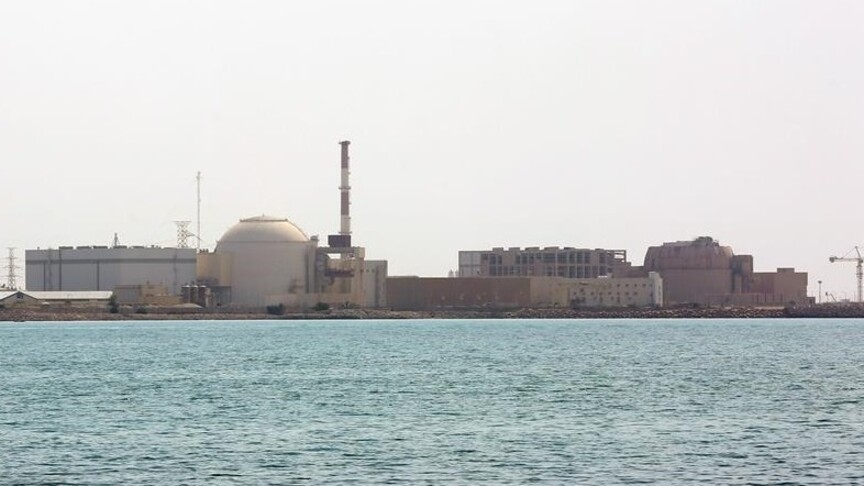
He also raised concerns about potential attacks on Iran’s Bushehr nuclear power plant – Iran’s only operational nuclear station, which provides roughly 2% of Iran’s electricity.
“If for some reason they attacked the Bushehr reactor... then you could cause a tremendous accident, not as big as Chernobyl, but more like Fukushima, and that would be really bad."
news_share_descriptionsubscription_contact