Mucahithan Avcioglu
08 May 2026•Update: 08 May 2026
For the second straight day, no major commercial ships passed through the Strait of Hormuz in the last 24 hours as of 0900GMT Friday, making it 48 hours without any such passages in the contested strait, according to ship tracking data compiled by Anadolu.
The dearth of ships making the passage came as renewed US-Iran tensions and rising security risks deepened disruptions in one of the world’s most critical energy transit corridors.
Commercial traffic through the waterway has sharply declined in recent weeks, with many operators rerouting ships or avoiding the Gulf due to attacks on vessels, signal jamming, and uncertainty over passage conditions.
The latest halt came after reports of alleged clashes between Iranian and US forces in and around the Strait of Hormuz.
Iranian naval forces late Thursday allegedly attacked three US warships in the strait, while the US military reportedly carried out airstrikes targeting Iran’s Qeshm Port and Bandar Abbas.
Ebrahim Zolfaqari, spokesperson for Iran’s Khatam al-Anbiya Central Headquarters, said the US military violated the ceasefire by attacking an Iranian oil tanker.
Zolfaqari also alleged that US forces targeted another vessel entering the Strait of Hormuz off the coast of Fujairah in the United Arab Emirates.
For its part, US Central Command (CENTCOM) claimed that Iran carried out “unprovoked” attacks on US naval assets transiting the strait and that American forces responded “in self-defense.”
US President Donald Trump said three US destroyers allegedly targeted by Iran while moving through the Strait of Hormuz toward the Gulf of Oman were not damaged.
“There was no damage done to the three destroyers, but great damage done to the Iranian attackers,” he said.
3 cargo-empty ships of Iranian Tanker Company crossed US blockade
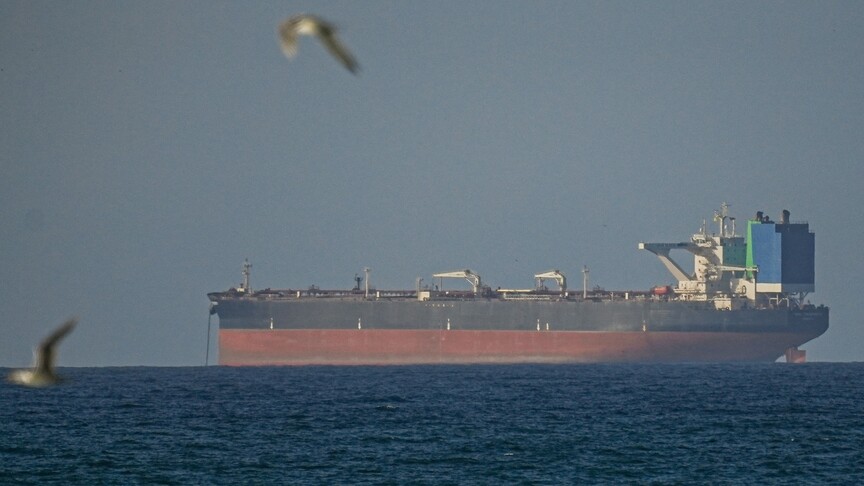
Adding to the tensions, three cargo-empty tankers belonging to the National Iranian Tanker Company crossed through the US Navy blockade line over the past two days after returning toward Iran via Pakistan’s Exclusive Economic Zone, maritime intelligence firm TankerTrackers said Friday.
The three vessels have a combined crude-carrying capacity of 5 million barrels, the firm said.
TankerTrackers said two of the tankers were confirmed on satellite imagery, while a third vessel, the Hasna, appeared on the Automatic Identification System (AIS) late Thursday off the coast of Shinas, Oman, some 254 nautical miles, or 470 kilometers, west of the blockade line.
The waterway had already seen rare and risky transits by Western-linked vessels in recent days. The French-owned CMA CGM Saigon reappeared off Oman’s coast late Wednesday after disappearing from tracking systems in the Persian Gulf, suggesting that the container ship crossed the strait with its AIS switched off amid intensified signal jamming in the area.
On Tuesday, another French-owned vessel, the CMA CGM San Antonio, was attacked while transiting the strait, injuring crew members and damaging the ship.
The latest halt also followed a reported attack on a Chinese-owned large oil tanker near the Strait of Hormuz on Monday. The incident reportedly occurred off the United Arab Emirates’ Al Jeer port and caused a fire on the ship’s deck.
Iran’s Islamic Revolutionary Guard Corps Navy said Wednesday that ships were complying with new transit regulations set by Tehran in the Strait of Hormuz.
The IRGC Navy earlier urged vessels to use only designated routes when transiting the strait, warning that deviations would be considered unsafe and could prompt “decisive action.”
The Strait of Hormuz links the Persian Gulf with the Gulf of Oman and the Arabian Sea and is a key artery for global oil, liquefied natural gas, and refined fuel trade. Its disruption has revived concerns over global supply security and lent support to oil prices.