Qatar said on Friday that official records it submitted to the UN show Iranian missiles struck civilian, commercial and residential areas in the country, rejecting Tehran’s attempt to cite a Qatari document as evidence that its attacks were limited to US military facilities.
Foreign Ministry spokesman Majed Al-Ansari made the remarks in a statement responding to a post on US social media company X by Iranian Foreign Ministry spokesman Esmaeil Baghaei.
Baghaei cited a safety and security risk assessment prepared by Qatar for the ITU Plenipotentiary Conference, claiming the document confirmed that Iranian strikes exclusively targeted US military facilities in Qatar and did not target civilian areas, except for gas facilities in Ras Laffan that he alleged were being used in US military operations against Iran.
Qatar hosts the Al Udeid Air Base, which houses the Combined Air Operations Center responsible for command and control of air operations across the US military’s Central Command area of responsibility, as well as a forward headquarters for the command, according to US military information.
“If the Iranian side wishes to reference official documentation, we invite it to refer to the record formally submitted by the State of Qatar to the United Nations, rather than selectively quoting a security risk assessment prepared for operational purposes,” Al-Ansari said.
“Qatar’s identical letters dated 1 March 2026 (S/2026/110) documented the launch of Iranian missiles over civilian, commercial and residential areas, resulting in damage and injuries to 16 people. Qatar’s letter dated 20 July also documented further attacks that injured three people, including a child,” he added.
The attacks came amid the war that erupted on Feb. 28, when the US and Israel launched large-scale military strikes against Iran, followed by Iranian attacks on Israel and countries across the region, including Qatar.
On the same day, UN Secretary-General Antonio Guterres condemned the US and Israeli strikes on Iran, as well as subsequent Iranian attacks that he said violated the sovereignty and territorial integrity of Qatar, Bahrain, Iraq, Jordan, Kuwait, Saudi Arabia and the United Arab Emirates.
Since the beginning of the war, Qatar has sent letters to the UN and the Security Council documenting Iranian attacks on its territory.
“The document now being cited by the Iranian side is a safety and security risk assessment prepared for the ITU Plenipotentiary Conference. It is neither a comprehensive factual record nor a legal assessment of the events,” said Al-Ansari.
“In fact, it expressly acknowledges direct attacks inside the State of Qatar, including the 18 March attack on gas facilities in Ras Laffan, and refers to the temporary closure of Qatari airspace and the impact on civilian life. Selectively extracting a sentence from that document while disregarding its broader context is therefore misleading.”
Al-Ansari said the success of Qatar Armed Forces in intercepting Iranian missiles and drones “does not diminish the gravity of these attacks, nor does it absolve those responsible of accountability.”
“It is regrettable that the attack on Ras Laffan has been described as ‘alleged,’ despite having been formally documented in Qatar’s letter S/2026/207, particularly given that these facilities are national assets belonging to the Qatari people and form an integral part of the global energy security architecture,” he said.
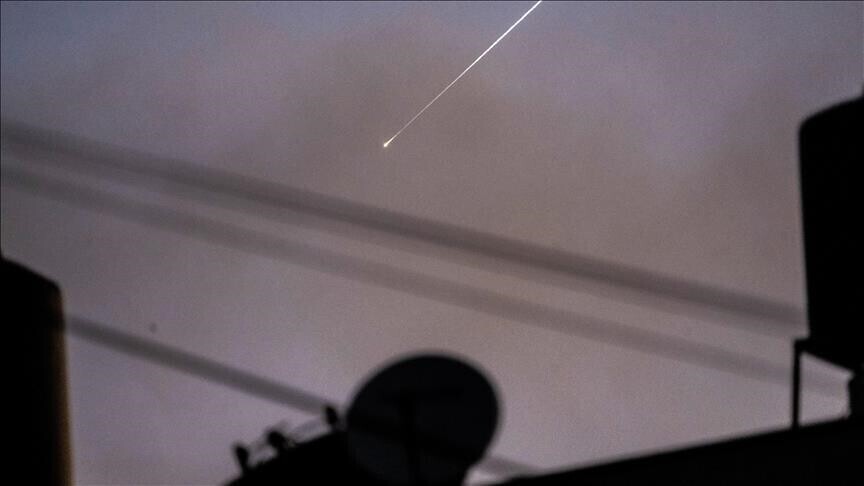
In the letter, Qatar told the Security Council that Iran launched seven ballistic missiles toward Ras Laffan Industrial City on March 18, with Qatari forces intercepting six while one missile struck the city, causing fires and significant damage. The area came under another missile attack in the early hours of the following day.
Qatar said in the note that it had “distanced itself from this war from its outset” and sought to avoid becoming involved in the escalation, accusing Iran of continuing to target Qatari territory and neighboring countries.
“The State of Qatar is not a party to this conflict. Attacks on its territory and civilian infrastructure, the endangerment of its population, and destabilizing actions in the Strait of Hormuz cannot be justified as ‘legitimate responses,’” said Al-Ansari. “Such acts constitute clear violations of international law, and no selective quotation or interpretation can alter that fact.”
The exchange between Qatar and Iran comes amid renewed escalation between Washington and Tehran, with the two trading military strikes in early September in one of the fiercest rounds of escalation since July, while shipping through the Strait of Hormuz continues to be affected.
“Guided by its longstanding position that dialogue and peaceful means remain the best path to resolving differences, Qatar will continue its diplomatic efforts and sustained endeavors to de-escalate tensions and promote security and stability in the region,” the Qatari spokesman said.
Letters to UN, Security Council rep.
In the letters sent to Guterres and France’s UN representative Jerome Bonnafont, who is holding the rotating presidency of the Security Council, Qatar rejected Iranian claims regarding recent territorial attacks, asserting its right to self-defense and compensation.
The letters said Iranian claims cannot provide a legal basis for “unjustified and unlawful” attacks against Qatar. Doha argued that the strikes violate international law and UN Charter Article 2(4), which prohibits the threat or use of force against the territorial integrity or political independence of any state. Qatar also cited UN Security Council Resolution 2817, which previously condemned the attacks as threats to international peace.
Doha also dismissed Iran's invocation of Article 51 self-defense and pointed out that Tehran's reliance on the 1974 UN General Assembly definition of aggression actually undermines its own position. The letters noted that the definition explicitly considers the bombardment of another state's territory and the blockade of ports, referencing Iran's closure of the Strait of Hormuz, as acts of aggression.
Qatar accused Tehran of targeting critical civilian infrastructure, including energy facilities, oil tankers, and commercial vessels in violation of the Geneva Conventions.