Mohamed Majed and Lina Altawell
19 November 2026•Update: 19 November 2026
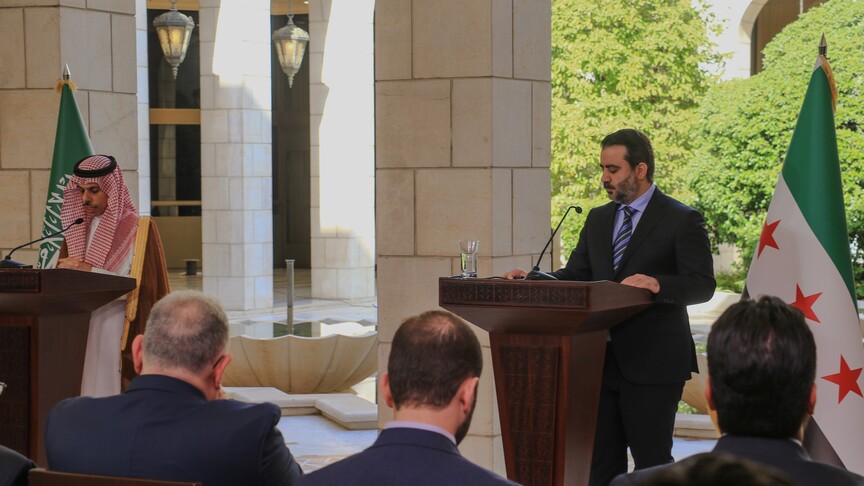
Saudi Foreign Minister Faisal bin Farhan and his Syrian counterpart, Asaad al-Shaibani, discussed regional developments and ways to strengthen bilateral cooperation and coordination during talks in Riyadh on Thursday.
The meeting followed al-Shaibani's arrival in Saudi Arabia earlier in the day, according to a statement by the Saudi Foreign Ministry on US social media company X.
It said the talks addressed “the fraternal relations between the two countries and peoples, and ways to strengthen joint cooperation in various fields.”
“The two ministers also discussed the latest regional developments, the challenges facing the region, and the importance of intensifying coordination and consultations on them in a way that contributes to strengthening regional security,” it added.
Saudi Deputy Foreign Minister for Political Affairs Saud al-Sati and Foreign Minister’s Adviser for Political Affairs Musab bin Mohammed al-Farhan attended the meeting.
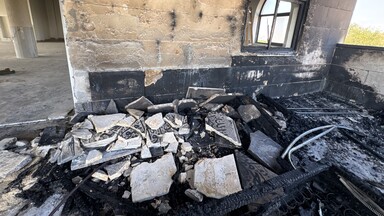
The talks came one day after Saudi Arabia condemned Israeli incursions into rural Quneitra and Daraa provinces in southern Syria and demanded an end to attacks on Syrian territory and respect for its sovereignty.
The Saudi Foreign Ministry urged Israel to halt attacks on Syrian territory on Wednesday and adhere to the 1974 Separation of Forces Agreement, while reiterating the kingdom’s support for Syria’s sovereignty and territorial integrity.
Since the fall of Bashar al-Assad’s regime on Dec. 8, 2024, Israel has expanded its military presence in the buffer zone between Syria and the occupied Golan Heights and carried out incursions into areas of southern Syria, in violation of the 1974 agreement.
The agreement, signed between Syria and Israel following the October 1973 war, provides for the separation of their forces and the establishment of a buffer zone monitored by the UN Disengagement Observer Force (UNDOF).
Damascus maintains that it seeks the restoration of all its territory and rejects Israeli incursions. Tel Aviv cites security considerations to justify its continued military presence inside Syrian territory.