Merve Aydogan
14 October 2026•Update: 14 October 2026
The UN's special envoy for Libya said Wednesday that the Smaller Convening Agreement signed in Tripoli marks a break in the country's prolonged political deadlock, but warned that disinformation and rejection of dialogue by some parties continue to threaten progress.
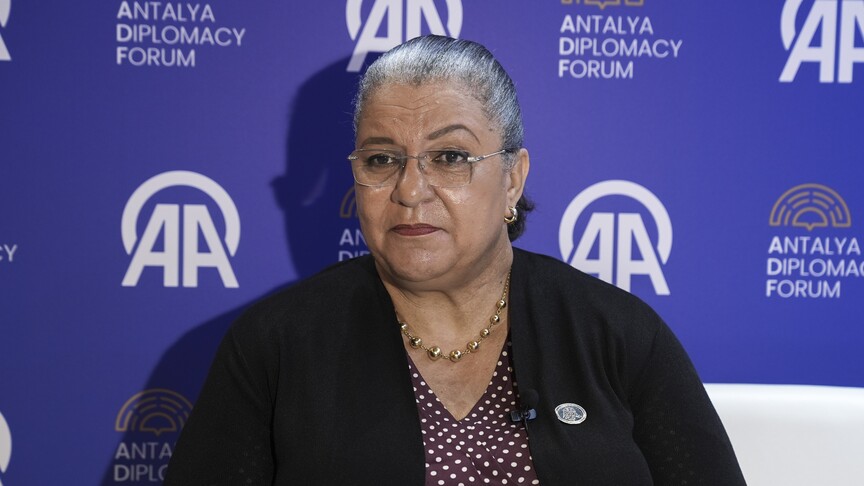
Hanna Tetteh, who also heads the UN Support Mission in Libya (UNSMIL), told the Security Council that "since my last briefing, we have seen encouraging progress on the UNSMIL-facilitated political process."
She said the parties to the Smaller Convening Agreement signed it on Aug. 30 after four months of deliberations, and that it "has received broad support from national and international actors."
Tetteh stressed that elections cannot be separated from wider institutional problems, including the fragmentation of the judiciary.
"The electoral process cannot be isolated from wider institutional challenges which impact the holding of elections, including the fragmentation of the judiciary," she said.
On security, she described the situation as "fragile" but welcomed "positive steps toward enhanced military cooperation between Eastern and Western military and security institutions."
Drawing attention to southern Libya, she said that "strengthening state presence, improving border management, as well as addressing local grievances related to access to services, can contribute positively to stability in these areas."
Tetteh warned of a continuing wave of "misinformation, disinformation, hate speech and incitement" targeting refugees, migrants, humanitarian actors and UN personnel in Libya.
"Legitimate public concerns regarding migration must be addressed through responsible policy, dialogue and verified information, not through hate speech, intimidation or violence," she said.
She cautioned that the continued rejection by some parties to engage constructively, together with inflammatory rhetoric, risks "hardening political positions, eroding willingness to compromise, and seeking to justify unilateral actions that would undermine the political process or lead to violence."
Calling on the council to back the parties with "positive incentives and guarantees," Tetteh said that "the council should hold spoilers accountable."
"I appeal to this council to urge all parties to move forward quickly given the political, economic and security fragility of the situation in Libya and its impact on the overall stability of the region," she said.
Tetteh also said that "the path to a stable, unified, and prosperous Libya remains long, but our destination remains within reach."