Alexander Seale is an Anglo-European journalist with Syrian roots
France’s historical entanglement in the Levant is a legacy of division, a colonial shadow that long weaponized sectarian fault lines to project influence. Following the end of the Ottoman Empire, French Mandatory policy fostered distinct militias as instruments of control. These fractures left deep, festering wounds that persisted long after independence, eventually becoming the architectural foundation of the security state built by the Assads and fueling the chronic, devastating instability that haunted the region for decades.
French President Emmanuel Macron’s visit to Damascus on July 6–7—the first by a European Union head of state since the fall of the Assad regime in December 2024—marks an attempt to shift away from this history. During his meetings at the Presidential Palace, Macron pursued a model of pragmatic realism with Syrian President Ahmad al-Sharaa’s administration. Macron was accompanied by a high-level economic delegation, including prominent leaders such as Rodolphe Saade, CEO of the shipping conglomerate CMA CGM, and Patrick Pouyanne, the CEO of TotalEnergies, who took part in a roundtable meeting with Syrian officials to discuss investment opportunities.
The visit concluded with the launch of an economic partnership focused on reconstruction. Key outcomes include a strategic partnership in maritime and air logistics with CMA CGM—specifically regarding capacity building for Damascus airport—and discussions by TotalEnergies regarding potential offshore exploration contracts. Furthermore, frameworks for technical assistance to the Central Bank of Syria and protocols for infrastructure development in Homs were established. Additionally, a memorandum of understanding was signed to develop university hospitals, and both sides announced the reappointment of ambassadors, signaling a major restoration of diplomatic ties. On aviation, Sharaa publicly outlined an ambition to modernize the national carrier and invited international manufacturers to participate in the sector's long-term development.
The visit took place against a backdrop of security challenges, with two explosions reported near the Four Seasons Hotel—where the delegation was staying—on July 7. The blasts wounded at least 18 people, highlighting the difficulties facing Sharaa as he attempts to assert full control and restore state functions following the toppling of the former regime. Despite these provocations, the official stance remained clear: Syria is steadily moving toward a new phase of international partnerships.
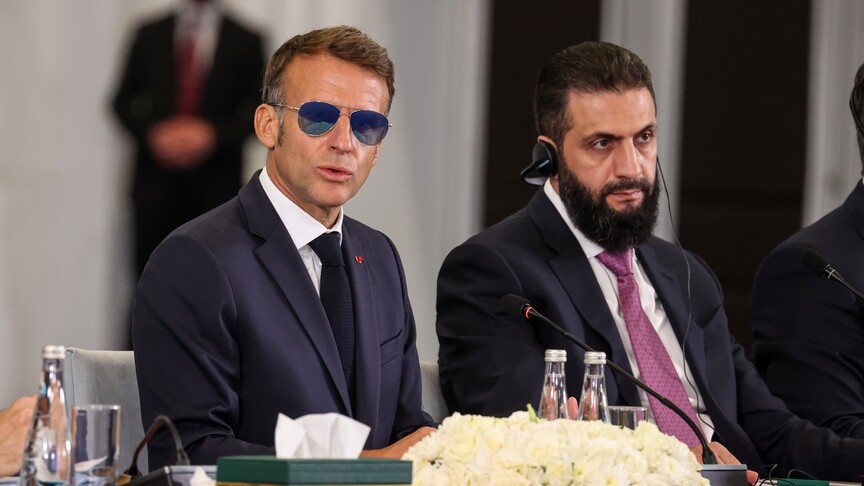
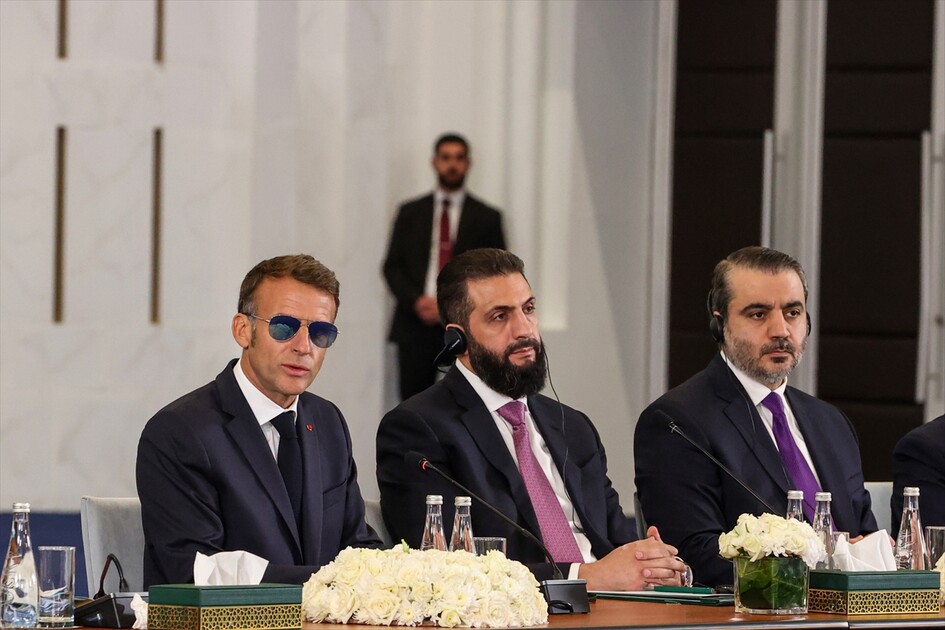
[1/9] DAMASCUS, SYRIA - JULY 7: Syrian President Ahmed Shara (R) and French President Emmanuel Macron (L), who is on an official visit to Damascus, Syria, deliver speeches during the Syria-France Economic Forum, on July 7, 2026.
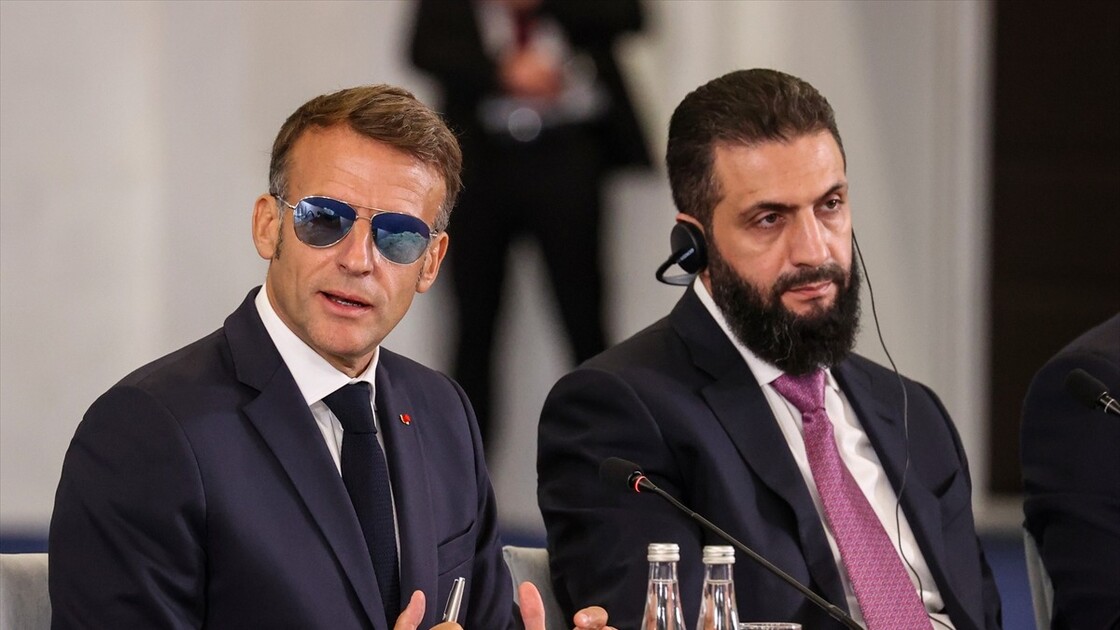
[2/9] DAMASCUS, SYRIA - JULY 7: Syrian President Ahmed Shara (R) and French President Emmanuel Macron (L), who is on an official visit to Damascus, Syria, deliver speeches during the Syria-France Economic Forum, on July 7, 2026.
[3/9] DAMASCUS, SYRIA - JULY 7: Syrian President Ahmed Shara (C), French President Emmanuel Macron (L), who is on an official visit to Damascus, and Syrian Foreign Minister Asad Hasan Shaybani (R) attend the Syria-France Economic Forum, in Damascus, Syria on July 7, 2026.
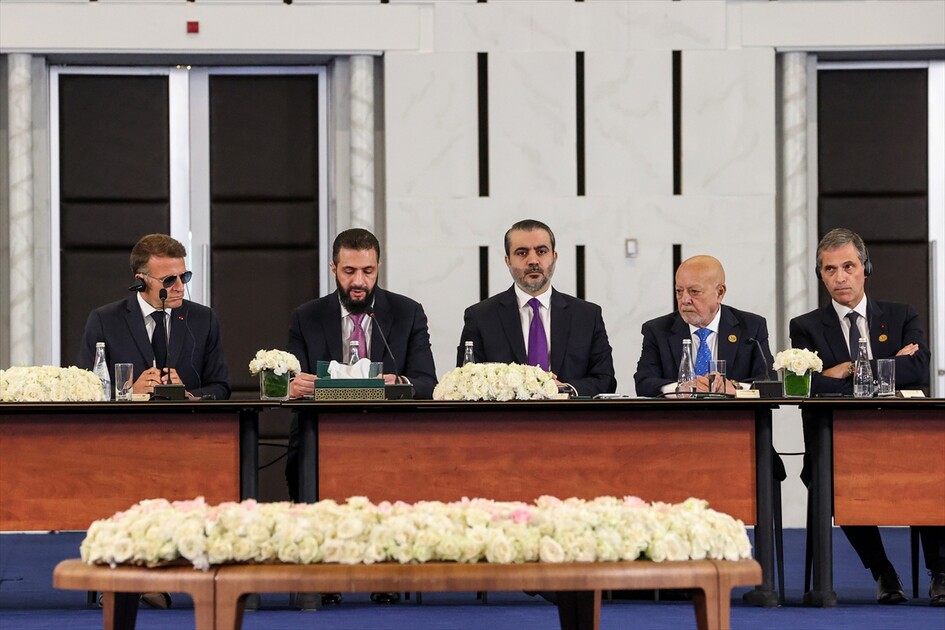
[4/9] DAMASCUS, SYRIA - JULY 7: French President Emmanuel Macron (L), who is on an official visit to Damascus, and Syrian President Ahmed Shara (2nd L) deliver speeches during the Syria-France Economic Forum, also attended by Syrian Foreign Minister Asad Hasan Shaybani (C), in Damascus, Syria on July 7, 2026.
[5/9] DAMASCUS, SYRIA - JULY 7: French President Emmanuel Macron (2nd L), who is on an official visit to Damascus, and Syrian President Ahmed Shara (3rd L) deliver speeches during the Syria-France Economic Forum, also attended by Syrian Foreign Minister Asad Hasan Shaybani (C), in Damascus, Syria on July 7, 2026.
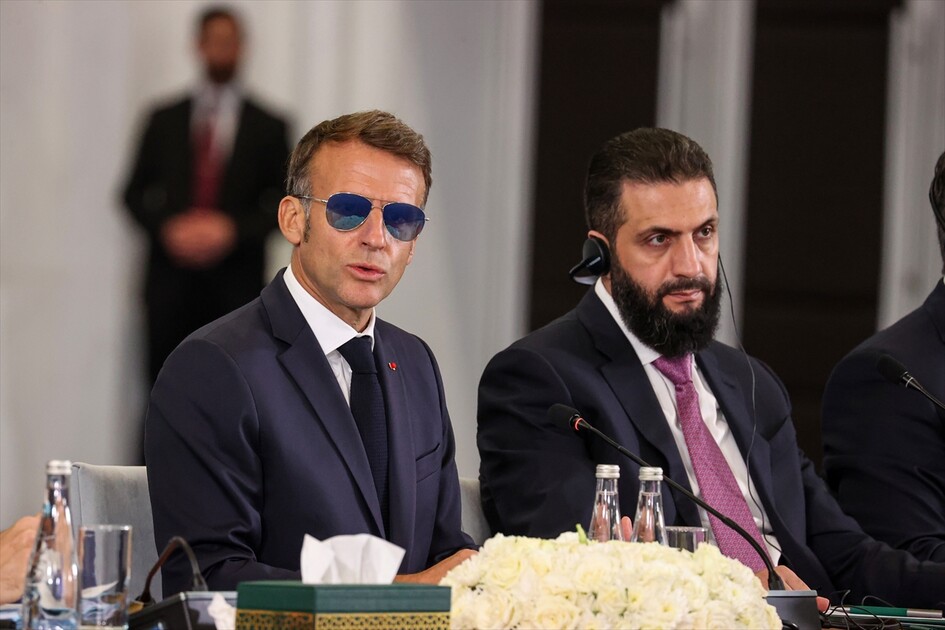
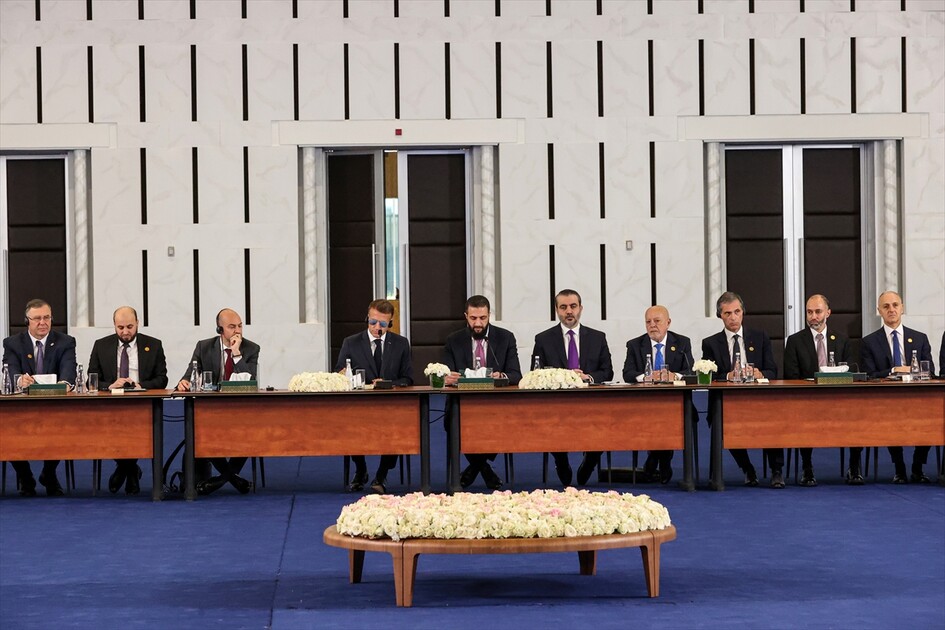
[6/9] DAMASCUS, SYRIA - JULY 7: Syrian President Ahmed Shara and French President Emmanuel Macron, who is on an official visit to Damascus, Syria, deliver speeches during the Syria-France Economic Forum, on July 7, 2026.
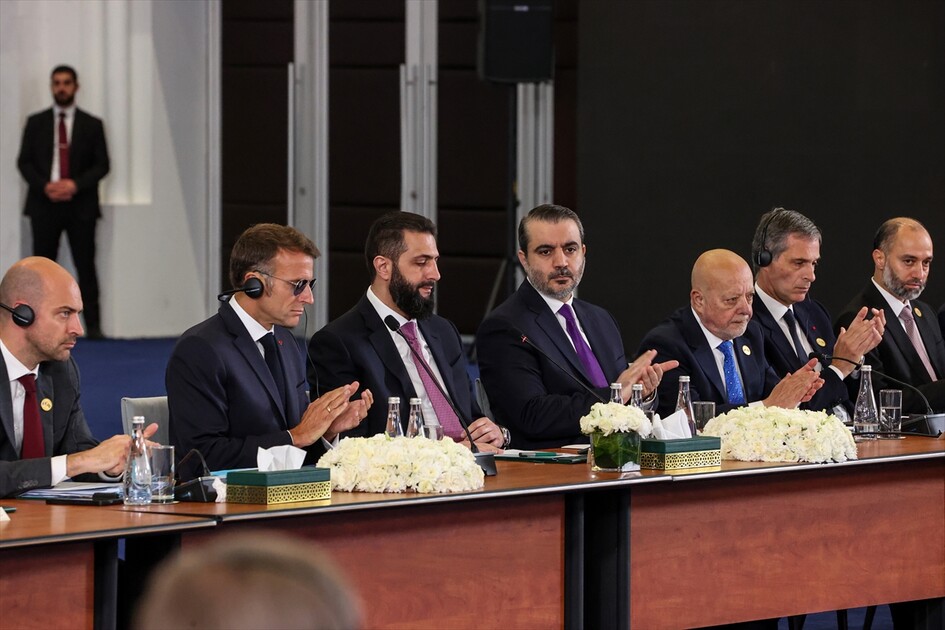
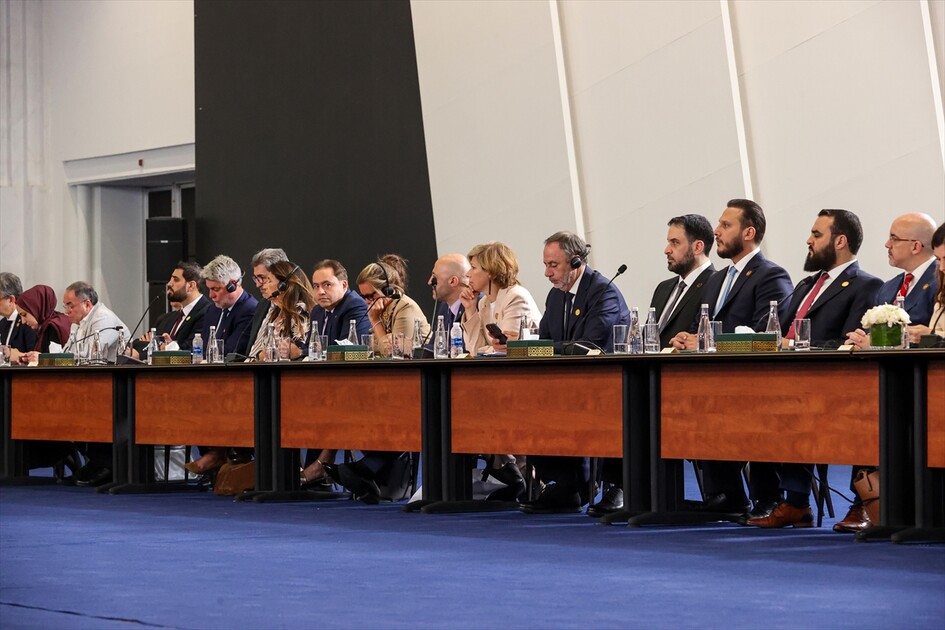
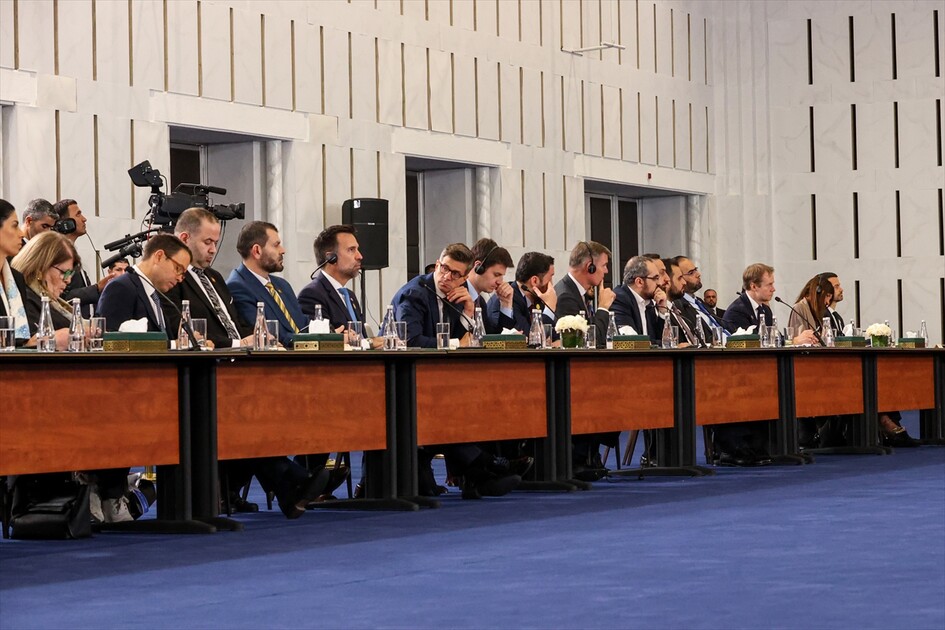
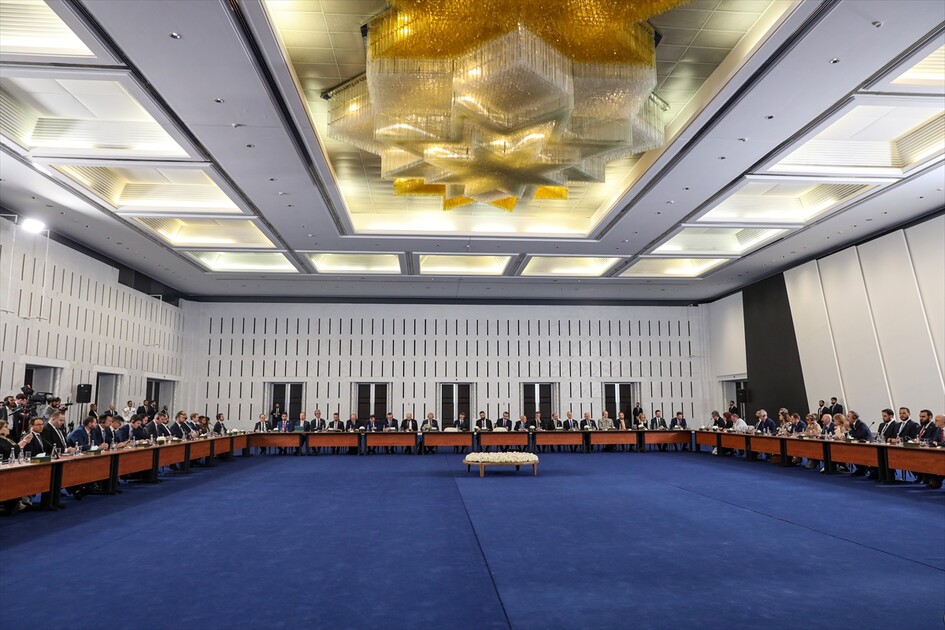
[7/9] DAMASCUS, SYRIA - JULY 7: Syrian President Ahmed Shara and French President Emmanuel Macron, who is on an official visit to Damascus, deliver speeches during the Syria-France Economic Forum, in Damascus, Syria on July 7, 2026. The high-level economic event was attended by senior political officials from both Syria and France.
[8/9] DAMASCUS, SYRIA - JULY 7: Syrian President Ahmed Shara and French President Emmanuel Macron, who is on an official visit to Damascus, deliver speeches during the Syria-France Economic Forum, in Damascus, Syria on July 7, 2026. The high-level economic event was attended by senior political officials from both Syria and France.
[9/9] DAMASCUS, SYRIA - JULY 7: Syrian President Ahmed Shara and French President Emmanuel Macron, who is on an official visit to Damascus, deliver speeches during the Syria-France Economic Forum, in Damascus, Syria on July 7, 2026. The high-level economic event was attended by senior political officials from both Syria and France.
[1/9] DAMASCUS, SYRIA - JULY 7: Syrian President Ahmed Shara (R) and French President Emmanuel Macron (L), who is on an official visit to Damascus, Syria, deliver speeches during the Syria-France Economic Forum, on July 7, 2026.
[2/9] DAMASCUS, SYRIA - JULY 7: Syrian President Ahmed Shara (R) and French President Emmanuel Macron (L), who is on an official visit to Damascus, Syria, deliver speeches during the Syria-France Economic Forum, on July 7, 2026.
[3/9] DAMASCUS, SYRIA - JULY 7: Syrian President Ahmed Shara (C), French President Emmanuel Macron (L), who is on an official visit to Damascus, and Syrian Foreign Minister Asad Hasan Shaybani (R) attend the Syria-France Economic Forum, in Damascus, Syria on July 7, 2026.
[4/9] DAMASCUS, SYRIA - JULY 7: French President Emmanuel Macron (L), who is on an official visit to Damascus, and Syrian President Ahmed Shara (2nd L) deliver speeches during the Syria-France Economic Forum, also attended by Syrian Foreign Minister Asad Hasan Shaybani (C), in Damascus, Syria on July 7, 2026.
[5/9] DAMASCUS, SYRIA - JULY 7: French President Emmanuel Macron (2nd L), who is on an official visit to Damascus, and Syrian President Ahmed Shara (3rd L) deliver speeches during the Syria-France Economic Forum, also attended by Syrian Foreign Minister Asad Hasan Shaybani (C), in Damascus, Syria on July 7, 2026.
[6/9] DAMASCUS, SYRIA - JULY 7: Syrian President Ahmed Shara and French President Emmanuel Macron, who is on an official visit to Damascus, Syria, deliver speeches during the Syria-France Economic Forum, on July 7, 2026.
[7/9] DAMASCUS, SYRIA - JULY 7: Syrian President Ahmed Shara and French President Emmanuel Macron, who is on an official visit to Damascus, deliver speeches during the Syria-France Economic Forum, in Damascus, Syria on July 7, 2026. The high-level economic event was attended by senior political officials from both Syria and France.
[8/9] DAMASCUS, SYRIA - JULY 7: Syrian President Ahmed Shara and French President Emmanuel Macron, who is on an official visit to Damascus, deliver speeches during the Syria-France Economic Forum, in Damascus, Syria on July 7, 2026. The high-level economic event was attended by senior political officials from both Syria and France.
[9/9] DAMASCUS, SYRIA - JULY 7: Syrian President Ahmed Shara and French President Emmanuel Macron, who is on an official visit to Damascus, deliver speeches during the Syria-France Economic Forum, in Damascus, Syria on July 7, 2026. The high-level economic event was attended by senior political officials from both Syria and France.
Consolidating the state
Sharaa now occupies a complex role: a state-builder tasked with the transition of a pariah state into a functioning regional player. His administration has consolidated power, effectively ending the era of decentralized, foreign-patronized militias. While Sharaa has restored diplomatic ties and insulated Syria from regional military spillover, the state remains in a precarious transition.
As the Levant transitions from a period of fragmentation toward a more stable regional order, there is a widespread demand for professional, centralized state security. The era of Cold War proxy conflicts and the unchecked proliferation of militias in Syria is increasingly rejected by a population exhausted by decades of violence. In this climate, countries across the region are prioritizing institutional stability and economic rehabilitation, seeking a move away from the armed non-state actors that have historically hindered national sovereignty.
The repatriation of Syrian antiquities during the visit serves as a symbol in this reset, reflecting the Syrian government's eagerness to curate its museums and revive its cultural heritage. As the French tricolor flew alongside the Syrian flag in Damascus, it represented more than just a diplomatic milestone; it symbolized the hope of a people who, after witnessing the end of the old world, are finally looking toward a future where their greatest ambition is simply to live, work, and exist within a stable state.
Whether this pragmatic turn succeeds depends on whether Sharaa can translate these external diplomatic gains—and the incoming technical and financial expertise—into genuine domestic inclusion and economic recovery. For now, the pariah is becoming a partner, and France is testing the durability of this new regional order.
*Opinions expressed in this article are the author's own and do not necessarily reflect the editorial policy of Anadolu.