Idlir Lika
02 November 2026•Update: 02 November 2026
Idlir Lika is an associate professor of political science and international relations at Ibn Haldun University in Istanbul.
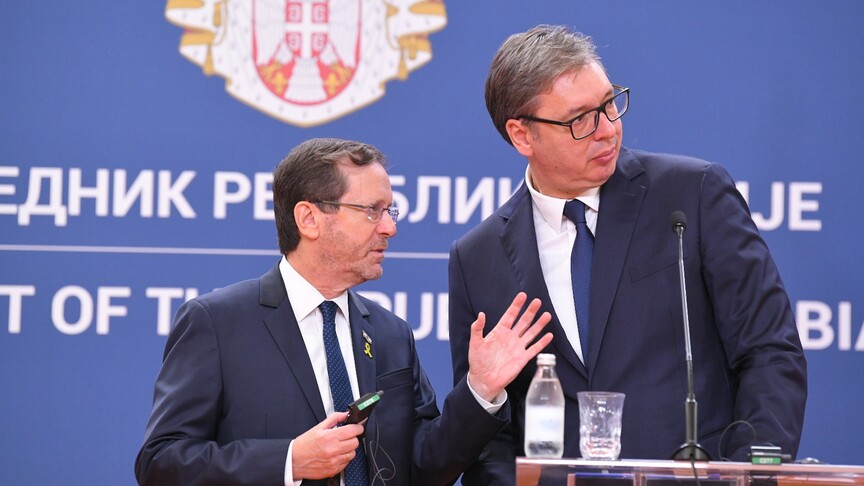
Aleksandar Vucic's electoral defeat in Serbia's Oct. 25 early parliamentary elections marks the end of an era in Serbian politics. After 14 years of dominance by his Serbian Progressive Party (SNS), a student-led opposition movement – the Student List – secured a decisive victory, winning 53% of the vote against 39% for the Vucic-led coalition. The result was primarily a verdict on domestic misgovernance, corruption and state capture by the ruling SNS. Yet, another issue deserves attention: Vucic’s close alignment with Israel during the genocide in Gaza. Although Serbia’s policy toward Israel was not a decisive factor in Vucic's electoral defeat, its potential contribution to the political discontent surrounding his government should not be overlooked.
The student-led protest movement that ultimately unseated Vucic began in the aftermath of the November 2024 collapse of a railway station canopy in Novi Sad, which killed 16 people. What started as a demand for accountability over a tragic infrastructure failure gradually developed into a nationwide protest movement against corruption, misgovernance and the ruling party’s capture of public institutions. One of the protest movement’s most remarkable achievements was to unite voters with otherwise diverse ideological preferences around a common set of demands. Foreign policy issues, however, were not among the central concerns of the opposition movement. Nevertheless, Vucic’s close alignment with Israel amid mounting international condemnation over the ongoing genocide in Gaza represented a politically sensitive aspect of his foreign policy. Serbia has traditionally maintained friendly relations with Palestine and supported Palestinian diplomatic initiatives in international bodies. Under Vucic, however, Belgrade developed close military and strategic cooperation with Israel, particularly after October 2023.
Being complicit in Israeli crimes?
The scale of Serbia's arms exports to Israel since October 2023 illustrates the extent of this cooperation. According to an investigation [1] by the Balkan Investigative Reporting Network (BIRN) and Haaretz, Serbian arms exports to Israel increased from approximately €1.4 million in 2023 to €42.3 million in 2024. Subsequent reporting [2] indicated that exports reached $132 million in 2025. These developments drew attention because of the potential use of Serbian weapons in the ongoing genocide against Palestinians in Gaza and the government’s lack of transparency regarding the transactions. Meanwhile, on Sept. 17 – just eight days after dissolving parliament and calling early elections – Vucic officially inaugurated a combat drone assembly factory in Belgrade, a joint venture between Israel’s Elbit Systems and Serbia’s state-owned arms company, Jugoimport.
Assessing the evidence
Did all this come at a significant electoral cost for Vucic? An April 2026 poll [3] by the New Serbian Political Thought (NSPT) found that about 57% of Serbian citizens supported Palestine whereas only 5% claimed to support Israel. The greatest support for Palestine was recorded among supporters of the opposition to Vucic, approximately 74% of whom expressed support for the Palestinian side. Moreover, in the manifesto [4] published by the Student List, the section on foreign policy states that "we will not be complicit in the systematic attempt to destroy the Palestinian people that Israel is carrying out in the Gaza Strip." These two facts suggest that even though the election primarily revolved around domestic issues, Vucic’s close alignment with Israel amid an ongoing genocide might have played a role in shaping the electoral preferences of Serbian citizens.
Domestic concerns above foreign policy
The protest movement itself was overwhelmingly driven by domestic concerns, particularly corruption, misgovernance and state capture. Foreign policy issues were politically relevant in this regard only insofar as they reflected broader concerns about the government’s lack of transparency and accountability. Put differently, Vucic's close alignment with Israel might have influenced Serbian voters’ preferences to some extent as this relationship intersected with domestic demands for transparency, accountability, and the rule of law. Indeed, the fact that Vucic officially launched the joint combat drone factory with Israel just a month before the elections suggests that he did not anticipate any significant electoral backlash over this cooperation. On the contrary, he presented the project as evidence of his government’s commitment to bringing new jobs, technological advancement, and economic development to Serbia.
To sum up, the close alignment with Israel may have contributed to Vucic's electoral difficulties, but its independent electoral impact remains difficult to establish. The incoming government’s handling of relations with Israel, among other countries, will therefore be an important test of whether its promises of political change extend beyond domestic institutions to Serbia’s foreign policy behavior. Ultimately, fulfilling its promise of democratization will require the new government to break with Serbia’s nationalist past and the Greater Serbia ideology.
[1] https://dev.balkaninsight.com/2025/01/28/regardless-of-war-crimes-claims-serbias-arms-sales-to-israel-soar
[2] https://www.youtube.com/watch?v=RgwGXIL6_QQ
[3] https://vreme.com/en/vesti/istrazivanje-javnog-mnjenja-tramp-izrael-palestina-nspm-galup/
[4] https://www.defensenews.com/global/europe/2026/10/29/after-vucic-ouster-serbias-weapons-buying-habits-are-under-the-microscope
*Opinions expressed in this article are the author's own and do not necessarily reflect the editorial policy of Anadolu.