
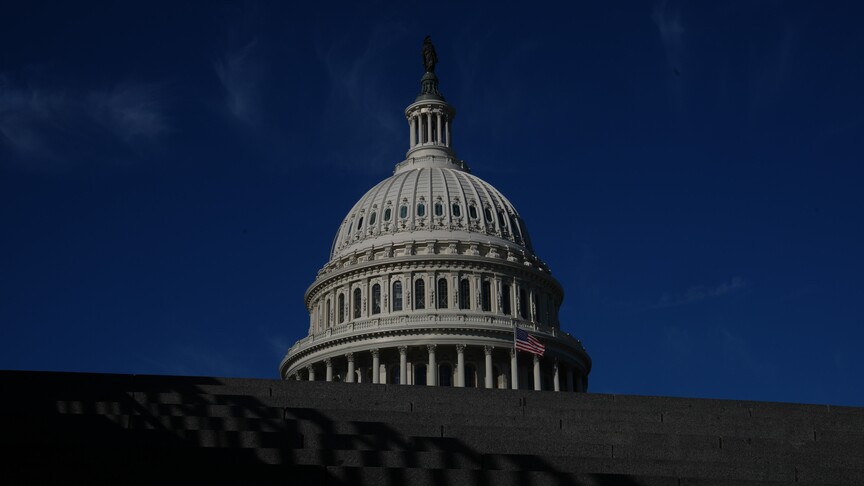
The 2026 United States midterm elections, in the end, did turn out as polling had suggested, with the Democratic Party winning key races across the country, sometimes by stunning margins. Both Congressional chambers will be controlled by the Democrats for the next two years.
US President Donald Trump’s bizarre antics during the campaign now look like a drowning person’s desperate struggling. His recent election rallies descended into vaudeville spectacles as he doubled down on race-baiting and Islamophobic rhetoric, while behaving strangely and musing about the physical attributes of male Republican Party candidates.[1] Nothing even remotely similar has been witnessed in US political history.
As for the Democrats, despite attempts to focus on Trump’s corruption, the cost-of-living, and inequality, the issue that ultimately dominated their campaigns was Israel. This culminated with former Speaker of the House Nancy Pelosi telling a podcast interviewer, only a week before the election, that any Congressional Democrat critical of Israel will face “disassociation” from other Democratic members of Congress.[2]
Several days later, on the eve of the polls, the Michigan Senate race was thrown into an uproar as Haley Stevens, who lost the Democratic primary to Dr. Abdul El-Sayed, endorsed his Republican rival essentially because of El-Sayed’s stance towards Israel.[3] The Democratic party is thus riven from top-to-bottom by an issue once seen as a marginal foreign policy problem.
Historic victories
Several results from Tuesday’s polls are notable. Georgia’s governor’s race, in which Keisha Lance Bottoms was elected the first female Black governor in US history, and the Texas governor’s race, in which Gina Hinojosa became the first Hispanic elected governor in that state, are eye-catching victories. Native Americans also saw firsts as former Interior Secretary (the first Native American to hold a Cabinet-level post) Deb Haaland was elected New Mexico’s governor, the first Native American governor in US history. In Minnesota, Peggy Flanagan’s win will make her the first Native American Senator in US history.[4]
The first Muslim Senator
On a night of historic results, one result stood out from the rest: El-Sayed’s victory in Michigan’s Senate contest. El-Sayed’s triumph is a milestone for Muslim representation at the national level as he will be the first Muslim Senator in US history. But for the Democratic party, El-Sayed exposes the party leadership’s years-long refusal to recognize the US electorate’s changing attitude towards Israel.
The Democrats’ internecine battles
Because the Democratic Party’s leadership [5] refused to show true commitment to El-Sayed’s candidacy, the shine may rub off of this Democratic electoral rout quickly. The narrative will immediately refocus on the Democrats’ internal dynamics, which have been a steady source of friction, if not outright hostility, for the past eight years. While El-Sayed’s victory will mean a Senate voice loudly critical of US policy towards Israel, his former rival’s last-minute endorsement of his Republican opponent will symbolize the Democratic leadership’s failure to understand America’s social dynamics.
The Democratic Party leadership’s shameful failure to support El-Sayed mirrored their moral collapse in regard to US policy towards Israel in 2023-2024, which arguably cost them the Presidency. Will they gain nothing from that experience and try to silence El-Sayed? If so, they will doom their accomplishment and further splinter the party’s already fractious body.
The Democratic Party’s leadership must see the writing on the wall and end their support for the Israeli state’s annihilationist policies in Gaza, the West Bank, and southern Lebanon; they must understand that the US can no longer arm, fund, or tacitly condone such policies. Without that shift, the 2026 midterms will be a Pyrrhic victory, and the party’s old guard will slouch down the disgraceful path to the Republican Party that Haley Stevens just inaugurated for them.
Item 1 on the January Congressional agenda: Impeachment
When the new Congressional Democratic majorities are seated in January, first on the docket will be impeaching President Donald Trump and his collaborators. Trump is the only US President to have been impeached twice, but no US President has been removed from office through the impeachment process. If the Democrats carefully create a case for impeachment and act with unity – certainly not a given in light of the party’s recent ideological and generational divisions – Trump could become the first.
The House of Representatives has the power to impeach a President, but conviction and removal from office is carried out by the Senate. Because the Democrats controlled the House of Representatives during 2019-2021, they were able to impeach Trump in December 2019 and January 2021, but Trump was acquitted by a Republican-majority Senate on both occasions. The House can impeach with a simple majority vote, but the Senate vote requires a two-thirds majority to remove from office.
Starting in January, the Democrats will have a large majority in the House, but only 54 (possibly 55 or 56) Senators. That would mean convincing more than 10 Republican Senators to vote for removal. Even though that seems unlikely, the Republican Party is also internally fragmented as debates concerning Trump’s policies and Israel have sparked loud desertions from the party’s base. Convincing 10 Senators to vote for removing a lame duck Donald Trump, may not be so farfetched, especially when Vice President JD Vance would be his replacement. And Vance, who maintains presidential ambitions, switched into 2028 mode immediately once the election’s results became clear, distancing himself from Trump’s policies by blaming the election results on Trump’s war on Iran.
Whether Trump is removed from office or not, the next two years will be characterized by constant Congressional legal initiatives aimed at punishing Trump and anyone who has aided or benefited from his activities since January 2025. Trump, for his part, has already vowed to veto the Democrats’ legislative initiatives. These stances will set the legislative and judicial branches of the government in direct conflict with President Trump and his administration. In other words, America’s political tensions will not abate, and instead will likely intensify as we head towards the 2028 US Presidential election.
[1] https://www.theguardian.com/us-news/2026/oct/27/trump-obama-rally-midterms-analysis
[2] https://www.nytimes.com/2026/10/30/us/elections/pelosi-mamdani-el-sayed-israel.html
[3] Stevens told the press that personal disagreements had caused her sudden about-face, but Israel has long been the issue dominating disputes between the two politicians, and which characterized the differences between their campaigns.
[4] https://www.nytimes.com/2026/11/04/us/elections/haaland-flanagan-native-american-women-elected.html
[5] In Pelosi’s interview mentioned above, she referred to Dr. El-Sayed, only ten days before the election, as “this new person.”
*Opinions expressed in this article are the author's own and do not necessarily reflect the editorial policy of Anadolu.
news_share_descriptionsubscription_contact

contact_the_ombudsman
is_there_an_error_in_this_story