By Shadi Khan Saif
KABUL
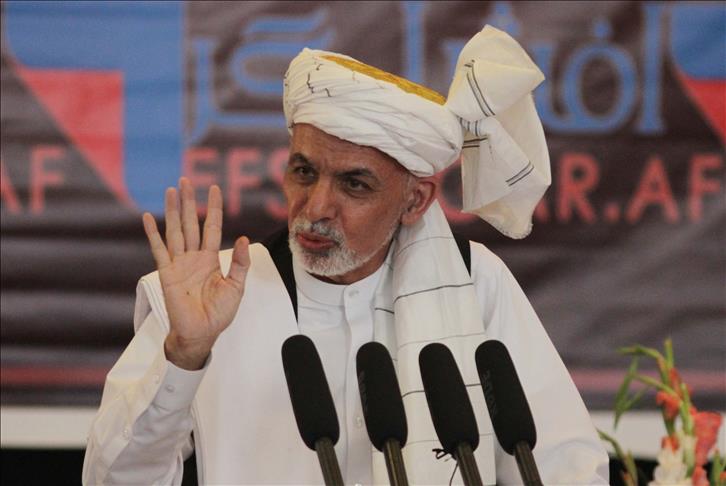
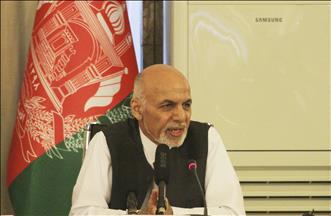
The Afghan president's call for a Jihad, or holy struggle, against corruption in the country has frustrated activists who claimed he should take more responsibility.
Afghanistan is the fourth most corrupt country in the world according to corruption watchdog Transparency International and Ashraf Ghani asked a gathering of religious leaders on Tuesday to motivate people to help root out the problem by reporting any corruption they witness.
Activists have complained however that Ghani should have taken more direct control of the issue himself by fighting corruption from the top.
“We have great confidence and trust in him [Ghani] but it seems he too is facing difficulties in curbing the menace of corruption in the country,” Khyber Safi, Public Outreach Manager at the anti-corruption Integrity Watch Afghanistan (IWA) told Anadolu Agency.
He said involving religious leaders in the anti-corruption campaign might have little impact as part of a “bottom-to-top” strategy and that it would be more effective for Ghani to take a top-down approach.
Safi claimed that reports Ghani personally oversees awarding of government contracts is evidence of the lack of trust and transparency in government institutions.
Ghani said on Tuesday that after some 350 projects were assessed over the past 10 months, 26 companies were blacklisted due to fake documents and some 8.5 billion afghanis ($1.6 billion) was saved.
Nadir Khan Katawazi, a senior politician in Afghan parliament, also said he was concerned by Ghani's request to the religious scholars.
“This is not something that the people are not already aware of. Each and every Muslim knows that giving and taking bribes is against Islam, so what really needed is a comprehensive action plan, not more sermons from the mosques,” he said, arguing that the judicial system needed to be strengthened to deal with the problem.
Katawazi said Ghani could start dealing with corruption by making high-ranking officials annually declare their assets.
Earlier this week, Sayed Ikram Afzali, Executive Director of IWA, alleged that the government has not seriously tackled the scandal of the defunct Kabul Bank which collapsed in 2010 losing almost $1 billion, mostly deposited by international donors.
The bank's founder Sherkhan Farnood and ex-CEO Khalilullah Ferozi were jailed for five years after being convicted of taking $810m of the $935m stolen.
Ghani had announced the re-opening of the case almost immediately after taking office in September last year but the IWA said that while some of the embezzled funds had been recovered there is a lot of progress needed on the case.