SARAJEVO/BERLIN/VIENNA/BUDAPEST
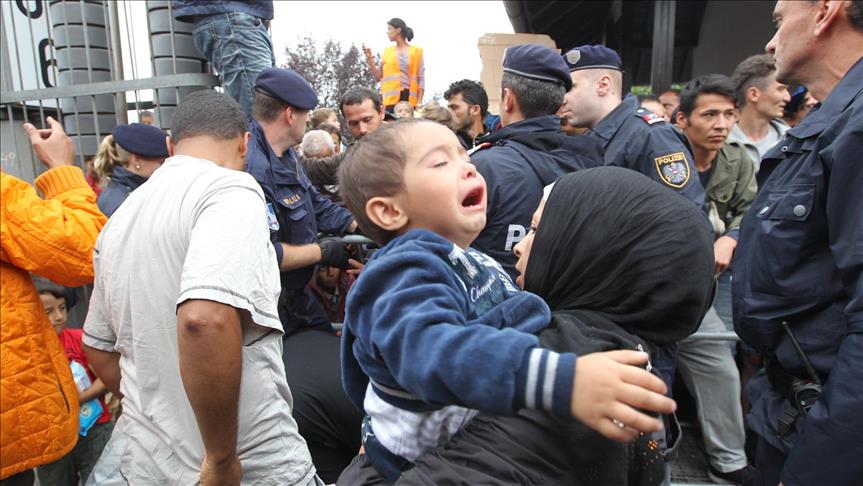
More than 3,000 asylum seekers were brought into the Austrian capital of Vienna on Saturday, local media reported.
Asylum seekers in Vienna were welcomed by humanitarian organizations as volunteers provided first aid and food.
Several refugees told Anadolu Agency that Hungarian police had been violent with them as well as with their children.
The refugees were later sent by train to the German city of Munich, where they were greeted with an announcement in English, saying "Welcome to Munich," local media said.
The refugees are expected to be sent to temporary hostels by bus, and undergo medical examination.
One of the trains arriving in Munich was reportedly diverted to Saalfeld in central Germany’s Thuringia.
The German Interior Ministry had previously issued a statement saying that refugees arriving in Munich would without delay be sent to other states in the country.
Around 7,000 refugees are expected to arrive in Germany from Hungary over the weekend, the statement said.
More than 6,000 refugees have so far travelled to Germany from Hungary via Austria over the past five days, and the number is expected to increase up to 10,000, it added.
Austrian Chancellor Werner Faymann said early on Saturday that he agreed with Germany and Hungary to receive thousands of refugees.
The Austrian Interior Ministry announced that they expected more than 10,000 refugees to arrive from Hungary and around 6,000 refugees crossed into Austria in the past five days.
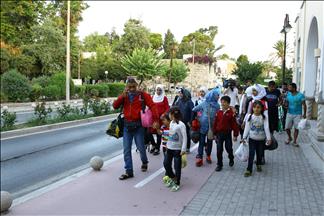
Meanwhile, some 5,000 refugees arrived in Austria's Nickelsdorf town, a local official said Saturday.
The refugees arrived in the town on 10 trains Saturday morning, an official at the reception center for immigrants told Anadolu Agency.
The refugees were offered food and water, he added.
- Europe risks ‘ruin’
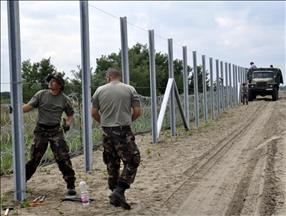
Hungarian Prime Minister Viktor Orban told reporters in Budapest Saturday that refugees would keep pouring in unless authorities did something about it.
''As long as we don't make it clear to migrants that not only Spain and Hungary, but the whole Europe is looking after and protecting its borders, tens of millions of people will come [to Europe]. As far as I can see, the European politicians are hesitant to say anything about this," Orban said.
"The number of people coming from non-conflict areas with hopes for a better life keeps increasing. We would ruin Europe if we accept everyone," he added.
Orban also said that he talked over the phone with Faymann about the issue, and would meet him in person the following week.
On Friday, the Visegrad Group member states, the Czech Republic, Poland, Hungary and Slovakia reaffirmed their opposition to quotas for refugee relocation between EU states.
After the meeting in the Czech Republic capital of Prague, the prime ministers of the Czech Republic, Hungary, Slovakia and Poland published a joint declaration on the Central European group's official website.
"Each member state may build on its experience, best practices and available resources; principles agreed at the highest political level, including in European Council conclusions must be respected; any proposal leading to the introduction of mandatory and permanent quotas for solidarity measures would be unacceptable," the declaration said.
The declaration also stated that the members of the group were ready to provide financial aid to countries with high number of refugees such as Turkey, Jordan, Iraq, Lebanon, including refugee camps, as well as the transit countries of the Western Balkans.
European countries are facing widespread criticism for their handling of refugees trying to cross the Mediterranean Sea in a desperate attempt to get to Europe.
Approximately 2,500 of them have died or gone missing trying to reach the continent this year alone.