By Andrew Jay Rosenbaum and Magda Panoutsopoulou
ANKARA
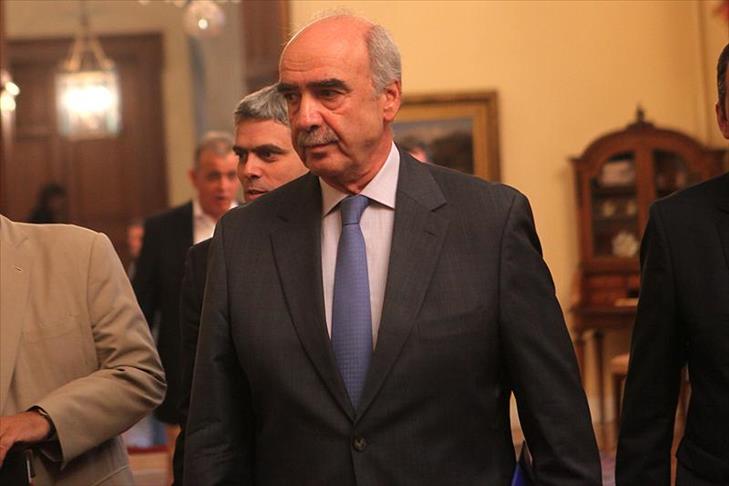
The conservative opposition party New Democracy leader, Evangelos Meimarakis, has abandoned attempts to form a new government.
Meimarakis returned the mandate to the president on Monday morning, it was officially announced by the Greek presidential office.
At this point, few observers believe that snap elections could be avoided.
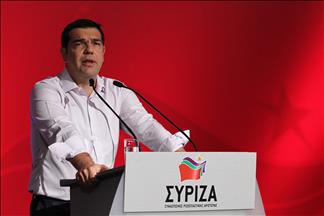
"New Democracy's image still suffers from the imposition of austerity and from the political compromises it made in the two-and-a-half years before current Prime Minister AlexisTsipras came to power. It is noteworthy that Tsipras forced snap elections in late 2014, right at the start of the Greek recovery, so the Greek people never actually felt the benefit of the policies laid down by the previous government", explained political analyst George Kratsas.
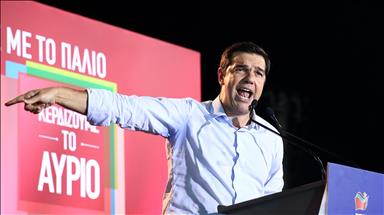
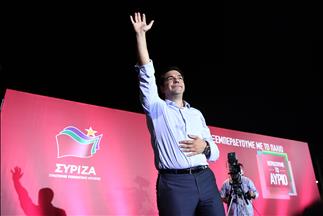
Tsipras on Sunday told the press that he would not meet with Meimarakis to discuss a coalition, as "our differences are unbridgeable".
Meimarakis met over the weekend with Panagiotis Lafazanis, the leader of the rebel Syriza left wing, which, on Friday, officially formed a new Popular Unity party, comprising 25 members of parliament.
But there were no grounds for agreement. “Our differences with New Democracy are unbridgeable, chaotic”, Lafazanis told the press on Sunday. “There is absolutely no ground for cooperation with any of the parties that have voted in favor of bailouts”, he added.
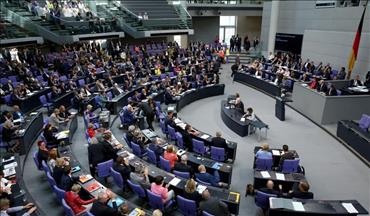
Popular Unity will on Monday be asked to form a government, as it has the largest number of parliamentarians after New Democracy. While Lafazanis is expected to make use of the full three days allowed to form a government, he declared on Sunday that there was little chance of success.
“Our differences with the parties who voted for the memoranda are unbridgeable and there’s no chance of any cooperation”, he warned.
All of this means that snap elections are likely in September. For the interim, Vassiliki Thanou, president of the Supreme Court, is reportedly to be named caretaker prime minister. This would make her the first woman ever named to the post.
The Greek political parties are already busy working out lists of candidates for the election. For Tsipras, the task should be easier now that he no longer has to contend with the radical wing of his Syriza party. It is possible that Tsipras will seek to woo opposition parliamentarians to his party, as the opposition has supported the bailout and the economic reform measures it calls for.
Tsipras is still the most popular politician in Greece with 61 percent of support in the polls.
So Tsipras' Syriza party is expected to win the election, Kratsas said.
"But Tsipras will once again come short of a majority in parliament", he said. "Tsipras will undoubtedly face great difficulties to form a viable government this time. His government partners, the Independent Greeks, could lose their representation in parliament thus forcing Tsipras to turn to pro-market parties such as To Potami, PASOK or the Centre Union", he added.
This would mean a break with the popular base of his party and turn every day, post election, into a constant battle for him. "Under these conditions, Tsipras will probably not be able to remain in office for more than a year", Kratsas said.