Aysu Bicer
23 November 2026•Update: 23 November 2026
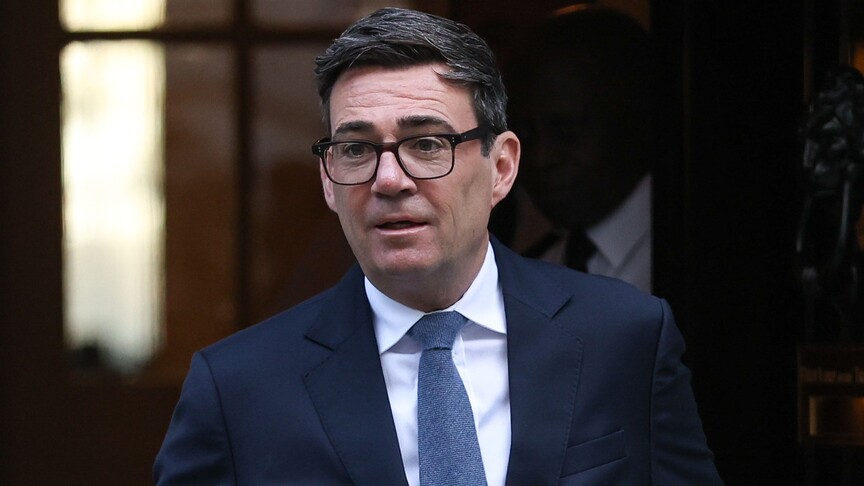
UK Prime Minister Andy Burnham on Monday said any attempt to rejoin the EU would require a referendum.
Conservative MP Sir Bernard Jenkin asked in the House of Commons if he could give “a clear and unequivocal statement that it would be unthinkable for any prime minister to try to take the UK back into the EU without a referendum?”
Burnham replied: “Yes, it would be unthinkable.”
However, responding to a subsequent question from Labour MP Graham Stringer, Burnham stressed that he was not seeking to revisit the UK's decision to leave the bloc.
"I am not proposing at this moment to rerun the referendum," he said. Burnham said the recent reset agreement, reached with European leaders on Friday, was consistent with the manifesto on which he was elected.
Britain left the EU in 2020 after a referendum in 2016 in which citizens voted to leave the bloc by 52% to 48%.
Burnham also rejected concerns that the agreement would require the UK to join the EU's digital identity system.
Responding to Conservative MP David Davis, who questioned how the government could justify a deal that could expose Britain to the EU's digital ID requirements, Burnham said the UK was not joining the bloc's digital identity wallet scheme.
Burnham also argued that "too many bridges were burned with Europe" in the first Brexit deal, adding that Britain should consider a "range of options" in its future relationship with the 27-member bloc.
The new agreement includes a youth mobility scheme, the removal of most checks on British food exports and linking of the UK and EU emissions trading systems.
‘Landmark moment’
The premier has defended the new deal, saying it would deliver economic benefits worth an additional £17 billion ($22 billion) and protect key British industries from large export tariffs.
He described the agreement as a "landmark moment" that would deliver "real benefits for Britain," arguing that the existing arrangements had a “negative impact on UK growth.”
He said as part of his government's 10-year plan, it was right to consider a "range of options" for establishing a long-term relationship with the European Union.
Burnham said it would prevent Britain's car and steel industries from facing significant export tariffs.
Responding to criticism from Conservative Party leader Kemi Badenoch, who accused him of revealing the UK's negotiating red lines and weakening its position, Burnham defended his approach.
Badenoch had argued that the prime minister "sold away the negotiating position" of the UK by disclosing its priorities in negotiations.
Burnham, however, said the agreement secured important protections for British industries, including the automotive, steel and aluminium sectors.
"It was not clear at all whether Made in Europe would be part of this deal," he said. "And I went in to bat on that very issue, and I got an agreement here that gives security to the British car industry, the British steel industry, the aluminium industry. That is all about negotiating a good deal for Britain."