Mahmoud Barakat
26 February 2016•Update: 27 February 2016
By Ahmet Dursun
ISTANBUL
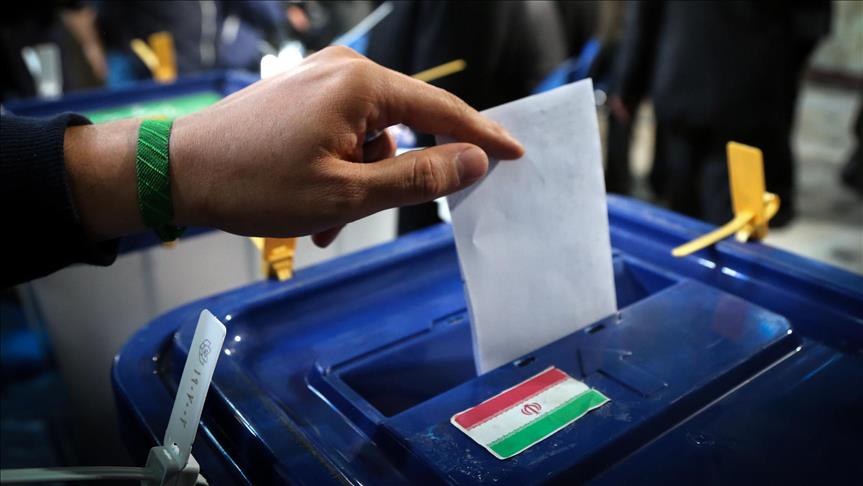
Iranian President Hassan Rouhani said Friday that he “received good news” about a large voter turnout in the elections of the Islamic Consultative Assembly and the Assembly of Experts of the Leadership, according to IRNA news agency.
Rouhani cast his ballot in Tehran and said the election process reflects the independence of the state and that voters are the ones who define the future of the country.
The elections saw the participation of some reformists and moderates who support Rouhani and are trying to reduce the conservatives’ influence on both institutions.
Reza Aref, the head of the reformists coalition, told Anadolu Agency that “improving the economy, achieving growth rates reaching eight percent and reducing unemployment below 10 percent will be their priorities if their presence in parliament is strengthened.”
Ebrahim Yazdi, secretary general of the Freedom Movement, expressed his gratitude for the turnout, saying he predicts it will reach 70 percent.
Iran has 54.9 million eligible voters who can cast their ballots in 120,000 voting boxes in 53 election centers.
Pre-election criticism
The Guardian Council of the Constitution had provoked outrage nationwide in December by declining the applications of many reformists, including prominent theologians and current parliamentarians.
This has led some analysts to discredit the results of the elections.
Ayatollah Hassan Khomeini, grandson of Ayatollah Khomeini, was among the refused candidates for the Assembly of Experts of the Leadership. It was the second time he had been denied.
Amid rising criticism, Iran’s supreme leader Ayatollah Ali Khamenei said in a speech that no country in the world opens the road to those who refuse the basis of its regime and gives them access to decision making.
In response, Rouhani said, “If only one political wing will enter the elections, then why are the elections being held?”
After mounting criticism, The Guardian Council of the Constitution decided to accept 1,500 candidates, but only a few were reformists.
The Guardian Council of the Constitution is considered one of the most important institutions in Iran and contains 12 members, half of who are assigned by Iran’s supreme leader.