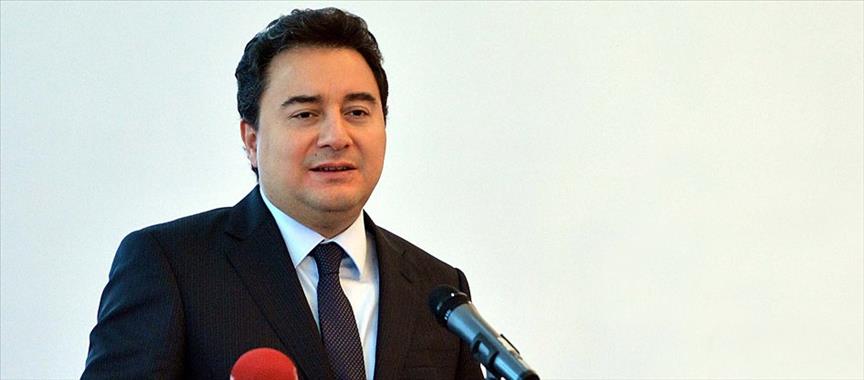
ZURICH (AA) - January 24, 2013 - Turkish Deputy Prime Minister Ali Babacan has stated Turkey deserves much better credit noting then what credit rating agencies assess Turkey.
He added assessments of credit rating agencies were not reflecting the truth and said, "Turkey is much above of those given marks."
In the framework of attending the World Economic Forum, Babacan headed to Zurich and replied the questions of reporters upon the topics in the agenda.
He said "Turkey's current credit ratings don't reflect the truth. Turkey's much over what it received as in those ratings. Obviously as a government we will say that however when we have a look at the risk and trust index in the market, loan, default, exchange rates and domestic real interest rate, it says that we already received higher points from investors and who had invested in Turkey. Turkey's credit note is much higher in the eyes of investors. So, they will make their own decisions."
He also stressed, "Actually 2012 was an important year in the scope of fighting against the current account deficit. Especially, bringing domestic consumption under control and taking a firm grip on bank loan volume. Considerably, these decreased the current account deficit. We did recover in inflation, current account deficit and prepared a strong ground to grow."
He stated, "Credit rating agencies may mention the current account deficit. Sometimes they touch on geopolitic issues, or they hold political assessments. They hold their own risk assessments. From whichever point who look at it, when you check the result, we think that Turkey deserves a much higher one."
Financial transaction tax is populism
Babacan has stated the financial transaction tax which Eurozone countries are planning to implement was populism.
He added, "Financial transaction tax is another example of populism. We were strictly against it at the G-20 Summit. We said, -we will play safe."
In the framework of attending the World Economic Forum, Babacan headed to Zurich and replied the questions of reporters upon the topics in the agenda.
He explained that the principle of financial transaction tax was the taxation demand of governments or politicians who see banks as responsible for crisis.
He made clear, once more tax levy, banks will not be able to pay back out of their pocket, and majority of banks would make people or industrialists to pay for it.
He stressed Turkey would not apply such taxation and that they were objected it at the G-20 Summit.
Babacan expressed, "We will not get into such a thing. We said, it would be negative for other countries as well. It was on the newspapers that former French President Nicolas Sarkozy looks for a real estate in Britain to pay less tax. On the other hand, he is a strong defender of financial transaction tax. He was the first one who came up with it. Such an example of populism."
He suggested that as this tax was not applied in London and Istanbul, these two financial centres' positions would be strengthened, and added that Britain was against it too.
Referring to the increase in interest rate in the international markets, he said, in the global risk view, latest developments in the Japanese economy was worrying. He said there were serious problems and added the majority of the risk space was moving towards Japan from Europe. He stressed that he was following Japan closely and the management tension between the government in Japan and the Central Bank would cause a loss of confidence.