KASTAMONU, Turkey
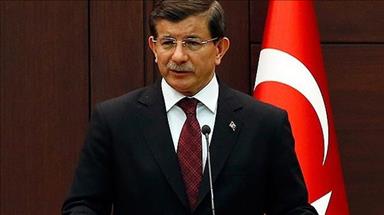
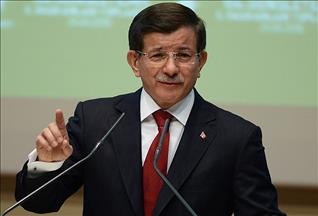
Turkish Prime Minister Ahmet Davutoglu said Wednesday that he does not regard the U.S.-based preacher Fethullah Gulen as a religious scholar since he abuses the religious feelings of the Turkish people.
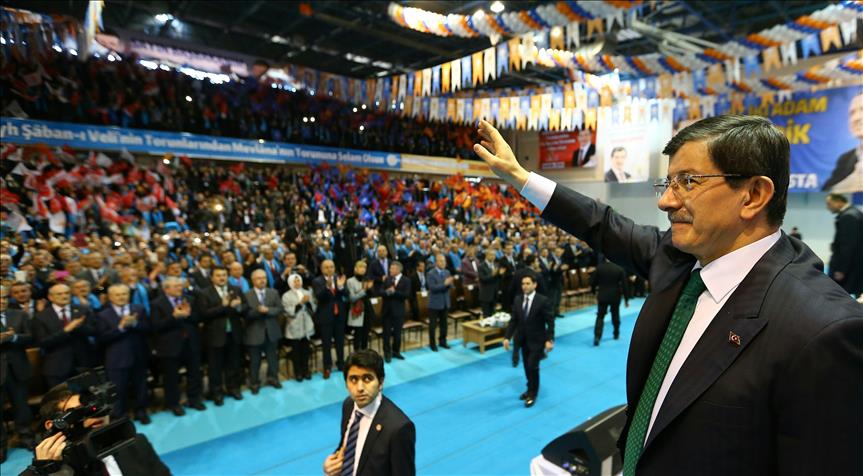
"We don't consider as scholars those who claim to act in the name of religion but exploit the religious feelings and benevolence of our people," he told a provincial congress of his Justice and Development (AK) Party in the northwestern Kastamonu province.
Self-exiled Pennsylvania-based Gulen is said to be the leader of the "Gulen movement," which is accused of masterminding an illegal organization trying to topple the Turkish government through what has been dubbed as the "parallel state," an alleged group of Turkish bureaucrats and senior officials nestled within key institutions of the state, such as the police and the judiciary.
"Neither we deem as scholars those who go to the U.S. and write against their own country," he said.
Davutoglu was referring to an article penned by Gulen on Tuesday for a U.S. daily.
He said the article is full of open insulting remarks against Turkey and he described Gulen as the leader of a "treacherous gang."
"I call on all Turkish people to be on alert against this plot," Davutoglu said.
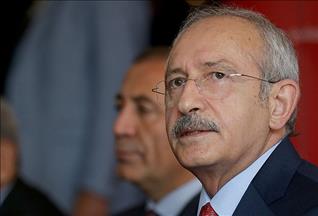
The premier also pointed out the timing of the article, as it coincided with the parliamentary group address of Turkey's main opposition leader and Republican People's Party Chairman Kemal Kilicdaroglu.
The opposition leader used his address to criticize the new security reform bill which will be debated in the Turkish parliament starting from next week just as Gulen's article criticized the government-backed bill.
The bill was first submitted to the commission in November 2014 in the wake of last October's protests in the country that resulted in the deaths of dozens of Turkish citizens.
It regards protesters with covered faces as potential criminals as it is a "declaration that the person will commit a crime by hiding his identity" and outlaws possession of fireworks, Molotov cocktails and slingshots during protests.
Opposing the bill, Kilicdaroglu, the main opposition leader, called on people, especially the youth, to take to the streets and promised that he will be in the forefront of the protests.
Davutoglu maintained that Gulen also made a call in his article for all opposition elements in Turkey to unite against the government.
"He published that libellous article against Turkey and called for opposition unity just like Selahattin Demirtas (the pro-Kurdish People's Democratic Party leader) said, 'Let's unite as all opposition parties and prevent this law,' and like Devlet Bahceli (the Nationalist Movement Party leader) who compared Turkey to North Korea," Davutoglu said.
The premier argued that Gulen, his movement and the opposition parties are all acting as a "coalition against his government."
Gulen has been in the U.S. since leaving Turkey in 1999 allegedly for "medical reasons." Shortly after his departure, Turkish prosecutors opened a case against him for incitement to attacking the secular state. He was acquitted in 2008.
An Istanbul court issued an arrest warrant for Gulen as part of a probe into "parallel state" operations in December 2014, which would pave the way for Turkish authorities to demand a search for Gulen through an Interpol red notice.
As Turkish Foreign Ministry spokesman Tanju Bilgic announced Tuesday, the Turkish government told the U.S. authorities on Jan. 26 that it canceled the U.S.-based preacher’s passport for providing false information.
Turkish officials have also voiced their expectation that U.S. will extradite Gulen when Turkey files an official request in line with a bilateral agreement for the extradition of criminals between the two countries.