Mucahithan Avcioglu
26 June 2026•Update: 26 June 2026
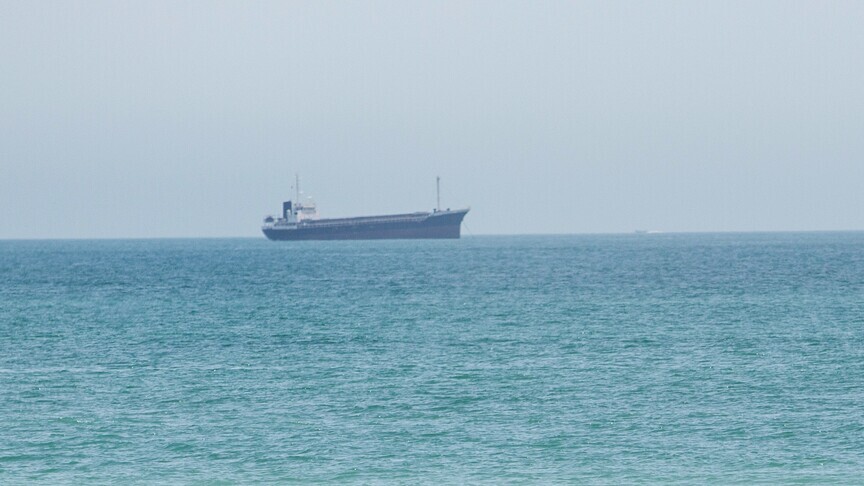
Ship traffic through the Strait of Hormuz continued in both directions Friday despite an attack on a container vessel that prompted some shipowners to reconsider transit plans through the key energy route.
The attack on the Ever Lovely on Thursday, the first such incident since an interim US-Iran peace deal was signed, led some owners and captains to pause or review exit plans from the Gulf.
At least one Asia-based company reportedly told staff that vessels in the Gulf should remain in place while executives reassess transit options.
However, ship-tracking data indicated that the incident had not halted a gradual recovery in traffic through the strait.
Two fully loaded tankers were seen heading out of the Gulf on Friday, while four empty very large crude carriers, or VLCCs, were among vessels sailing inbound along the Omani coast. The southern route is managed by Oman and coordinated by the US.
Outbound traffic along the Omani route included an India-bound Aframax tanker and a small US-sanctioned tanker. A loaded VLCC carrying crude from the United Arab Emirates also entered the strait, along with a products tanker loaded from the same exporter.
In the opposite direction, an empty VLCC signaling Basrah, Iraq, as its destination entered the waterway, along with three others linked to the UAE. A liquefied natural gas carrier off Khor Fakkan also appeared to be attempting transit.
Some vessels used the northern route close to Iran, which is recognized by the International Maritime Organization. These included a South Korean-flagged products tanker, another products tanker bound for Indonesia, and a bulk carrier.
The management of Hormuz remains a point of friction between Washington and Tehran. The US has said Iran must keep the strait toll-free and prevent fees on shipping if it wants a permanent peace deal.
Windward data also showed that 62 vessels transited the Strait of Hormuz on June 24, including 21 inbound and 41 outbound vessels. Five “dark” transits were recorded, with two inbound and three outbound, referring to vessels moving with limited or unavailable AIS visibility.
Outbound traffic was concentrated on the southern corridor, with 26 of the 41 outbound vessels using that route, while the northern corridor remained the dominant Iran-proximate lane for inbound traffic.
The data also showed two 333-meter VLCCs clearing the southern corridor within one minute of each other, while a South Korean-flagged VLCC that had been held in the Gulf since February departed, indicating that pent-up Gulf traffic is beginning to clear.
US Secretary of State Marco Rubio, during a visit to Gulf Arab countries, warned that any tolling system could encourage other governments to impose charges at maritime chokepoints, creating “chaos.”
Washington is also pressing Oman not to establish a joint tolling mechanism with Iran.
Earlier, Oman and Iran said they would discuss traffic administration and related costs in the strait, while Rubio later said Muscat had assured the US it did not support tolls.
Meanwhile, empty LNG tankers have begun lining up offshore Qatar as the country prepares to increase exports from Ras Laffan, one of the world’s largest LNG production hubs.
At least eight empty LNG carriers were observed leaving the Ras Laffan facility, with most having transited Hormuz over the past week. Another tanker was heading toward the plant, while two more were approaching the eastern entrance of the strait, according to ship-tracking data.
The buildup suggests Qatar is preparing to increase LNG loadings as maritime traffic through the Strait of Hormuz gradually returns to normal after months of disruptions.