Ahmad Adil
12 September 2026•Update: 12 September 2026
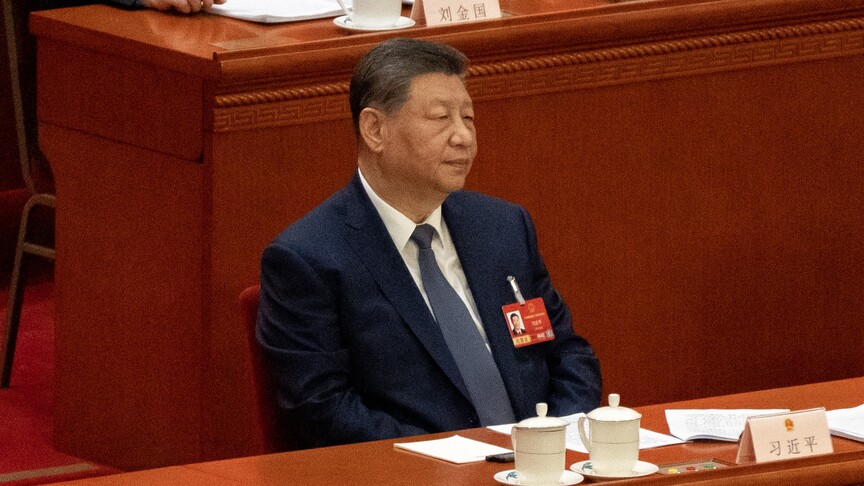
China and India can achieve “shared development” and learn from “each other’s strengths,” Chinese President Xi Jinping told Indian Prime Minister Narendra Modi Saturday.
Xi held talks with Modi in the Indian capital, New Delhi, on the sidelines of the 18th BRICS Leaders' Summit, according to the state-run Xinhua news agency.
The Chinese leader arrived in New Delhi Saturday for the BRICS Leaders' Summit, his first visit to India in seven years.
He called on the two Himalayan nations to “join hands for high-quality development of greater BRICS cooperation.”
Saturday’s meeting between the two leaders marks the third consecutive year they have met, following a meeting in Kazan, Russia, in 2024 and another on the sidelines of the Shanghai Cooperation Organization (SCO) summit in Tianjin in 2025.
Xi and Modi also met at the SCO summit in Bishkek, Kyrgyzstan, this year, but did not hold official talks.
Xi last traveled to India in 2019, months before the start of a military standoff between the two border forces in Ladakh that lasted more than four years and sent bilateral ties to their lowest level in six decades.
Bilateral ties have gradually improved in recent years, with Modi visiting China last year and the two countries taking steps to resume high-level engagement.
“China and India should advocate an equal and orderly multipolar world,” Xi told Modi, adding that Beijing views bilateral relations with its southern neighbor from “a strategic and long-term perspective.”
Modi stresses peace along borders
The Indian Ministry of External Affairs said Modi highlighted during the talks that “both sides must be guided by three mutuals -- mutual respect, mutual sensitivity and mutual interest.”
Modi “emphasized that peace and tranquility in the border areas remains an essential basis for the continued development of bilateral relations.”
“He underlined the need for both sides to observe existing agreements and understandings on border-related issues,” the statement said.
The two leaders “expressed commitment to a fair, reasonable, and mutually acceptable resolution of the boundary question proceeding from the political perspective of their overall bilateral relations and the long-term interests of the two peoples,” the ministry noted.