Ilayda Cakirtekin and Vakkas Dogantekin
16 November 2026•Update: 16 November 2026
- ‘You can't solve those problems only through national action,’ Diarmid Campbell-Lendrum warns
Solutions to the health impacts of the unfolding climate crisis are well known, said a senior official of the UN health agency.
“We should stop saying that this crisis is too big, that we don't know what to do. We know what to do,” said Diarmid Campbell-Lendrum, head of climate change, energy and air quality at the World Health Organization (WHO).
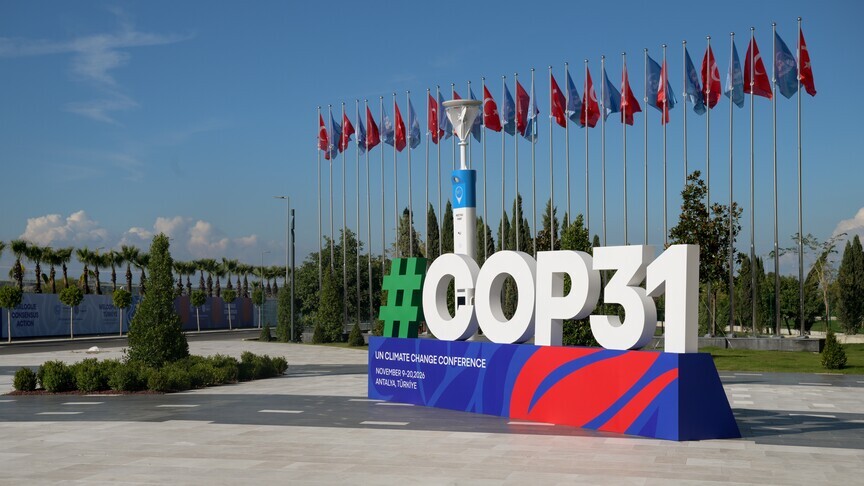
Speaking to Anadolu on the sidelines of the UN climate conference COP31 in Antalya, he said climate change should no longer be viewed as a distant challenge.
“I think part of the challenge that we have with climate change is that for too long it's been seen as a long-term challenge,” Campbell-Lendrum said.
He pointed to deaths caused by extreme heat waves, floods and droughts.
“We're already losing lives from climate change. It's an issue that's happening now,” he said.
Campbell-Lendrum said this perception had contributed to a lack of urgency in making the necessary investments.
“It's been described as an environmental crisis acting over decades. This is no longer the case,” he said.
Campbell-Lendrum highlighted the significance of global cooperation, saying climate change, like pandemics and other major health emergencies, cannot be effectively addressed through national efforts alone.
“You can't solve those problems only through national action,” he said.
“If there's one thing that we should be able to agree on is that we shouldn't be losing lives that we don't have to lose from the climate crisis,” he added.
6 public health interventions to save around 1.6M lives every year
Referring to a recent WHO report, Campbell-Lendrum said scaling up six established public health interventions could save approximately 1.6 million lives every year.
“That's about one in 40 of all the deaths that occur around the world,” he said.
The measures include heat-health warning systems, climate-resilient drinking water services, basic sanitation and hygiene facilities, cleaner household fuels and technologies for cooking and heating, and efficient fossil fuel pricing policies.
He added that these measures should be considered investments rather than costs.
“For every dollar that we invest in putting into place these interventions or scaling them up, we get $24 back in benefits for society.”
Campbell-Lendrum also emphasized the importance of protecting scientific evidence amid attempts to undermine research and promote competing political or commercial narratives.
“If we find that the science contradicts our advice, we don't try and change the science, we change our advice,” he said.
“We always follow the evidence.(…) In fact, that's our North Star. That's our guiding principle. Always follow the truth,” he added.
‘Health facilities, health workers should never be a target in war’
Commenting on the situation in Gaza, Campbell-Lendrum also said WHO was doing its best to support the population through frontline health services.
“We are very clear that around the world health facilities, health workers should never be a target in war,” he said.
Campbell-Lendrum also echoed WHO Director-General Tedros Adhanom Ghebreyesus' recent remarks that true leaders choose peace, linking the issue to broader global challenges, including energy costs and the climate crisis.
“We're investing a lot of effort, a lot of attention, a lot of money, effectively not in peace, in the opposite of peace,” he said.
“Peace basically equals health,” Campbell-Lendrum said.