Berk Kutay Gokmen
14 July 2026•Update: 14 July 2026
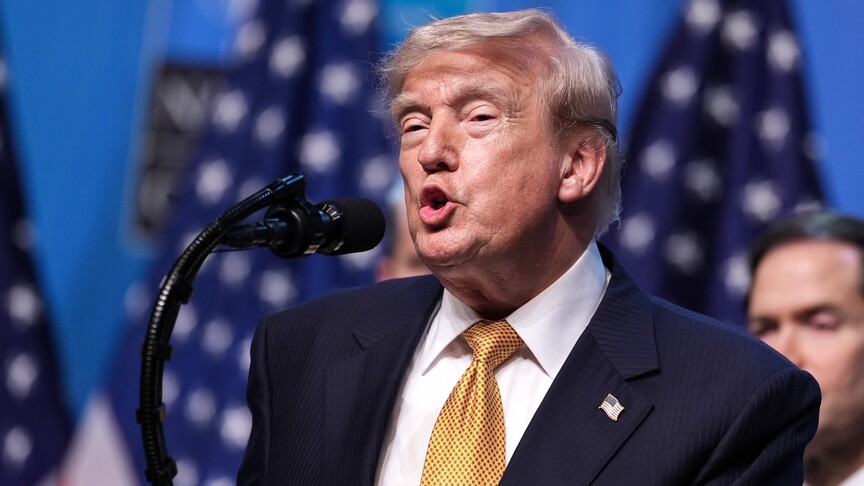
US President Donald Trump said Tuesday that he decided to replace a 20% reimbursement fee on cargo moving through the Strait of Hormuz with trade and investment deals with Gulf states.
“Based on highly productive conversations with Middle East leadership, I have decided to replace the 20% United States Reimbursement Fee with Trade and Investment Deals that the various Gulf States will be making into the United States,” Trump wrote on his Truth Social platform.
“Those Investments will be MASSIVE but, at the same time, extraordinarily good for them, and their future. As everyone is aware, we have the largest Dollar Investment into the United States, of any Country in History, but these new Investments will make that Number even larger, and we will see Factories, Plants, and Equipment pour into the United States at Historic levels, which will create additional millions of High Paying AMERICAN Jobs,” he said.
Trump claimed that “oil is flowing like never before,” saying that the strait is “open to ALL Ship traffic except for Iran — and that is because of their lying, violent, malicious leadership, which is taking them down the path of TOTAL DESTRUCTION.”
He said that the US will have “a FULL Blockade, but only on Ships coming to and from Iranian ports, or carrying anything have to do with Iranian cargo,” adding that “the days of Iran killing hundreds of thousands of people, including 52,000 protestors, are OVER and, most importantly, IRAN WILL NEVER HAVE A NUCLEAR WEAPON!”
Earlier, Trump announced that the US would reinstate a blockade on Iran and assume responsibility for securing the Strait of Hormuz, saying that the US would become the "guardian" of the Strait of Hormuz and charge commercial vessels a 20% fee for providing security.
A memorandum of understanding reached in June called for an end to fighting that began in February on all fronts, lifting of the US blockade of Iranian ports, and the full reopening of the strait.
The US military has carried out strikes on Iran in recent days, with Tehran retaliating against US assets in the Gulf. Both sides have accused each other of violating the agreement and also claimed control of the strategic waterway.