Türkiye is no longer simply a consumer of Western defense technology but an increasingly important producer capable of offering practical solutions to Europe's urgent rearmament efforts, according to experts speaking ahead of the NATO summit in Ankara.
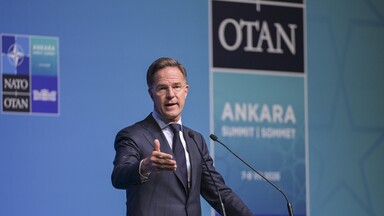
As NATO leaders prepare to meet in the Turkish capital on July 7-8, defense production, burden-sharing and Europe's military readiness are expected to dominate the agenda.
The summit comes at a time when European governments are seeking to strengthen their own capabilities, while reducing long-term dependence on the US.
Experts say Türkiye's growing defense-industrial base, combined with its strategic geography and military capabilities, is placing Ankara at the center of Europe's evolving security architecture.
"Türkiye is one of NATO's most important allies from a defense perspective," Riccardo Gasco, foreign policy program coordinator at the think tank IstanPol, told Anadolu.
"This is not only because it has one of the largest militaries in the alliance, but also because of where it is located and what it can produce."
Gasco said Türkiye has undergone a profound transformation over the past decade, evolving from a country largely dependent on Western suppliers into one capable of developing and exporting advanced military systems.
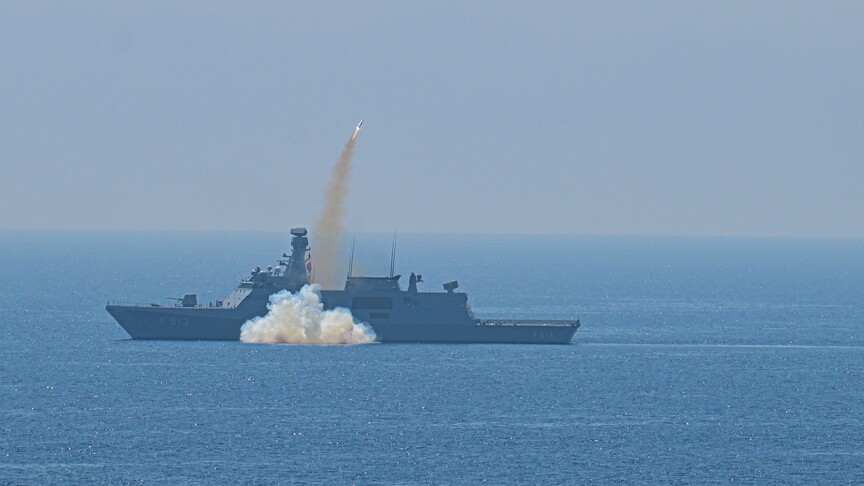
"Türkiye is no longer only a consumer of Western defense technology. It has become a producer of drones, naval platforms, missiles, armored vehicles, and increasingly advanced aerospace systems," he said.
That transformation, he argued, comes at a crucial time for NATO.
"This matters for NATO because the alliance's challenge today is not only spending more, but producing more and faster," Gasco said.
He noted that Türkiye's strategic location connecting the Black Sea, the Eastern Mediterranean, the Middle East, and the Caucasus has become even more significant since the start of the Russia-Ukraine war.
According to Gasco, Europe's debate over strategic autonomy should focus less on replacing NATO and more on building a stronger European pillar within the alliance.
Gasco said that Europe's biggest obstacle is not a lack of financial or industrial resources but insufficient political coordination.
"Defense industries remain fragmented, procurement is still too national, and there is often a gap between political declarations and concrete implementation," he said.
Gasco said Türkiye already forms part of Europe's defense architecture regardless of institutional debates.
"Türkiye is already part of Europe’s defense architecture. This is not a future possibility, it is already a reality. The question is how to manage and strengthen this reality," he said.
"Türkiye has one of Europe’s largest armed forces, a growing defense industry, and a strategic position that connects Europe to the Black Sea, the Middle East, the Caucasus, and the Eastern Mediterranean," he further added.
Gasco said debates surrounding Türkiye's participation in the European Union's Security Action for Europe (SAFE) program should not overshadow the broader reality that European defense already depends on cooperation with Ankara.
He pointed to expanding defense-industrial cooperation between Türkiye and several European countries, including Italy, Spain and the UK.
"The broader point is that Europe cannot ignore Türkiye’s capabilities," Gasco said.
Timothy Ash, associate fellow at London-based Chatham House, said Europe faces an urgent need to strengthen its own defense capabilities as confidence in long-term US security commitments declines.
"Hard to achieve given years of over dependence on the US, but now an absolute priority," he told Anadolu, referring to Europe's ambitions for greater strategic autonomy.
While many European governments have announced significant increases in defense budgets, Ash argued that expanding industrial production remains a far greater challenge than increasing spending.
Ash said that Türkiye could play a decisive role in Europe's defense transformation.
"Türkiye could offer Europe plenty of solutions," he said.
"It has the largest and probably most capable military in European NATO. It can provide tens of thousands of troops to defend a ceasefire in Ukraine."
He also highlighted Türkiye's industrial advantages.
"It has the best drone industry in Europe and can provide large-scale defense manufacturing to build the tanks, planes, boats and shells needed for Europe to re-equip quickly," Ash said.
According to Ash, expanding cooperation with Ankara is becoming a strategic necessity rather than a political choice.
He stressed that political disagreements should not prevent deeper defense cooperation at a time when Europe faces its most serious security challenges in decades.
"Europe needs to wake up fast but past racism and Islamophobia are getting in the way... There is no credible European defense without Türkiye as a bulwark for that," he said.
"Some European countries get it - I think the Brits, Italy and now Belgium. Others are shooting themselves in their feet by not working to deepen defense ties with Türkiye," Ash added.
Ash criticized the exclusion of both Türkiye and the UK from the EU's SAFE defense financing mechanism.
"(It) shows that Europe still does not understand the threats it faces from Russia and with the US withdrawal," he said.
"SAFE financing for Turkish defense industries could be a win-win for Europe and Türkiye."
Türkiye's defense industry has expanded rapidly over the past decade through sustained government investment, indigenous production and growing export success.
The country now produces a broad range of military systems, including armed drones, armored vehicles, naval platforms, missiles, electronic warfare systems, helicopters and advanced aircraft programs.
Turkish defense firms have also achieved notable success across Europe.
In late 2024, Defense Technologies Engineering and Trade (STM) signed a contract worth €123 million ($140 million) to design and build two fleet replenishment ships for Portugal, marking Türkiye's first major naval export to an EU and NATO member outside Eastern Europe.
The same year, Otokar secured a major contract with Romania to supply more than 1,000 Cobra II armoured vehicles, while Türkiye and Spain expanded cooperation on advanced trainer aircraft expected to center on Turkish Aerospace Industries' Hurjet program.
Meanwhile, drone manufacturer Baykar strengthened its European presence through the acquisition of Italy's Piaggio Aerospace, opening new opportunities for cooperation with European aerospace industries.
Türkiye's defense and aerospace exports have risen sharply in recent years, reflecting growing international demand for competitively priced systems that can often be delivered more quickly than comparable Western alternatives.
Both experts expect this week's NATO summit in Ankara to place greater emphasis on implementation rather than announcing new commitments.
For Gasco, the summit's significance will lie in whether allies demonstrate credible plans to transform higher defense spending into deployable military capabilities and stronger industrial production.
He also said that Ankara's role as summit host reflects Türkiye's growing military and industrial importance within the alliance.
"Hosting it reinforces Ankara’s centrality within NATO at a moment when its military capabilities and defense industry are becoming more relevant for the alliance," Gasco said.
He pointed to recent discussions surrounding possible US support for Türkiye's indigenous KAAN fighter program, including potential engine cooperation and renewed speculation about Türkiye's future participation in the F-35 program.
Ultimately, Gasco said, the alliance's success will depend less on political declarations than on its ability to strengthen deterrence through sustained investment, industrial cooperation and military readiness.
news_share_descriptionsubscription_contact