By Ilgin Karlidag
BRUSSELS
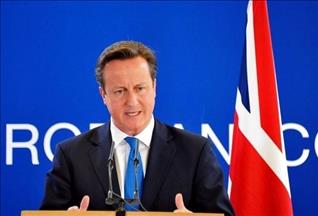
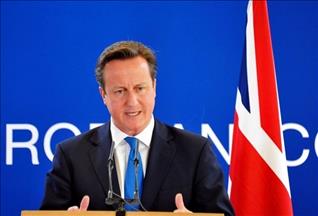
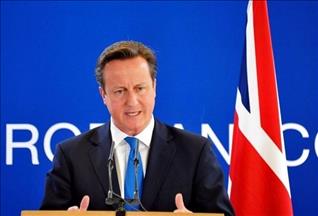
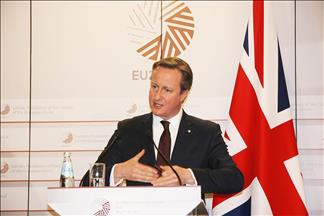
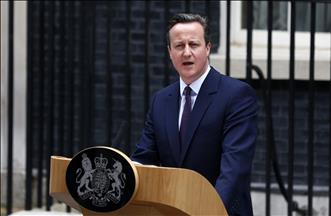
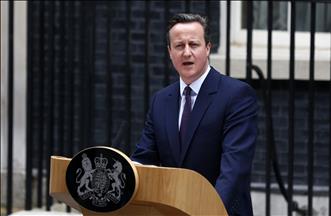
UK’s Prime Minister David Cameron has offered on Thursday to send three military ships and three helicopters to "smash the gangs" smuggling migrants across the Mediterranean Sea.
Cameron spoke ahead of an EU emergency summit on Thursday in Brussels where EU leaders are expected to flesh out a 10-point migration plan after up to 900 people lost their lives off the Libyan coast last weekend.
"Saving lives means rescuing these poor people but it also means smashing the gangs and stabilizing the region," Cameron told reporters in Brussels.
"We (Britain) will use our aid budget to help stabilize neighboring countries and as the country in Europe with the biggest defense budget we can make a real contribution," he said.
However, Cameron added that this would be done "under the right conditions and that must include people we pick up and people we deal with are taken to the nearest safe country and don’t have an immediate recourse to claim asylum in the UK."
Among the proposals to be discussed Thursday is a plan to seize and destroy the boats used by people traffickers.
European Council President Donald Tusk told reporters in Brussels on Thursday: "We need to track down on the human smugglers, we have to break up their network and to undermine their business model."
"I think the best way to protect people from drowning is by ensuring that they do not get on the boat in the first place," Tusk added.
There are also plans to provide Frontex, the agency that runs the EU's Mediterranean border security operation Triton, with additional resources.
The abandonment of Italy’s Mare Nostrum rescue operation last year and its replacement with the EU’s Triton scheme has also been seen as a significant factor behind the crisis.
The Mare Nostrum operation, which saved more than 140,000 lives, was cancelled due to alleged high costs and because critics said it encouraged refugees to flee to Europe across the Mediterranean.
Amnesty International has denounced the current system, which has less than a third of the funding previously provided to Mare Nostrum, saying that "current search and rescue operations are far from what is required to address the humanitarian crisis currently unfolding in the Mediterranean."