By Alex Pashley
LIMA, Peru
The widows of Peruvian tribal leaders allegedly killed at the hands of suspected illegal loggers, clamoured Friday for the host of the UN’s annual climate talks to award them land titles.
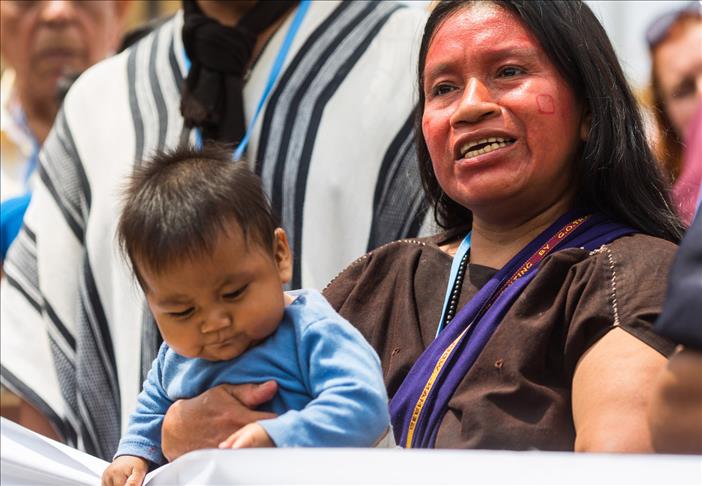
Ergilia Rengifo, Julia Peres and Diana Rios from the Amazonian community of Saweto publicly petitioned the government to award them titles for 80,000 hectares of tropical forest after a 10-year fight.
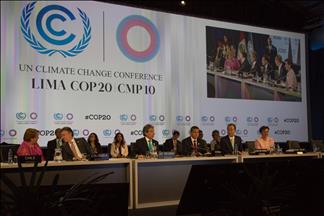
International civil society groups stood in solidarity with the women from the Ashnaninka tribe, as they spoke at the Conference of Parties, or COP here, where countries aim to move beyond the Kyoto treaty.
Their husbands, including the outspoken, prominent anti-logging activist Edwin Chota, were murdered Sept. 1 in the Ucayali region near the Brazilian border, prompting international outcry.
Three months later, investigations have drawn to a standstill as one body remains unrecovered and the perpetrators free.
“The government still has not complied with our demands to title our land,” said Rengifo, the wife of Jorge Rios, while holding the couple’s young child. “We have received many promises, including from Prime Minister Ana Jara, but we have yet to see any concrete action.”
“The community is still under constant threat from loggers,” she added.
Land titles are considered a sole weapon to keep illegal loggers at bay in the Peruvian Amazon where the illicit activity is rampant. The World Bank estimated in 2011 that 80 percent of wood products leaving Peru where illegal.
“They symbolize the situation of many communities in Peru and also the world,” Julia Urrunaga, Peru director at Environmental Investigations Agency told The Anadolu Agency.
“They are the guardians of the forest, it’s them who are on the front line, and we must assure ourselves that their lives and rights are respected,” Urrunaga said.
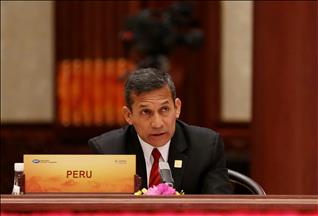
The Peruvian government is titling its forests as it decentralizes power in the regions, though progress is glacial.
The government has promised to award 5 million hectares in projects to tackle deforestation as part of an agreement with the Norwegian government.
But Peru’s top indigenous association, Aidesep, calls more for four times that amount.
“Our proposal is that the only form of stopping illegal logging – and this contributes to global warming – is legal titling the territory,” Alberto Pizango, president of the organization told Peru’s foreign press corps in October.
Peru is the world’s fourth deadliest country for environmental activist, Global Witness reported last month, with at least 57 activists killed between 2002 and 2013.
The majority of those killings were linked to conflicts in the mining, oil and logging industries. Successful prosecution occurred in 1 percent of cases.
Almost 20 percent of tropical forests across the Amazon are at risk from illegal logging, construction of new roads and dams, and the expansion of agriculture, according to a study published by Carbon Management.
“We have never been under so much pressure, as this study demonstrates,” said Edwin Vásquez, co-author and president of COICA, the Indigenous Coordinating Body of the Amazon Basin, which represents indigenous groups in the region.
“Yet we now have evidence that where there are strong rights, there are standing forests.
www.aa.com.tr/en