Ayhan Simsek
19 November 2026•Update: 19 November 2026
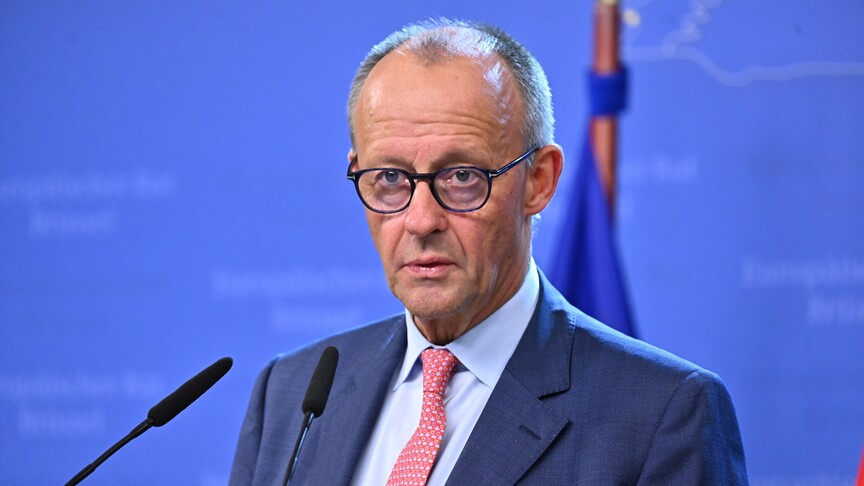
German Chancellor Friedrich Merz said Thursday that any diplomatic talks between the US and Russia to end the war in Ukraine that exclude Kyiv and the Europeans will not succeed.
“If peace negotiations take place, we will contribute to them,” Merz said at a news conference after a Ukraine “Coalition of the Willing” summit in Berlin. “Negotiations involving Ukraine and Europe can only succeed if conducted together. A Yalta-style format will not bring peace.”
Merz hosted Ukrainian President Volodymyr Zelenskyy along with US special envoys Jared Kushner and Steve Witkoff in the German capital to discuss diplomatic efforts. French President Emmanuel Macron and British Prime Minister Andy Burnham were among the leaders from around 40 countries present at the meeting.
It took place the same day US President Donald Trump met Russian President Vladimir Putin and Chinese President Xi Jinping in China for a summit, on the sidelines of an Asia-Pacific Economic Cooperation summit, where they discussed the war in Ukraine among other topics.
Merz said he gave each guest a piece of the Berlin Wall as a gift. He noted that the wall had stood meters from the venue and divided Berlin for decades.
“The Berlin Wall brought oppression, insecurity, and discord. And that is precisely what Yalta stood for,” he said, referring to the 1945 Yalta Conference where the great powers divided post-war Europe into spheres of influence.
He noted that in 1987, US President Ronald Reagan stood in Berlin and called out, “Mr. Gorbachev, tear down this wall,” referring to the then-Soviet leader Mikhail Gorbachev.
“Today we say: President Putin, end the war in Ukraine, and let us work together to find diplomatic solutions,” said Merz. “We never want to live in a divided Europe again. We want to live in freedom and in peace, together with Ukraine.”
Some European politicians voiced worries ahead of Trump’s meeting with Putin and Xi that the summit could become a “Yalta 2.0,” noting the Yalta Conference. They expressed concern about possible US concessions to Moscow on Ukraine and a new division of global influence zones among the big powers without Europe present.