BEIJING/SHANGAI
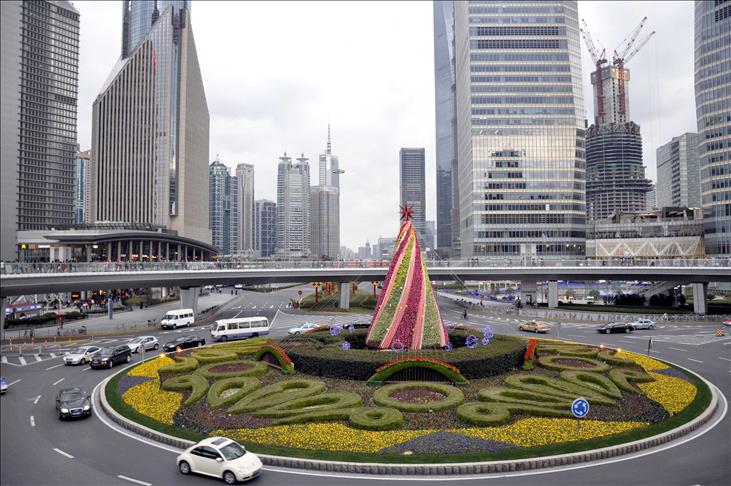
China has been trying hard to find a solution to its chaotic traffic problem.
The government drew back a new traffic regulation, which was reinforcing penalty for running yellow lights in order to update it, for that it triggered widespread controversy. Beijing administration did not announce the reason for drawing the regulation back that became effective since the New Year's Day, but it seems very possible that the increase in accidents due to drivers' jamming on the brakes to stop at the yellow light is the reason for that.
According to that traffic regulation from the Ministry of Public Security, 52 different sorts of violations can result in deducting points for punishment, up from 38 under the previous regulation. But many drivers in China think that the regulation brings more chaos to the already hampered traffic.
Under the new rule, which has been dubbed the strictest traffic regulation ever, driving through a yellow light will result in a gain of six penalty points on the license. When the drivers reach 12 points, the system requires them to attend a 7-day training and take a written exam before returning to the traffic. Vehicles must come to a complete stop at yellow lights unless part of the vehicle's body has already crossed the line.
Yellow lights in China flash for just a few seconds before turning red, making it difficult to bring vehicles to a full stop in time. The Ministry of Public Security's Traffic Administration has pledged to remain open to reasonable suggestions regarding the change, as well as promised to announce more details on the implementation of the regulation.
Authorities have tightened traffic regulations amid the growth of the country's auto market in recent years. According to the The Ministry of Public Security's Traffic Administration, the country is home to 114 million automobiles driven by 186 million drivers. About 62,000 people died from traffic accidents in 2011, according to the State Administration of Work Safety, dropping from nearly 89,000 the previous year.
Having plates by drawing
Having a registration plate for cars is really complicated in China's major cities since drivers need to either pay a big amount or wait for the draw.
More than 1 million people wait for the draw in capital Beijing and only 20,000 lucky drivers qualify to get their licence per month. Other than that drivers can only enter traffic on every other day based on their odd or even numbered plates in the city.
The number of motor vehicles reached 4.67 million in 2010 compared to 1 million in 1997 in the capital.
In the financial capital of China, Shanghai, there are 50,000 cabs and 100 cab enterprises. Authorities set the plate and cab prices high in order to avoid traffic jam in the city.
Cab report
Since having plates are hard in China, cabs became a major alternative to driving. But Chinese cab drivers are famous for being picky. Chinese Academy of Social Sciences (CASS) the highest academic research organization in the country, conducted a research on the jigsawed cab issue.
There are a total of 66,600 cabs in Beijing and the traffic administration do not plan to increase that number until 2015.
CASS advices that the number of "legal cabs" in the city should increase, while cab drivers are complaining of low income and heavy work. According to the report cab fees had not increased since 2002 in the metropolitans but local government pays cab drivers one fourth of their monthly income as a support.
Reporting by Ali Ihsan Cam/Tevfik Durul