
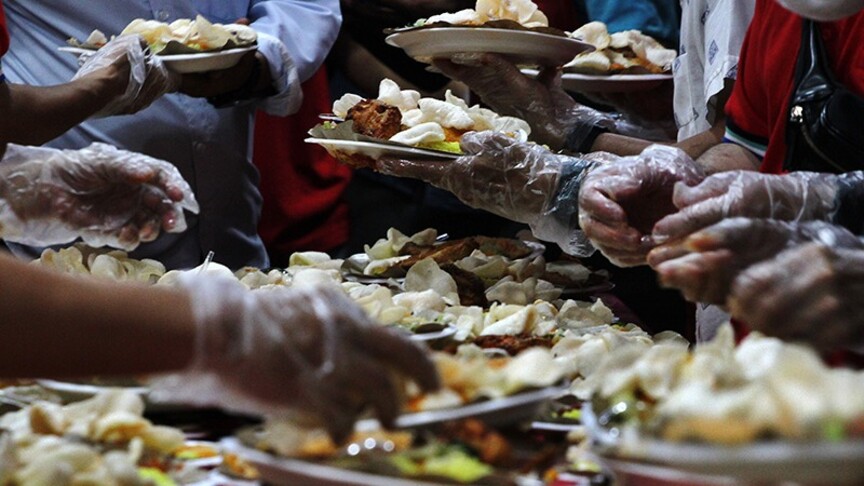
Organic waste generated by food loss and waste is driving greenhouse gas emissions and accelerating global warming, experts said, urging for awareness and action at a global scale.
Speaking to Anadolu at the Zero Waste Forum 2026, Ana Catalina Suarez Pena, senior director of strategy and innovation at the Global FoodBanking Network, assessed food banking and food waste.
She noted that around 20% of global methane emissions come from organic waste, and that approximately 77% of organic waste is food waste.
"At the same time, 2.5 billion people are facing food insecurity across the globe. There is a paradox — on one hand we are losing and wasting food, on the other, people are facing hunger and food insecurity. What food banks do is interconnect those two conversations," she said.
Suarez noted that food insecurity, land, agriculture, and food systems have been growing in importance and included in every COP agenda since COP28.
"People sometimes ask why we are speaking about food systems when we are speaking about climate. We are speaking about food systems because food stability is always at risk.
"When we face a climate-related disaster — floods, extreme rainfall, wildfires — it becomes more and more relevant how food stability is affected. Harvesting changes, the cost of fertilizers rise. Then we need to talk about how we are producing food and how people are going to be fed under the circumstances that we are living," she said.
Suarez said ways to prevent food waste will be addressed at COP31 under the zero waste package.
"The most important step we need to take is to prevent food loss and waste from the outset, because the best waste is the one you never generate. Our expectation from COP31 is that the waste agenda takes a very important place. What we are discussing with the COP31 presidency is that it becomes part of the negotiations, that there are incentives and a clear agenda to reduce food loss and waste," she said.
Suarez stressed that when a food bank prevents 1 ton of food from being wasted or lost, it also prevents 2.6 tons of CO2 emissions from being generated. She said one of the key messages to carry from the Zero Waste Forum to COP31 is that reducing organic waste is the fastest way to meet climate commitments, while making food available for people in need is the fastest way to improve food security.
Stressing that solutions to both food insecurity and the waste of 30% of all food produced already exist in the field, she said there are many solutions happening on the ground.
"What we need is to ensure that we are promoting, supporting, and scaling those solutions that are already working. And that is our commitment. Preventing food loss and waste is the best way to cool the planet and the best way to feed people. We need to ensure that everyone is working actively to resolve this problem, because this paradox is everyone's problem."
Michael Oko, vice president of communications and marketing at the Global FoodBanking Network, said preventing food waste also prevents the release of methane, a potent greenhouse gas.
"If we are able to get food to people instead of wasting it, or redirect it to other solutions like composting, we can really significantly reduce the emissions that are heating the planet," he said.
Oko noted that food waste accounts for around 8-10% of all emissions, making it a major share of the total, and that reducing food waste offers a significant opportunity to cut emissions.
He added that only about 4% of global climate finance is currently directed toward food systems — a clear disconnect.
He pointed to growing attention to food waste and food systems at international forums, noting that the Global FoodBanking Network has been working in climate conferences for several years and that momentum is now building.
"Türkiye is bringing a lot of leadership to this area. We see that food waste should be really at the top of the agenda this year. It's really powerful that Türkiye is making this one of the top priorities. There are many solutions in the world, including food banking, that can address both food security and climate at the same time. We need to not just have the words, we need action and implementation, which is what we're hoping to see at COP this year," he concluded.